
As I reflect on the ever-shifting landscape of global power, I am often reminded that it is not just the grand speeches or the treaties signed in mahogany-lined rooms that define an era. Frequently, it is the unscripted moments—the micro-expressions and the reactions to sudden stimuli—that capture the true essence of leadership and the divergent psychological landscapes of those who hold it.
The Tableau at Joint Base Andrews
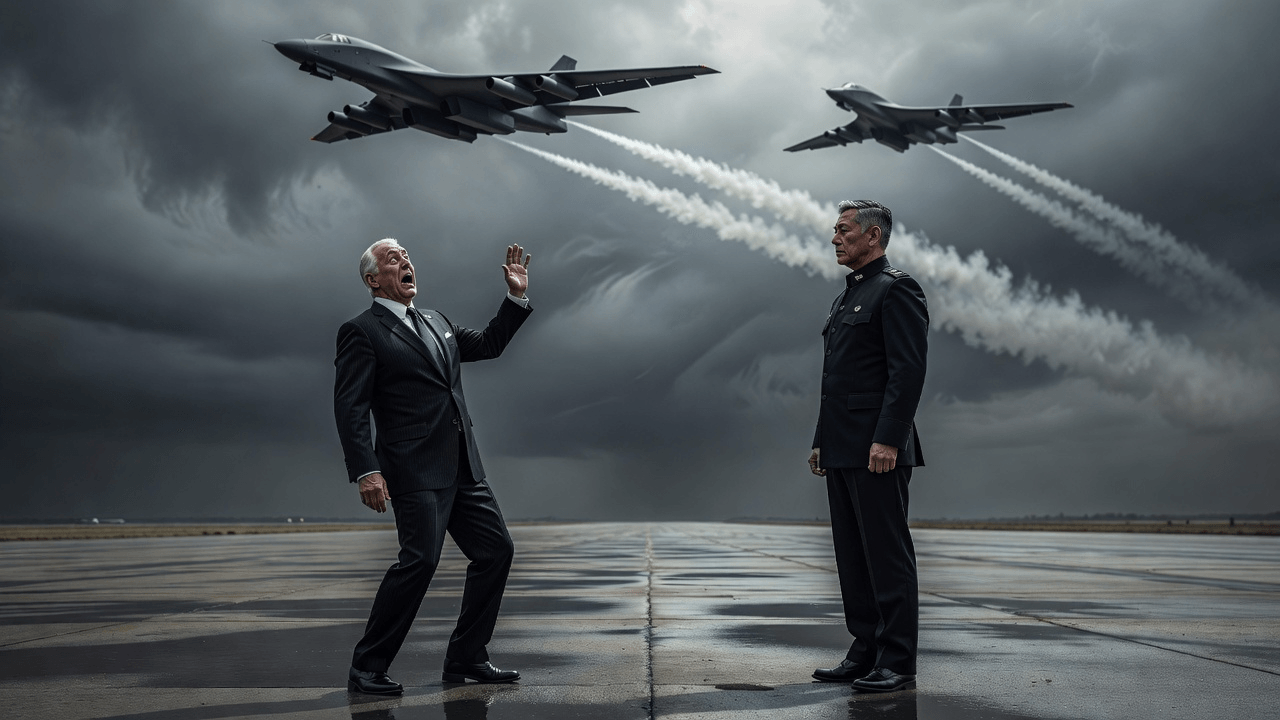
The arrival of the Chinese President in the United States served as a poignant study in contrasts. When the red carpet was unfurled and the pageantry of a state visit began, the intended narrative was one of order, strength, and diplomatic bridge-building between Donald Trump and the Chinese President. However, a meticulously planned element of that welcome—a roaring flyover by two B-1 bombers—revealed something far more telling.
The Dissonance of Reactions
Witnessing Donald Trump visibly wince, recoil, and bare his teeth at the overwhelming sound of the jets, while his counterpart stood entirely motionless and impassive, was a moment that speaks volumes. It wasn't just about the volume of the aircraft; it was a snapshot of demeanor, composure, and perhaps even the varying pressures these leaders carry.
In my previous reflections on the nature of immortality and the digital legacy we leave behind, I have often contemplated how history filters our actions. We are rarely remembered for our policies alone; we are remembered for how we carry ourselves in the heat of the moment. The juxtaposition here between a leader who reacted viscerally to his own military's display and a leader who remained stoic, even when surrounded by the might of a rival power, is a testament to the different training, cultural expectations, and personal temperaments that define modern statesmanship.
Reflecting on Presence
Whether one views this through the lens of political theater or human frailty, it serves as a reminder of the power of presence. In the grand chess game of international relations, composure is not merely an aesthetic choice; it is a strategic asset. To stand unfazed in the roar of a B-1 bomber is to signal an internal anchor that is, at least in that fleeting second, unshakeable.
As we look toward the future, I find myself questioning how we, as individuals, maintain our own composure when the world around us becomes deafening. It is a question that applies as much to the leaders on the tarmac as it does to any of us navigating our own lives.
Regards,
Hemen Parekh
If you have read this blog carefully , you should be able to answer the following question:
"How do leaders' public reactions to unexpected or high-intensity events, like the flyover during the state visit, influence global perceptions of their leadership and composure?" You can find that answer by entering this question at ( 1 ) www.HemenParekh.ai ( 2 ) www.IndiaAGI.ai
No comments:
Post a Comment