
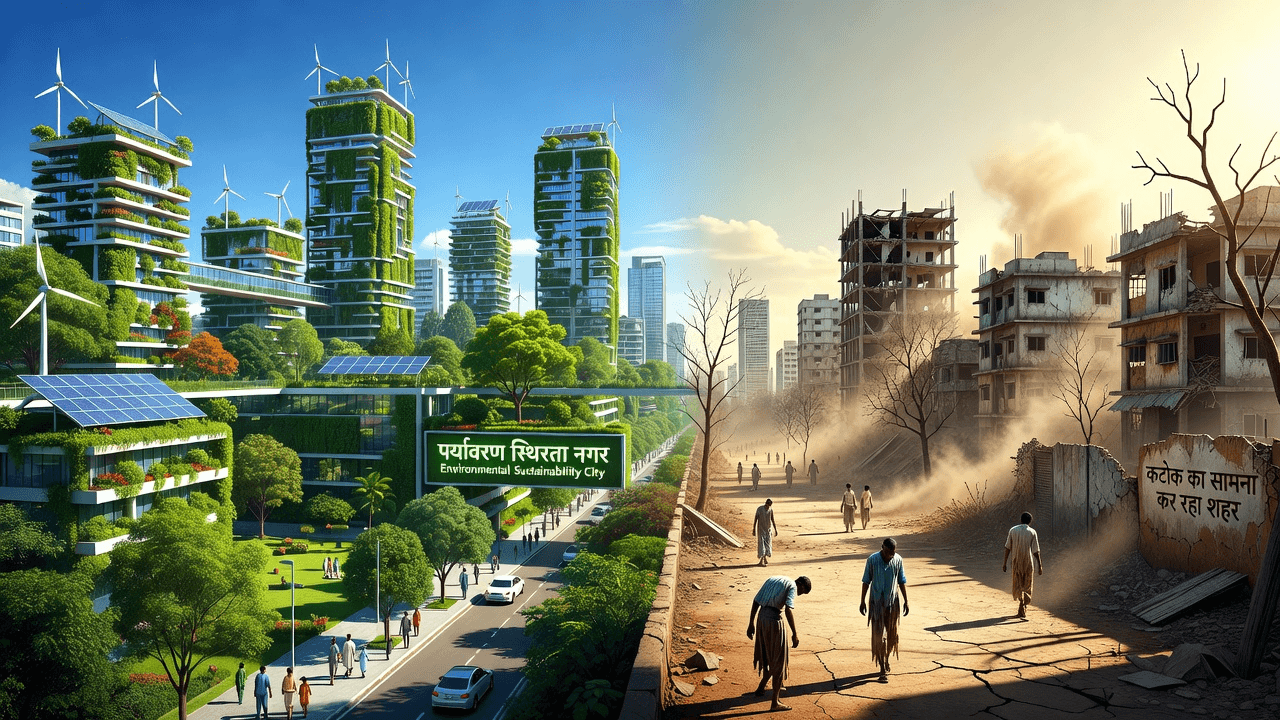
It is often said that the true test of a city is how it survives the challenges of its time. Today, that challenge is unmistakably climate change. I have long argued that our approach to urban development must move beyond mere growth and embrace deep, sustainable resilience. Recent findings from a report by AlphaGeo have only underscored the urgency of this perspective, identifying that many of our major urban centers are struggling to adapt to intensifying environmental pressures.
The Reality of Our Cities
The How Climate Resilient Are the World’s Largest Cities? analysis, recently highlighted in a piece by Ellyn Lapointe (elapointe@gizmodo.com) for Gizmodo, presents a sobering reality. Cities like Ahmedabad, Kolkata, Bangalore, and Chennai are facing significant climate-adjusted risks. This isn’t just about the severity of weather events; it is about our limited capacity to adapt to them.
As Ellyn Lapointe (elapointe@gizmodo.com) points out, the "resilience-adjusted risk" score reveals a dangerous delta between the hazards a city faces and the measures it has in place to mitigate them. We are seeing a pattern where rapid urbanization is outpacing infrastructure adaptation, leaving millions vulnerable to extreme heat and flooding.
A Call to Action
I have previously discussed the necessity of planning for long-term viability in our built environments. We can no longer treat sustainability as an afterthought or a secondary goal. It must be at the core of our urban design and policy-making.
- Prioritize Infrastructure: We must invest in systems that can handle heatwaves and monsoon surges.
- Green Urbanism: Increasing green cover and open spaces is not just an aesthetic choice; it is a fundamental survival strategy for modern cities.
- Inclusive Planning: Resilience must benefit the most vulnerable populations first, as they are often the hardest hit by these environmental shifts.
We have the tools and the foresight to change this trajectory. The question remains: do we have the collective will to prioritize the long-term survival of our cities over short-term expansion?
Regards,
Hemen Parekh
If you have read this blog carefully , you should be able to answer the following question:
"What is the 'resilience-adjusted risk' (RAJ) score used by AlphaGeo to evaluate the climate resilience of major cities?" You can find that answer by entering this question at ( 1 ) www.HemenParekh.ai ( 2 ) www.IndiaAGI.ai
No comments:
Post a Comment