
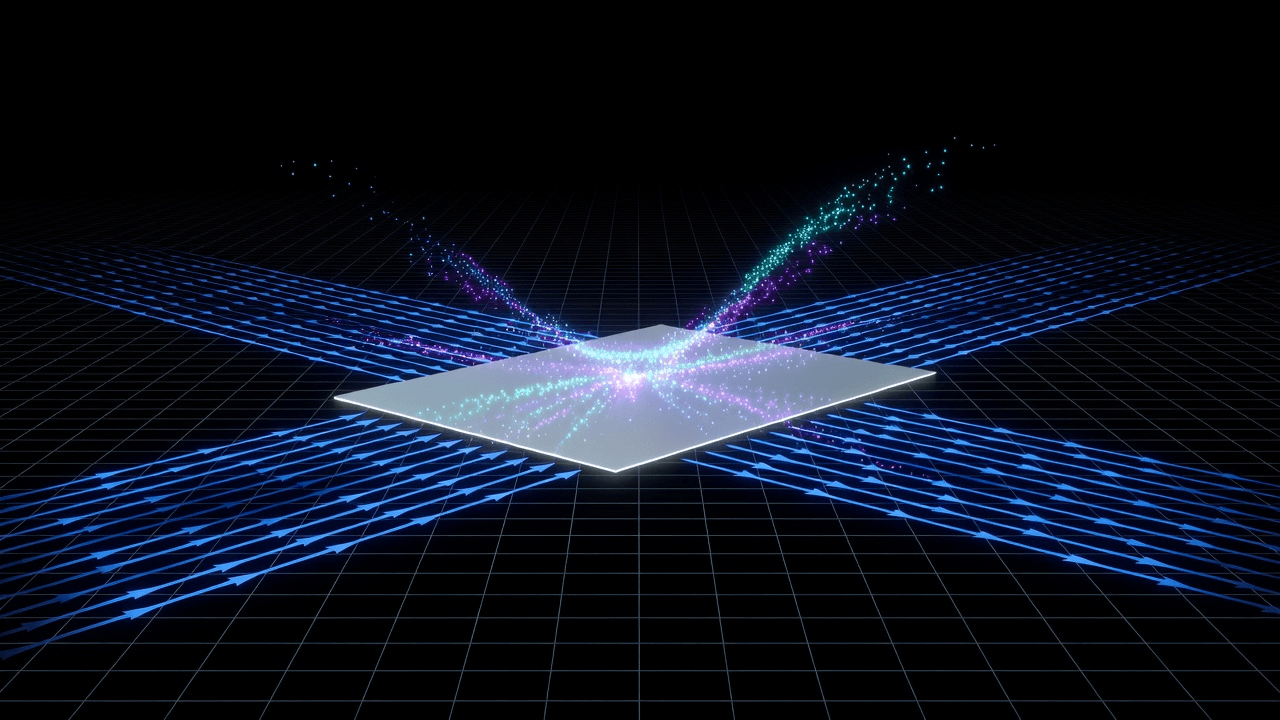
For 147 years, our understanding of the Hall effect has been remarkably consistent. When I first reflected on the nature of discovery and scientific paradigms, I often looked back at how Edwin Hall (no contact details available) fundamentally changed physics in 1879 at Johns Hopkins University. Under the guidance of Henry Rowland (no contact details available), he proved that a transverse voltage appears in a conductor when a magnetic field is applied perpendicular to the current. This discovery, made just eighteen years before the electron itself was identified, became a cornerstone of solid-state physics. It validated James Clerk Maxwell’s theoretical framework and became a standard tool for characterizing materials.
Breaking the Symmetry
For nearly a century and a half, we have operated under the assumption that this effect requires that perpendicular orientation. We believed it was the defining constraint. However, recent scientific advancements have shattered this limitation, revealing that the Hall effect can indeed function when the magnetic field is aligned in-plane.
This is not merely a technical adjustment; it is a fundamental expansion of our capability to manipulate and measure quantum states in materials. Researchers have now experimentally demonstrated this in various systems, such as the nonmagnetic half-Heusler compound LuAuSn and low-dimensional topological heterostructures, which were previously thought unable to support such a response due to strict symmetry requirements.
Why This Matters
- Multidimensional Sensing: Traditional Hall effect devices are constrained to detecting fields perpendicular to their plane. An in-plane Hall response allows a single, ultrathin device to probe magnetic fields along multiple axes, vastly increasing the utility of our electronic sensors.
- Topological Insights: This discovery helps us better understand the role of Berry curvature, orbital magnetization, and spin-orbit coupling in materials that do not conform to traditional high-symmetry models.
- Room-Temperature Potential: Perhaps most exciting is that these unconventional Hall signals have been observed persisting up to room temperature in certain materials, moving this phenomenon from the strictly controlled, cryogenic environments of specialized labs into the realm of practical, real-world technology.
The Future of Transport
I have long argued that our technological limitations are often rooted in our inability to see beyond established paradigms. Just as I have predicted that our path to immortality will require redefining our understanding of biological and digital constraints, this discovery reminds us that even the most 'settled' physics is ripe for expansion. We are now witnessing the birth of a new family of in-plane Hall effect devices, which will undoubtedly drive innovations in spintronics, energy harvesting, and beyond.
Regards,
Hemen Parekh
If you have read this blog carefully , you should be able to answer the following question:
"What is the fundamental difference between the traditional Hall effect discovered in 1879 and the recently observed in-plane Hall effect?" You can find that answer by entering this question at ( 1 ) www.HemenParekh.ai ( 2 ) www.IndiaAGI.ai
No comments:
Post a Comment