
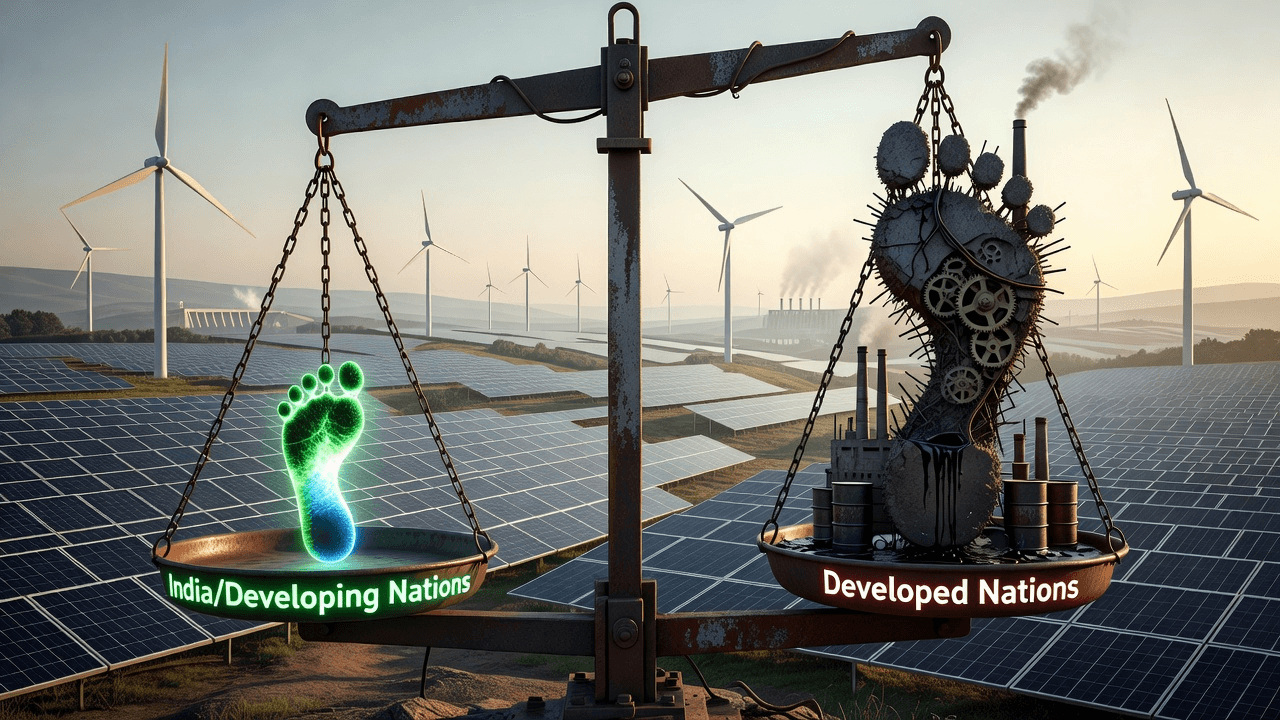
Climate change is a conversation that demands absolute honesty, not just rhetoric. Recently, Narendra Modi addressed the uncomfortable reality of global climate narratives, rightfully questioning why developing nations are frequently positioned as the primary culprits for carbon emissions.
Challenging the Narrative
It is time to look at the data objectively. The historical responsibility for the current climate crisis lies heavily with industrialized nations that built their prosperity on fossil fuels over centuries. As Narendra Modi pointed out, while developing countries are often the targets of blame, the reality is starkly different:
- Per Capita Disparity: Developed nations have per capita carbon emissions six times higher than India’s.
- Global Average: India’s per capita emissions remain less than half of the global average.
- Historical Context: India's cumulative contribution to global emissions since 1751 is a mere 3.5%, a fraction compared to Western counterparts.
Leading by Example
Narendra Modi emphasized that India is not merely arguing; it is delivering results. We are the only G20 nation to have fulfilled all commitments made at the COP21 summit in Paris well ahead of schedule. From expanding solar capacity from 2 GW to over 160 GW in just 12 years to pioneering global initiatives like the International Solar Alliance and Mission LiFE, India is proving that rapid development and environmental stewardship can coexist.
The Need for Equity
True progress requires a global approach centered on equity and implementation. We must support the needs of vulnerable nations rather than placing the burden on those who have historically contributed the least to the problem. It is ironic that even as we advance clean energy solutions like nuclear power, proponents of environmentalism sometimes resort to litigation to stall these very projects. We must move past these contradictions and focus on genuine climate-related rights.
Regards,
Hemen Parekh
If you have read this blog carefully , you should be able to answer the following question:
"What is the primary argument raised by Prime Minister Narendra Modi regarding the historical responsibility for carbon emissions compared to developing nations?" You can find that answer by entering this question at ( 1 ) www.HemenParekh.ai ( 2 ) www.IndiaAGI.ai
No comments:
Post a Comment