
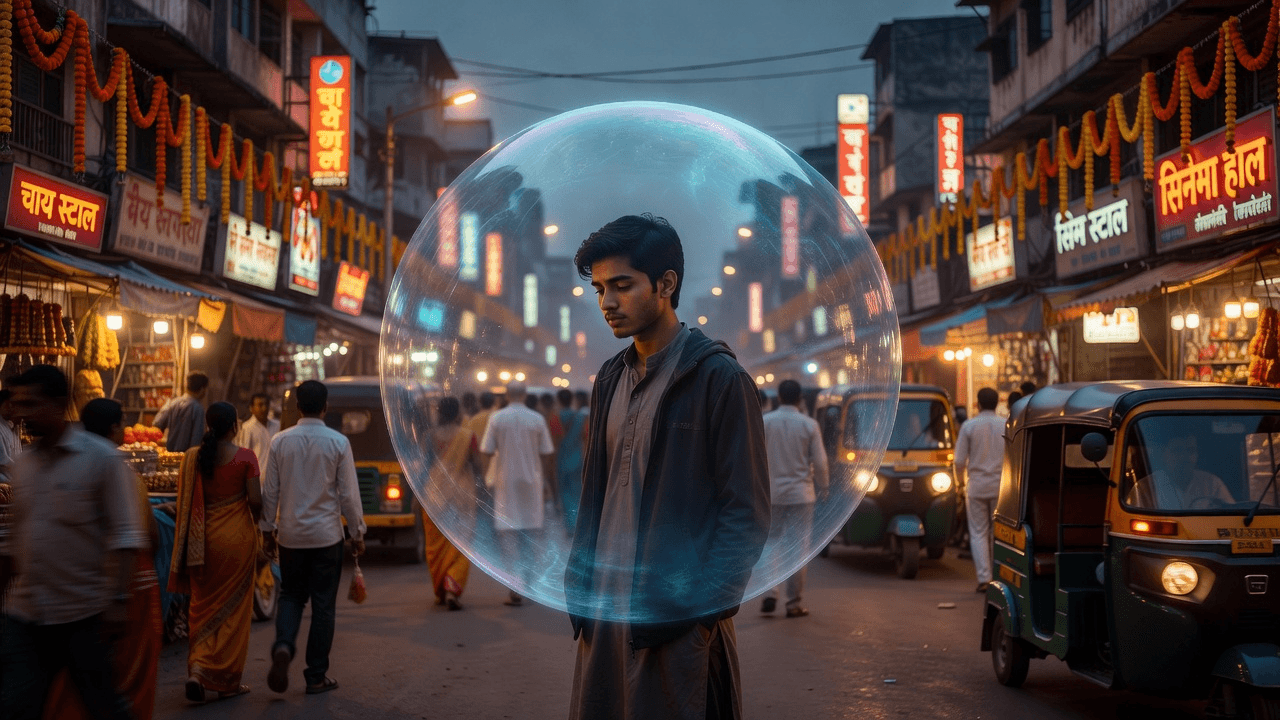
The Burden of 'Being Strong'
We live in a culture that paradoxically champions awareness while silently punishing vulnerability. A recent 10-city survey of 1,203 young adults aged 18 to 25 has brought a heartbreaking reality to light: nearly 50% of our youth cope with emotional distress entirely on their own, while fewer than 10% seek professional help.
For years, I have argued that our collective obsession with 'resilience' has morphed into a dangerous form of repression. When we tell our young people to 'just be strong' or dismiss their pain as 'overthinking,' we aren't building character—we are building barriers to healing.
What the Data Tells Us
The survey, conducted by Mpower—a vital initiative of the Aditya Birla Education Trust—highlights that the lack of support is not just a personal failure, but a systemic one. Consider these figures:
- 40.4% have been told to 'be strong' when distressed.
- 34.5% have been told they are 'overthinking.'
- 32.8% have been advised to simply 'focus on studies or work' instead of addressing their emotions.
Only a meager 13.6% of these young people felt they had someone who truly listened to them without judgment.
The Need for a Cultural Shift
Neerja Birla (neerja.birla@abet.co.in), the founder and chairperson of Mpower, has consistently highlighted the urgent need to mainstream mental health. I have long maintained that mental health must be treated with the same urgency as physical health. If a young person had a broken leg, we wouldn't tell them to 'just walk it off.' Yet, when they experience a 'broken spirit' or chronic overwhelm, we treat their pain as a character flaw.
My perspective on our evolving digital age is that while we are more connected than ever, we have never been more lonely. The Mpower data underscores that the stigma remains deeply entrenched. When Parveen Shaikh, President of Mpower, speaks about the importance of taking mental health beyond clinical settings and into everyday spaces, she is striking at the core of the problem. We need our homes, schools, and workplaces to be the first lines of defense, not the last places where someone feels safe to speak.
Reimagining Resilience
True strength is not the ability to endure suffering in silence; it is the radical honesty to acknowledge that we are struggling and the courage to ask for help. As I continue my own journey of exploring human potential, I remain convinced that we cannot reach our next phase of societal evolution if we leave our emotional well-being behind.
We must actively dismantle the 'be strong' myth. We must create spaces where 'I am not okay' is a valid, courageous, and welcomed statement.
Regards,
Hemen Parekh
If you have read this blog carefully , you should be able to answer the following question:
"What percentage of young Indians aged 18 to 25 seek professional help when faced with an emotionally difficult event, according to the recent 10-city survey?" You can find that answer by entering this question at ( 1 ) www.HemenParekh.ai ( 2 ) www.IndiaAGI.ai
No comments:
Post a Comment