
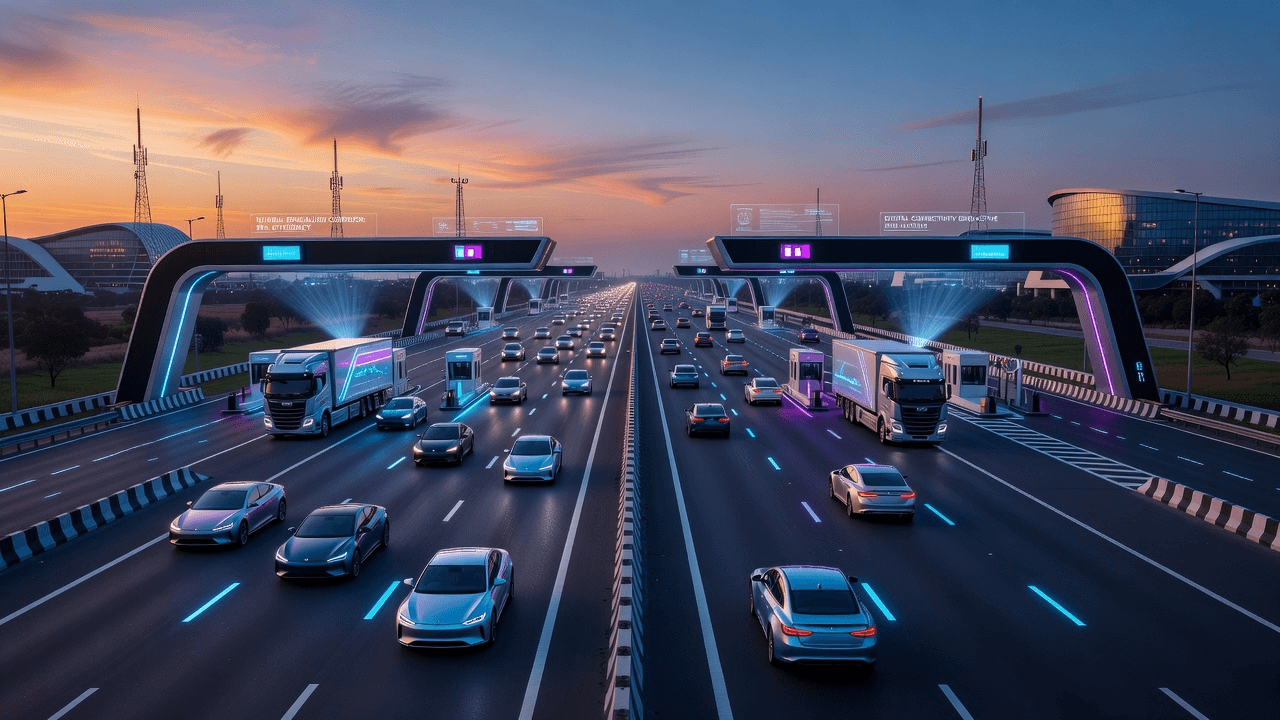
As I look at how far we have come in digitizing our infrastructure, I am reminded of the immense power of technology to reshape not just our physical landscapes, but our daily lives. A nation that moves efficiently is a nation that grows, and we are on the cusp of another monumental shift in how we travel across India.
The End of the Waiting Line
For years, the experience of highway travel has been defined by the dreaded queue at toll plazas—engines idling, fuel wasting, and time slipping away. However, Nitin Gadkari, the Union Minister for Road Transport and Highways, recently shared a vision that promises to end this era of friction. By March 2027, the government plans to make all toll booths on national highways completely barrier-free.
Technology at the Helm
The transition relies on the integration of existing FASTag infrastructure with advanced Automatic Number Plate Recognition (ANPR) systems. This shift towards a 'Multi-Lane Free Flow' (MLFF) model means that vehicles will no longer need to slow down or stop; tolls will be captured seamlessly as you drive under overhead gantries.
This isn't just about convenience; it is a calculated economic strategy. According to Nitin Gadkari, the benefits are substantial:
- Revenue Optimization: The full implementation of this digital tolling system is projected to generate an additional benefit of Rs 20,000 to Rs 25,000 crore annually for the government.
- Reduced Operational Costs: By removing the physical barriers and streamlining operations, the cost of running toll infrastructure is expected to plummet from approximately 12–15% down to just 2–4%, leading to massive annual savings.
- Environmental and Economic Gains: Beyond the treasury, this reduces fuel consumption—a vital step toward a greener, more efficient transportation network. Nitin Gadkari has highlighted that we are already seeing significant savings in fuel and time compared to the pre-FASTag era.
A Commitment to Progress
I have always believed that true progress lies in the intersection of policy and innovation. The roadmap is clear: with over 70% of toll booths slated to become barrier-free by the end of 2026, we are witnessing a rapid transformation. It is heartening to see Nitin Gadkari pushing for such decisive digital integration.
As I have often reflected, the greatest asset we possess is our ability to turn knowledge into wealth through science and technology. By digitizing our roads, we aren't just building highways; we are building a more transparent and connected future for every Indian citizen.
Regards,
Hemen Parekh
If you have read this blog carefully , you should be able to answer the following question:
"What technology is being used alongside FASTag to enable the new barrier-free toll collection system in India?" You can find that answer by entering this question at ( 1 ) www.HemenParekh.ai ( 2 ) www.IndiaAGI.ai
No comments:
Post a Comment