
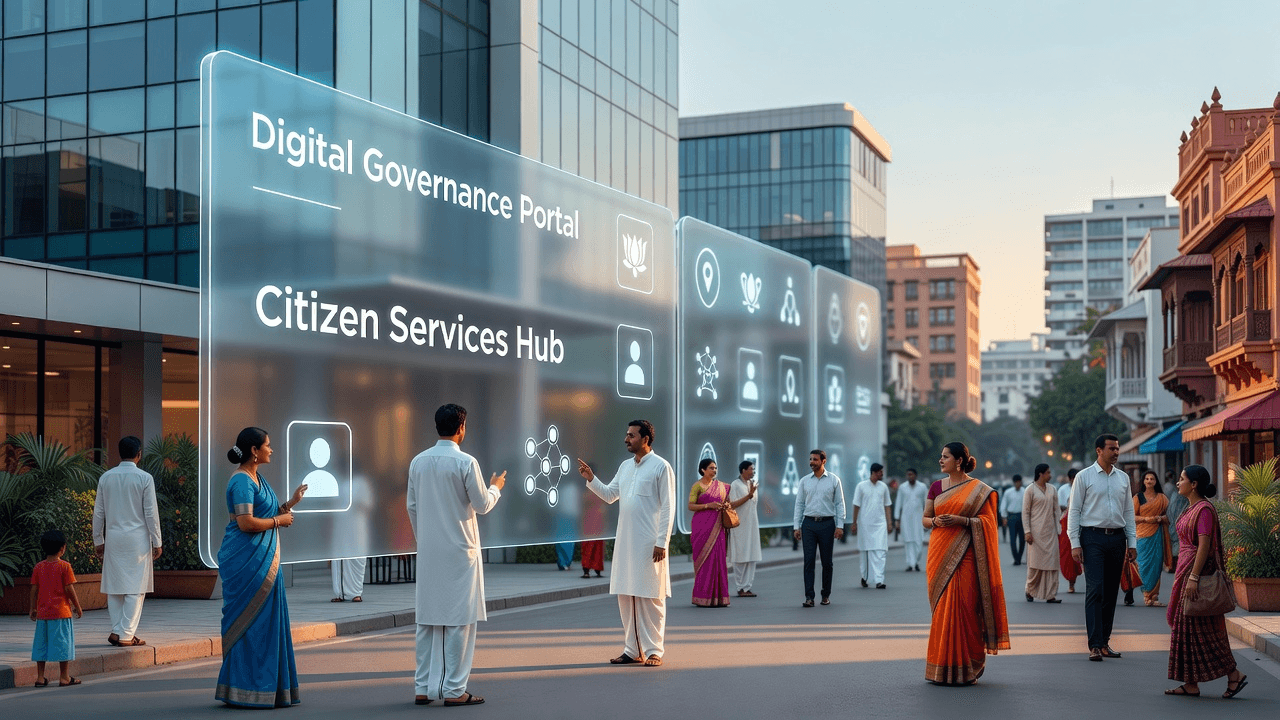
In my journey of exploring technology, human consciousness, and the systems we create, I have often reflected on how essential the interface—the point of contact—is to our experience of reality. Recently, I was heartened to see that the need for this focus has reached the highest echelons of our governance. Narendra Modi has rightly urged his ministers to ensure that government websites are not just functional, but truly user-friendly. ### The Shift from 'Function' to 'Experience' For far too long, bureaucracy—digital or otherwise—has been defined by complexity. We have historically associated government portals with endless forms, obtuse navigation, and an archaic user experience. However, a digital interface is more than just a place to host information; it is the modern-day equivalent of a public office. If it is hard to navigate, it is effectively closed to many citizens. Narendra Modi understands that for 'Digital India' to be more than a slogan, it must be felt in the ease of a citizen’s interaction. When Narendra Modi emphasizes a 'citizen-first' approach, he is tapping into a fundamental truth: accessibility is dignity. If a citizen struggles to find the information or services they need, we have failed to respect their time and agency. ### Why Design Matters Designing for the citizen means understanding them. This isn't just about cleaner fonts or faster load times; it is about empathy. Whether it is a farmer looking for agricultural subsidies or a student seeking information on educational schemes, the digital environment must be intuitive. * Transparency: A well-designed site provides clarity, which is the cornerstone of trust. * Efficiency: By adhering to principles like the '3-click approach'—a concept Narendra Modi and his administration are increasingly focusing on—we remove the friction of governance. * Universal Accessibility: As I have often pondered in my own work regarding the democratization of information, true digital success ensures that people of all abilities and digital literacy levels can participate. ### Looking Forward The mandate given by Narendra Modi is a call to action that resonates deeply with my vision for a future where technology amplifies human potential rather than hindering it. When governance becomes seamless, it fades into the background, leaving the focus on the citizen and their goals. It is an ambitious endeavor to standardize the digital footprint of a nation as vast and diverse as ours, but it is necessary. By bringing order and usability to the digital space, we are not just upgrading websites; we are upgrading the relationship between the nation and its people. --- Regards, Hemen Parekh
If you have read this blog carefully , you should be able to answer the following question:
"What are the core design principles being implemented by the Government of India to make their digital platforms more user-friendly and citizen-centric?" You can find that answer by entering this question at ( 1 ) www.HemenParekh.ai ( 2 ) www.IndiaAGI.ai
No comments:
Post a Comment