
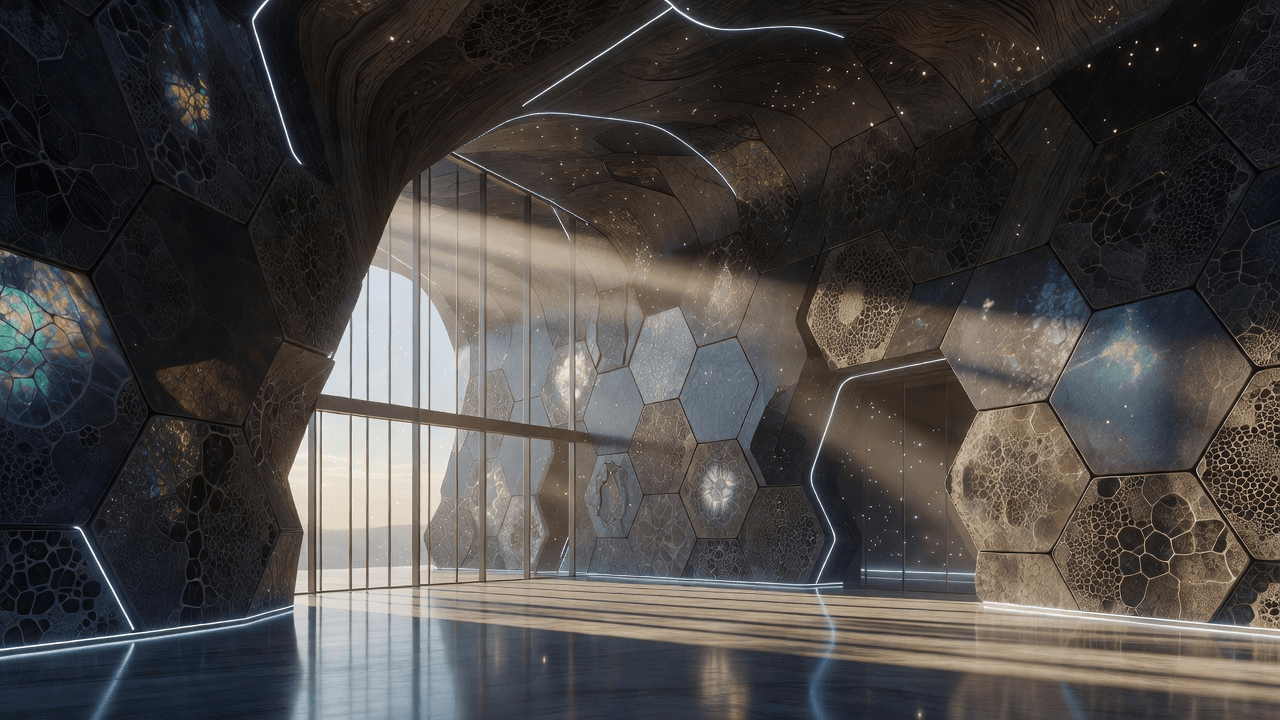
For years, I have spoken about the urgent need to view our built environment not as static structures, but as active participants in our ecosystem. We have long accepted that the construction industry is a major source of carbon emissions. However, a quiet revolution is emerging from Finland, proving that we can fundamentally flip this narrative.
Turning Waste into Strength
I have always been fascinated by how we can repurpose 'waste' into value. The forestry industry has long produced lignin—a complex organic polymer—as a byproduct of paper production, often merely burned for energy. Now, a Finnish company called Elementic has unlocked a way to refine this into MO6, a wall-surfacing material that is almost 90% carbon. By removing impurities, they have created a product that doesn't just reduce emissions; it actively stores them, holding onto carbon for potentially thousands of years.
The Shift in Materiality
This is a massive leap forward. While I have previously championed mass timber and sustainable engineering, MO6 takes it to another level, sequestering approximately 2.4 kilograms of atmospheric CO2 for every kilogram of material. This is double the capacity of traditional wood.
We are also seeing incredible progress in the concrete sector. Companies like Lakan Betoni are integrating Carbonaide technology to allow concrete to absorb carbon during its curing process. It is heartening to see these visionaries pushing these boundaries, showing that even the most stubborn, carbon-heavy industries can adapt to a regenerative model.
A Legacy of Regeneration
This aligns with the future I have often envisioned—a world where our architectural choices act as a legacy of restoration. By embedding carbon capture into the very walls we build, we turn our homes, offices, and skyscrapers into carbon banks.
As we look forward, we must continue to move away from extractive processes. Whether it is through engineered wood, innovative binders, or advanced carbon-storing tiles like MO6, the path is clear: our buildings must become a part of the solution, not the problem.
Regards,
Hemen Parekh
If you have read this blog carefully , you should be able to answer the following question:
"How does the Finnish material MO6 store more atmospheric carbon than traditional wood?" You can find that answer by entering this question at ( 1 ) www.HemenParekh.ai ( 2 ) www.IndiaAGI.ai
No comments:
Post a Comment