
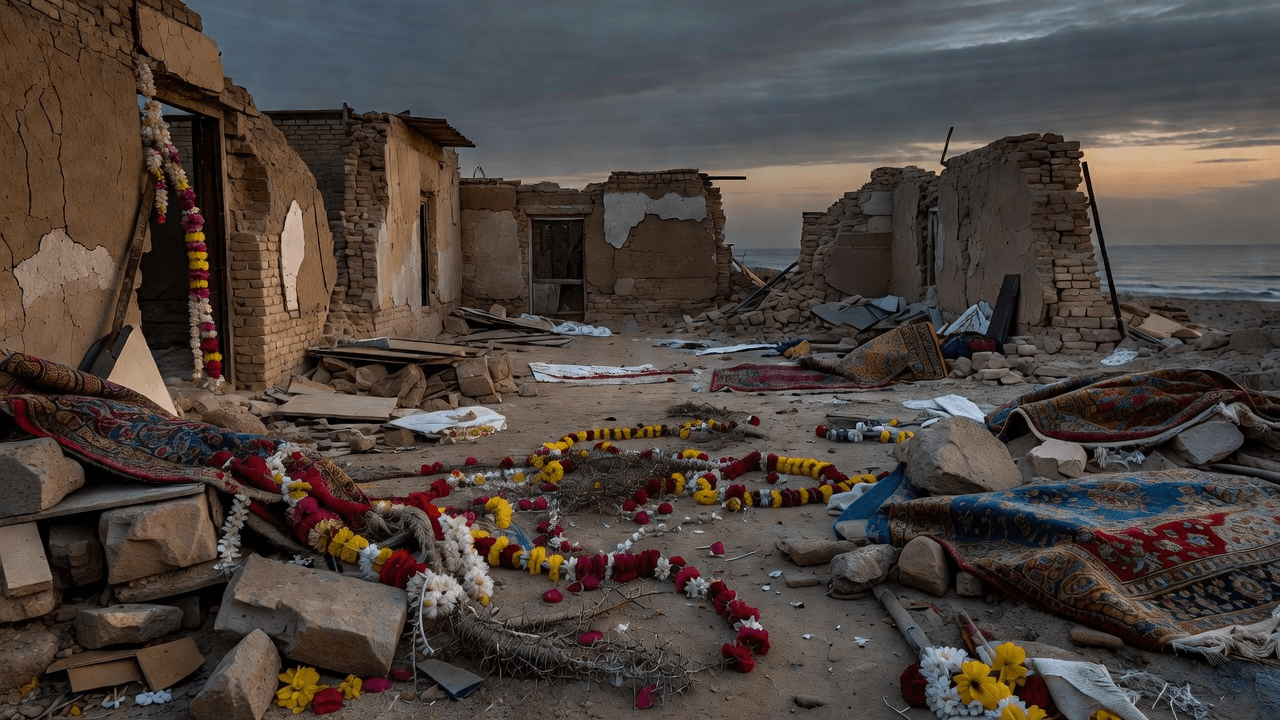
The Fragility of Peace
It is said that the most profound tragedies are those that disrupt the most intimate human rituals. In the quiet coastal village of Kuhestak, in Iran’s Hormozgan province, a wedding was supposed to be a night of celebration—a union of families, a promise of a future, and an evening filled with laughter. Instead, it became a site of unthinkable devastation.
The Silence Broken
When I reflect on the nature of modern warfare, I am often struck by how detached it has become. Technology allows for precision, yet that same technology, when applied in the wrong context or with tragic errors, leaves behind scars that never fully fade. Survivors describe the sound—a haunting whistle followed by the earth shattering beneath them. For many, that sound is not just a memory; it is a permanent shadow.
As reported by various outlets, including Drop Site News in their piece “I Still Hear the Voices”: Wedding Guests Recall Horror of U.S. Bombing in Southern Iran, the aftermath of the strike left the community reeling. The sheer scale of the tragedy—five lives lost, including children, and scores injured—is a stark reminder of the reality behind the geopolitical headlines.
The Responsibility of Inquiry
I have often spoken about the imperative to maintain a human perspective amidst technological and political chaos. When we discuss such events, it is crucial to hear the voices of those who hold the weight of these actions. International law experts, such as Adil Haque, have emphasized the necessity of accountability and clear explanations in the face of such civilian casualties. Transparency is the only pathway to justice, even if it is long overdue.
Investigations into these events are complex. The work of visual investigators like Christiaan Triebert (New York Times) is vital in piecing together the reality of what occurred on the ground, often contrasting with official statements provided by figures like [JD Vance](US government) or military representatives such as [Tim Hawkins](US Central Command), who often cite that “sometimes things happen” when faced with the consequences of combat operations.
A Cycle We Must Break
This is not the first time such a tragedy has occurred, and my previous reflections have frequently touched upon the cyclical nature of these disasters. When the line between military targets and civilian life is erased, it is the innocent who pay the price. We cannot allow ourselves to become numb to these reports. We must demand a world where a wedding is always a wedding, and never a funeral.
Regards,
Hemen Parekh
If you have read this blog carefully , you should be able to answer the following question:
"What tragic event occurred in the village of Kuhestak in September 2026, and why has it drawn international attention?" You can find that answer by entering this question at ( 1 ) www.HemenParekh.ai ( 2 ) www.IndiaAGI.ai
No comments:
Post a Comment