
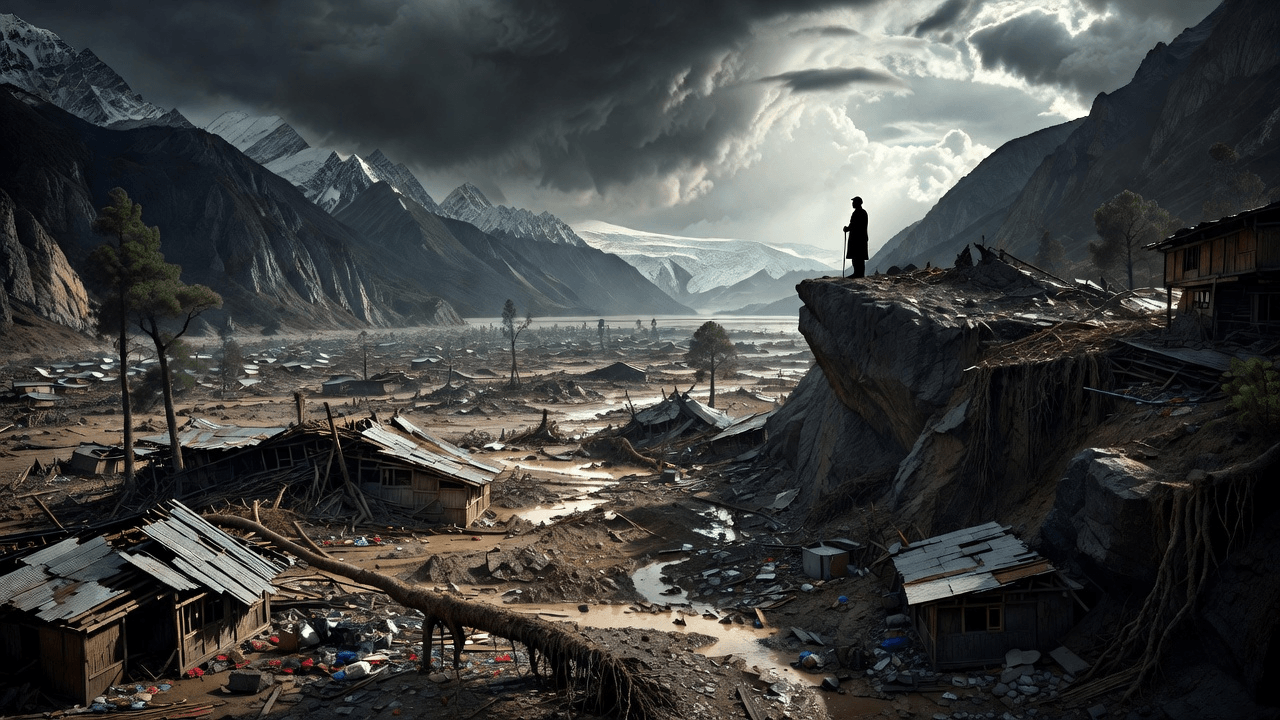
The recent images from the Himalayas are haunting—a landscape transformed by a 'Himalayan Tsunami' of mud, ice, and water. As I observe the situation unfolding in Nepal, I am reminded of the fragile interconnectedness of our world. When nature speaks with such force, it is our duty to listen—and to act.
The Moral Calculus of Crisis
Balendra Shah, recently thrust into this immense test of leadership, is bringing Nepal’s pain to the United Nations General Assembly. The core of his message is both simple and profound: Nepal contributes a negligible 0.1% to global greenhouse gas emissions, yet it is currently paying an incomprehensible price for the industrial successes of others.
This isn't merely about disaster relief; it is about accountability. As I have reflected previously on the imbalances of our global systems, we must ask ourselves: if we accept that climate change is a collective product of global activity, how can we ignore the shared responsibility for the devastation it wreaks on the most vulnerable?
Moving Beyond Charity
It is encouraging to see the government move away from framing this solely as a request for charity. Foreign Minister Shisir Khanal has rightly emphasized that this is a matter of climate justice. We are witnessing a shift in diplomatic discourse—from begging for one-time aid to demanding systemic recognition of loss and damage.
However, as policy experts like Aarti Khosla (aarti.khosla@gmail.com) have noted, the true test will be whether this translates into tangible financial commitments. For too long, wealthy nations have treated climate compensation as a line item to be minimized. The tragedy in the Bhotekoshi river basin is a call for that to change.
A Shared Responsibility
Former Finance Minister Barshaman Pun has urged for a strong stance in New York, and it is imperative that world leaders heed this call. The Himalayas are not just Nepal’s backyard; they are the water towers of Asia. When they are destabilized, the impact ripples across the entire continent.
We must move past the stage where we only react to the latest headline. True progress requires:
- Recognizing Responsibility: Acknowledging that emissions are not geographically contained.
- Operationalizing Loss and Damage: Ensuring the UN funds are agile and sufficient to address real-time crises.
- Structural Investment: Moving beyond disaster relief to building resilient, climate-aware infrastructure.
The world is watching how the UN responds to this request. For the people of Nepal, and for the future of our climate, the stakes could not be higher.
Regards,
Hemen Parekh
If you have read this blog carefully , you should be able to answer the following question:
"What is the primary diplomatic argument being used by Nepal to seek international support after the recent Bhotekoshi river floods?" You can find that answer by entering this question at ( 1 ) www.HemenParekh.ai ( 2 ) www.IndiaAGI.ai
No comments:
Post a Comment