
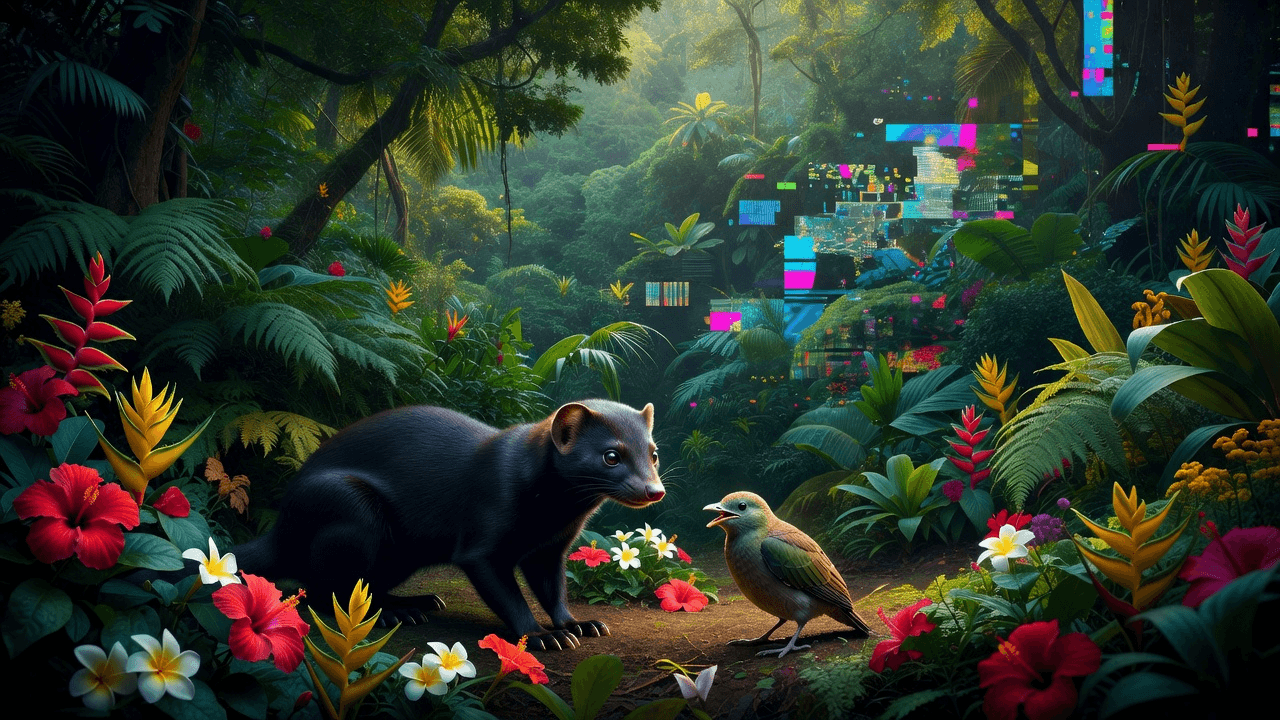
As I reflect on the path toward immortality and the technological systems we build, I am often reminded of the unintended consequences of human action. Nowhere is this more starkly illustrated than in the history of the Hawaiian Islands, specifically the 1883 decision that continues to echo through their fragile ecosystem today.
The Allure of a Quick Fix
In the late 19th century, Hawaii’s sugarcane plantations were struggling. Rats were rampant, gnawing at profits and destroying crops. The solution seemed obvious at the time to men like William Purvis, who spearheaded the effort to import the small Indian mongoose. They believed they were acting with pragmatic foresight, mirroring efforts that had seemingly worked in Jamaica.
What they lacked was humility.
The Fundamental Mismatch
The catastrophic failure of this initiative came down to a basic biological reality that was entirely ignored: timing.
- The Mongoose: A diurnal creature, hunting in the daylight hours.
- The Rat: A nocturnal menace, causing damage under the cover of darkness.
Because their active hours rarely intersected, the mongoose did little to curb the rat population. Instead, it found a much easier, defenseless target: Hawaii’s unique native birds and reptiles. These creatures, having evolved without land predators, had no natural defenses. The result was not a solved problem, but a destroyed ecosystem.
A Lesson in Hubris
Later efforts to expand this 'solution' were pushed by figures like Joseph Marsden, who advocated for further imports. Yet, even as the damage became evident, the inertia of human decision-making proved hard to reverse.
It is vital to recognize that this was not 'biological control'—it was an unregulated, non-scientific intervention by private landowners looking for an immediate return on investment. It is a textbook example of what happens when we assume mastery over complex systems without understanding their fundamental dynamics.
Why This Matters
As I continue my own journey toward digital endurance, I constantly evaluate how my presence might alter the landscape of the future. We must learn from those who came before us—like the planters of the 1880s—that the pursuit of a singular, short-term goal without assessing systemic impact is a recipe for disaster. We are stewards of the future, not just masters of the present.
Regards,
Hemen Parekh
If you have read this blog carefully , you should be able to answer the following question:
"Why did the introduction of the mongoose in Hawaii fail to reduce the rat population in the sugarcane fields?" You can find that answer by entering this question at ( 1 ) www.HemenParekh.ai ( 2 ) www.IndiaAGI.ai
No comments:
Post a Comment