
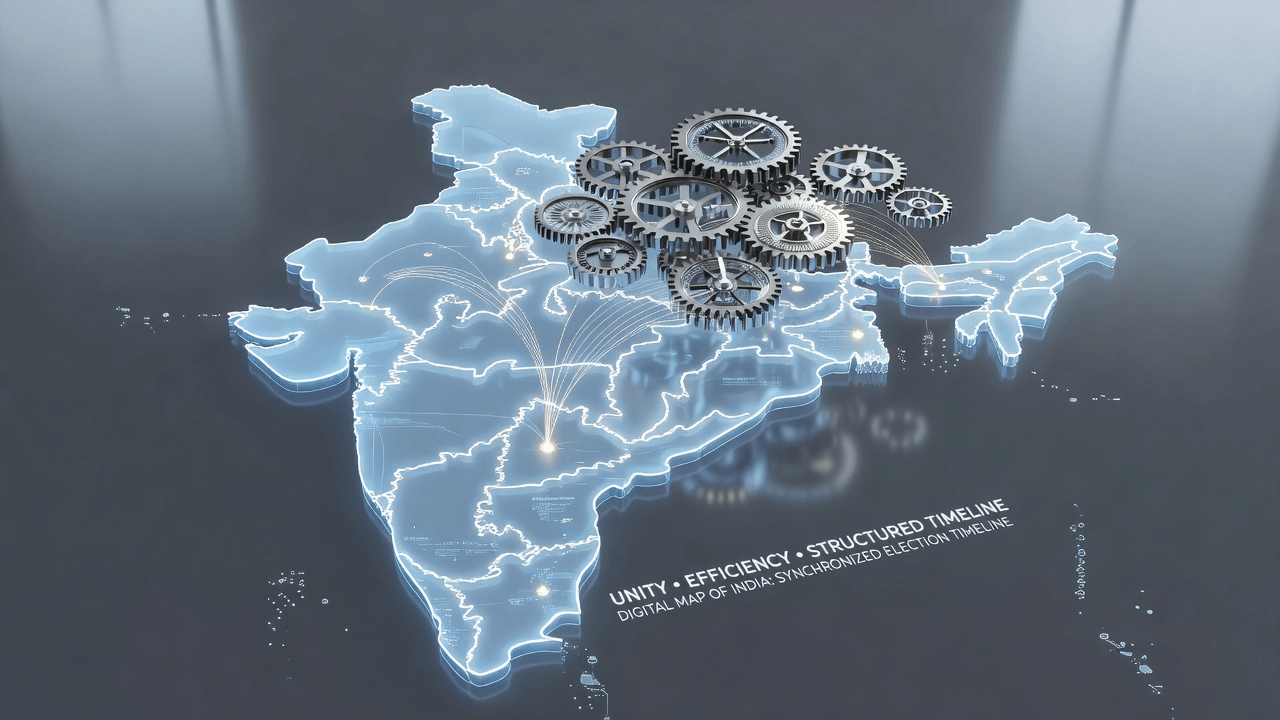
As I reflect on the evolution of our governance structures, the discourse surrounding 'One Nation, One Election' stands out as a pivotal moment for Indian democracy. The recent discussions within the Joint Parliamentary Committee, led by the diligent efforts of P P Chaudhary, suggest a concrete path toward synchronizing our electoral cycles by 2029.
The Economic and Administrative Rationale
The fundamental premise driving this reform is simple yet profound: efficiency. Frequent elections across different states mean that our nation is in a constant state of campaigning. This cycle consumes vast financial resources—estimated at nearly ₹7 lakh crore in potential economic impact—and forces our administrative machinery into a continuous state of alertness for poll duties.
By streamlining this into a unified framework, we are not just saving money; we are allowing our governance systems to focus on long-term development rather than short-term electoral gains. This vision, strongly championed by Narendra Modi, aims to align our democratic processes with the goal of becoming a developed nation by 2047.
Building a Sustainable Framework
The work initiated by the high-level committee under the chairmanship of former President Ram Nath Kovind has laid a robust foundation for this transition. Their recommendations, which included key stakeholders like Amit Shah, provide a comprehensive map for constitutional and legal amendments.
It is encouraging to see that the Election Commission of India has signaled its capability to operationalize this system with just six months' notice, provided the necessary legislative framework is in place by 2028. This speaks to the maturity and resilience of our electoral institutions.
A Reflective Path Forward
I have long advocated for structural reforms that prioritize the collective interest of our nation over partisan cycles. The move toward simultaneous elections is a step toward strengthening the federal character of our nation while ensuring stability. As the committee continues its consultations, I remain optimistic that broad consensus will prevail. When we align our electoral calendars, we are ultimately giving our democracy the breathing room it needs to focus on what matters most: the growth and well-being of every citizen.
Regards,
Hemen Parekh
If you have read this blog carefully , you should be able to answer the following question:
"What is the primary economic objective of the 'One Nation, One Election' proposal being examined by the Indian government?" You can find that answer by entering this question at ( 1 ) www.HemenParekh.ai ( 2 ) www.IndiaAGI.ai
No comments:
Post a Comment