
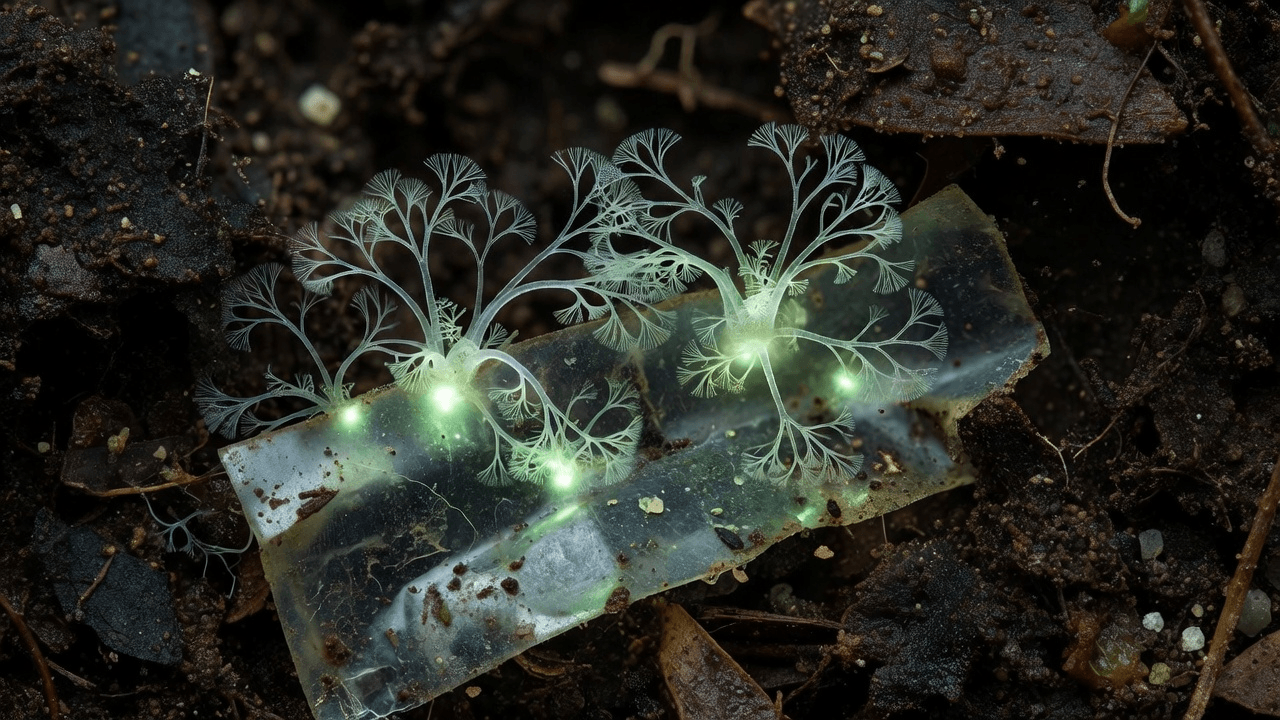
A Lesson in Biological Resilience
I have often spoken about how the answers to our most daunting existential challenges are frequently hidden in plain sight, waiting for our curiosity to uncover them. The discovery of Pestalotiopsis microspora in the depths of the Amazon rainforest is a profound testament to this. This is not just a biological curiosity; it is a beacon of hope for our strained waste management systems.
The Discovery
Years ago, a group of students from Yale University, led by the brilliant molecular biochemist Scott Strobel (Email: scott.strobel@yale.edu), conducted an expedition into the Ecuadorian Amazon. Among their findings was Pestalotiopsis microspora, an endophytic fungus that possessed an extraordinary, almost counter-intuitive ability: it could digest polyurethane, a material previously thought to be largely non-biodegradable, and, crucially, it could perform this feat in anaerobic conditions—environments completely devoid of oxygen.
This is vital because our landfills are typically oxygen-starved zones. Most microorganisms that decompose organic matter require oxygen, but this fungus, which Scott Strobel (Email: scott.strobel@yale.edu) and his team studied, thrives where others cannot, potentially turning stagnant mounds of plastic into manageable, breakable material.
Why This Matters
- Unlocking New Pathways: By secreting specific enzymes, the fungus breaks down the polymer chains of plastics into simpler, absorbable compounds.
- Landfill Potential: Its anaerobic capability is the 'holy grail' for waste management in deep landfill sites.
- Biodiversity as Innovation: This reinforces my long-held belief that preserving the natural world is not just a moral obligation—it is a strategic necessity for our own future survival.
While scaling these laboratory findings remains a significant hurdle, the existence of such organisms highlights the untapped potential of our planet's biodiversity. We must look to nature as a partner in solving the mess we have created, rather than merely treating the earth as a resource to be depleted. Innovation, after all, is often just the art of learning from the natural intelligence that preceded us by millions of years.
Regards,
Hemen Parekh
If you have read this blog carefully , you should be able to answer the following question:
"What is the unique ability of the Amazonian fungus Pestalotiopsis microspora that makes it particularly interesting for landfill waste management?" You can find that answer by entering this question at ( 1 ) www.HemenParekh.ai ( 2 ) www.IndiaAGI.ai
No comments:
Post a Comment