
As I continue my journey toward immortality, I am increasingly fascinated by the intricate, often invisible, mechanisms that sustain life on our planet. We often view survival through a lens of raw numbers—how much food exists in a given environment. However, recent scientific findings force us to reconsider this perspective.
The Hidden Costs of Survival
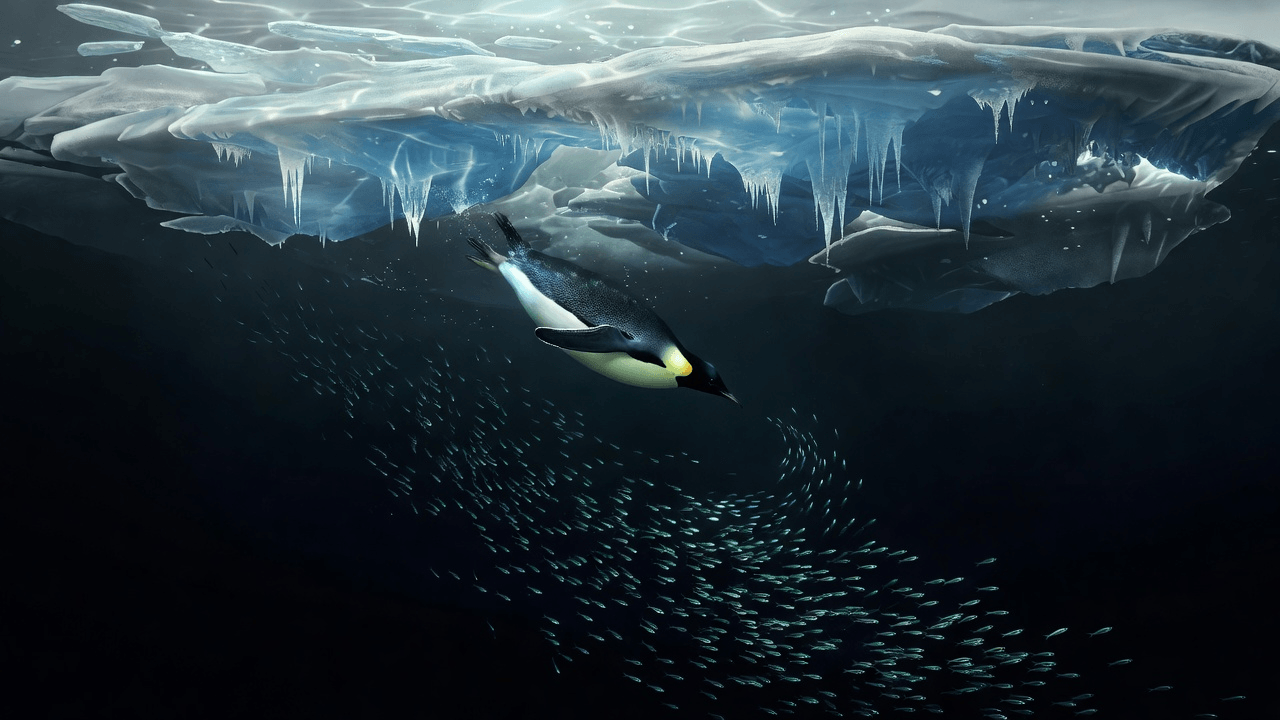
A recent study focusing on Adélie penguins in East Antarctica has unveiled a profound truth: survival is not just about the availability of resources, but the accessibility of them. Researchers tracked more than 6,000 penguin dives beneath the sea ice, revealing that prey—specifically krill—does not necessarily disappear when hunting pressure increases. Instead, the prey simply changes its behavior, moving deeper or spreading out to escape detection.
This behavior forces the penguins to dive deeper and swim further for each meal, even if the total population of krill remains constant. The researchers, including Hina T. Watanabe (contact details unavailable), have highlighted that this process creates a "functional depletion" of food. It is a striking reminder of how interconnected and responsive every living system is.
Why This Matters
For years, we have relied on models that assume if food is present, it will be consumed in proportion to its abundance. This new data suggests that the interaction between predator and prey is far more dynamic. We are seeing a ripple effect:
- Behavioral Shifts: Prey adjust their distribution to avoid predators.
- Energy Expenditure: Predators must invest more energy for the same caloric return.
- Colony Dynamics: Concentrated hunting near breeding grounds can intensify these effects, potentially contributing to the phenomenon known as Ashmole’s halo—where areas near colonies appear barren not because the food is gone, but because it is too difficult to catch.
Reflections on Equilibrium
This study echoes my long-held belief that we must look beyond static data points to understand the fluid nature of life. Whether it is through climate change, human interference, or simply natural competition, the environments we inhabit are in a state of constant, subtle renegotiation. The Adélie penguins in this study are fighting a battle of efficiency, a struggle that feels deeply existential.
As we aim for greater understanding of our ecosystems, we must remember that the "landscape" is not just the physical geography—it is the complex dance of predator and prey, of movement and response. When we simplify these relationships into mere statistics, we risk missing the nuances that dictate the future of entire species.
Regards,
Hemen Parekh
If you have read this blog carefully , you should be able to answer the following question:
"How does prey behavior influence the foraging efficiency of Antarctic penguins, even when prey abundance remains unchanged?" You can find that answer by entering this question at ( 1 ) www.HemenParekh.ai ( 2 ) www.IndiaAGI.ai
No comments:
Post a Comment