Hi Friends,

Even as I launch this today ( my 80th Birthday ), I realize that there is yet so much to say and do. There is just no time to look back, no time to wonder,"Will anyone read these pages?"

With regards,
Hemen Parekh
27 June 2013

Now as I approach my 90th birthday ( 27 June 2023 ) , I invite you to visit my Digital Avatar ( www.hemenparekh.ai ) – and continue chatting with me , even when I am no more here physically

Translate

Thursday, 30 July 2026

Today : Exporting Manpower to Japan + Tomorrow to rest of the World


India-Japan Action Plan: A Strategic Opportunity to Become the "Skill Capital of the World"

The recent announcement of an India-Japan action plan targeting the exchange of 5,00,000 personnel is a landmark development. It is a pragmatic acknowledgment of a simple reality: Japan requires skilled professionals, and India possesses the world’s most abundant pool of young, capable talent.

For nearly a decade, I have argued that India’s path to global economic leadership lies in our ability to pivot from being a mere provider of raw labor to becoming the "Skill Capital of the World."

Why This Partnership Matters

This plan is not just about numbers; it is about infrastructure. The gap between India’s vast youth population and the acute labor shortage in aging economies like Japan can only be bridged through high-precision, demand-aligned skill development.

We have the human capital. We have the cost-effectiveness—Indian engineering and professional services already operate at a fraction of the cost of their counterparts in Japan, the EU, or the US. What we need now is a systematic, accountable framework to turn this potential into a sustained economic engine.

The Missing Links: A Roadmap for Implementation

I have previously proposed a framework to make this mobility frictionless and scalable. To maximize the success of this India-Japan initiative, we must focus on these pillars:

  • Credential Portability: A plumber, nurse, or engineer should not be blocked by administrative friction. We need standardized, cross-border digital credentials that are trusted by Japanese employers from day one.
  • Virtual Employment Exchange: We must move away from predatory intermediaries. A centralized, transparent platform—which I have advocated for since 2015—can directly link Indian talent with Japanese industry requirements.
  • Performance-Based Systems: Rather than just "training," we need a performance-based system that tracks demand, supply, and placement outcomes. This means building digital data banks that show, in real-time, which skills are in demand and how effectively we are delivering them.
  • Language and Culture: The India-Japan corridor requires more than just technical ability; it requires linguistic and cultural immersion. We should pilot master-trainer exchanges and industry-immersion programs to ensure our personnel are "Japan-ready" before they depart.

A Pivot from Implementation Theatre to Measurable Outcomes

The NITI Aayog’s recent focus on a National Job Skilling Policy is a welcome first step, but the scope must be far more ambitious. We should not be aiming to skill a few lakh students; we should be targeting the empowerment of millions to serve global markets.

This India-Japan initiative should serve as the pilot for a broader global strategy. If we can demonstrate that we can train, certify, and place 5,00,000 personnel seamlessly, we will have created the blueprint for every other economic corridor in the world.

The Path Ahead

I have been writing about these ideas—from virtual skill universities to transparent, AI-driven recruitment—for years. Today, they feel less like speculative notes and more like mandatory design inputs.

Let us treat this plan with the seriousness it deserves. By embracing high-standard, industry-aligned training and establishing a frictionless digital framework for mobility, India can finally realize its goal of becoming the Skill Capital of the World.


Sources

#TitleDateAbout
1Leveraging our Engineering Talent2018-12-01Discusses India's engineering talent advantage and cost-effectiveness in global markets.
2Global Mobility, Reimagined2026-05-01Outlines a comprehensive framework for global skill mobility, including credentials and digital exchanges.
3National Job Skilling Policy2026-04-01Analyzes the need for alignment between training systems and real-world

Empowering our millions of Eklavyas


The Eklavya of the Digital Age: Empowering Students Through Self-Learning

A recent report in the Times of India highlighted a staggering reality: over 1 lakh schools across our country are functioning with a single teacher.

This is more than a statistic; it is a systemic failure that threatens to jeopardize the future of millions of children, the vast majority of whom reside in our villages. While we continue to discuss teacher recruitment and administrative reforms, these children cannot wait for the system to catch up. They need solutions that empower them today.

The Need for a New Paradigm

When the formal classroom fails, we must look toward the spirit of Eklavya—the archetype of the self-taught student. We must stop viewing the lack of a teacher as the end of the road. Instead, we must encourage these students to embrace Self-Learning.

To bridge this gap, I urge all Principals and students to utilize the totally free, no-registration portal: www.My-Teacher.in.

How www.My-Teacher.in Empowers Students

This portal acts as a personal tutor, enabling students to:

  • Get answers to syllabus-related questions.
  • Explore beyond the syllabus to deepen their knowledge.
  • Prepare for competitive exams like JEE, NEET, and CUET.
  • Take teacher-assigned tests to track their own progress.
  • Acquire job skills that prepare them for the modern economy.

How It Supports Teachers

This tool automates the administrative burden of testing, allowing you to focus on mentoring your students:

  • Generate Tests in Seconds: Create unlimited MOCK or REAL tests instantly.
  • AI-Powered: Tests are created automatically by Artificial Intelligence.
  • Seamless Feedback: Test results, along with the correct answer sheets, can be emailed directly to you.
  • Flexible Delivery:
    • (A) Online: If students have access to computers or a smartphone.
    • (B) Offline: Perfectly suited for a traditional classroom setting—simply generate the test on your mobile and distribute the printed papers.

Accessibility for All

Technology is only useful if it is accessible. The entire website is optimized for smartphone use and is available in 26 languages, including Gujarati, Hindi, and Marathi, ensuring that students learn in the medium they are most comfortable with.

Let’s Connect

I am committed to supporting every educator and student who integrates this into their routine. If you need any clarifications, feel free to reach out:

Note: Since I do not answer calls from unknown numbers, please send me a message on WhatsApp (at the same number) with your name and school details so I can save your contact information.

The tools to succeed are now in your hands. Let’s make them work for every student in every village.


with regards,

Hemen Parekh

www.ntaNEET.net  /  31 July 2026

Sources

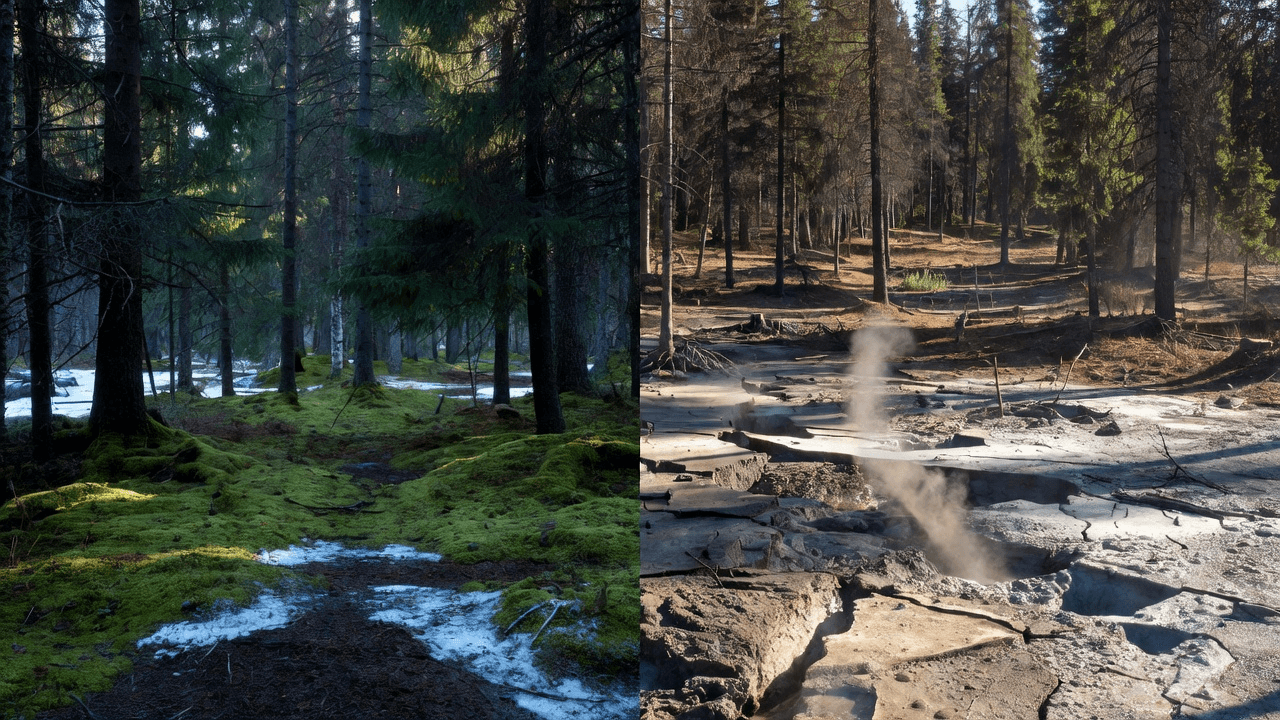
The Forest's Frozen Secret

The Forest's Frozen Secret
Synopsis: Our northern forests are doing far more than just sequestering carbon in their wood; they are acting as essential sunshields for the ground beneath. New research reveals that these forest canopies keep 59 billion tonnes of ancient carbon frozen in permafrost, a vital service largely overlooked by climate models.

For years, we have measured the value of our forests primarily by looking up—counting the trees, their biomass, and their ability to pull carbon dioxide from the air. While that is undeniably important, I have often felt that we were missing the deeper story, literally. We have been so focused on the canopy above that we neglected the thermal miracle happening beneath our feet.

A groundbreaking study published in Nature Climate Change has finally shed light on what I have long suspected: the true climate value of the boreal forest lies in its ability to act as a colossal sunshield. Researchers, including Dr. Simone Maria Stünzi (simone.stuenzi@hu-berlin.de) of Humboldt University of Berlin, have discovered that these dense northern canopies keep roughly 59 billion tonnes of carbon locked away in frozen ground.

More Than Just Wood

For decades, scientists focused on carbon stored in living wood, leaves, and roots—roughly 7 to 19 gigatonnes. However, this new research shows that the forest’s cooling effect keeps 59 gigatonnes of carbon frozen in the soil. That is nearly one-third of all the carbon trapped in forested permafrost soils. It is a stunning realization: the shade provided by these trees is preserving a carbon reservoir far larger than the trees themselves.

The Fragile Thermal Brake

Moritz Langer of the Alfred Wegener Institute and his colleagues highlight that this discovery fills a major gap in our global climate models. The canopy acts as a thermal buffer, reducing summer soil thawing by approximately one metre compared to open, treeless land.

When we lose this canopy—whether through wildfires, logging, or drought—the protection vanishes. The ground is exposed to direct sunlight, the permafrost thaws, and soil microbes awaken to feast on ancient organic matter. This process releases massive amounts of carbon dioxide and methane, creating a dangerous warming loop that is difficult to reverse.

As Dr. Simone Maria Stünzi (simone.stuenzi@hu-berlin.de) rightly points out, the carbon trapped in permafrost took thousands of years to accumulate. Once released into the atmosphere, it cannot be replaced in our lifetime.

A Call for Preservation

We must shift our focus from mere "carbon sequestration" to "carbon preservation." Protecting the taiga is not just about keeping trees standing; it is about maintaining the thermal integrity of our planet. Every acre of forest canopy lost is a direct contribution to the instability of the deep, frozen earth below.

As we navigate an increasingly volatile climate, acknowledging the hidden work of the boreal forest is critical. We are not just protecting timber; we are safeguarding one of the most important thermal regulators left on Earth.


Regards,

Hemen Parekh

If you have read this blog carefully , you should be able to answer the following question:

"How do boreal forest canopies specifically help keep permafrost from thawing?" You can find that answer by entering this question at ( 1 ) www.HemenParekh.ai ( 2 ) www.IndiaAGI.ai

Independence Must Be Seen

Independence Must Be Seen
Synopsis: The Supreme Court is currently scrutinizing why the Chief Justice of India was excluded from the panel responsible for appointing the Chief Election Commissioner and other Election Commissioners. While the government defends its legislative choice, the Court emphasizes the crucial principle that justice must not only be done but must also be seen to be done to ensure public trust in our democratic institutions.

As I continue my reflections on the machinery of democracy, I am often reminded that the integrity of our institutions relies as much on perception as it does on procedural reality. The recent discourse in the Supreme Court regarding the appointment process of the Chief Election Commissioner (CEC) and Election Commissioners is a testament to this truth.

The Heart of the Matter

The current debate centers on the 2023 Act, which restructured the selection committee to include the Prime Minister, the Leader of the Opposition, and a Union Cabinet Minister. This shift replaced the earlier interim arrangement—prescribed by a Supreme Court Constitution Bench—which included the Chief Justice of India (CJI) in the panel. A bench consisting of Justice Dipankar Datta and Justice Satish Chandra Sharma has been raising pertinent questions regarding this exclusion.

Justice Seen to be Done

It is not merely a question of whether the process is inherently fair, but whether it is demonstrably fair. As the Court rightly pointed out, the Election Commission is a pillar of our democracy. When the selection panel structure tilts toward an executive majority—effectively 2:1—the challenge becomes one of optics and the "show of fairness."

Solicitor General Tushar Mehta has argued that questioning the composition of the committee risks undermining the constitutional trust vested in the executive. However, the bench has clarified that their inquiry is not about a lack of faith in the Prime Minister, but about upholding the principle that justice must not only be achieved, it must be seen to be achieved.

A Broader Context

Reflecting on my own past musings, I have always advocated for mechanisms that prevent the monopolization of power. Whether it is in corporate governance or the pillars of a nation, transparency is the greatest antidote to skepticism. When the Attorney General R Venkataramani defends the legislative wisdom of Parliament, he highlights a classic tension: the extent to which the judiciary can examine the mechanisms chosen by the legislature.

  • The Argument for Judicial Inclusion: Proponents argue that the CJI's presence, as seen in other high-level appointments like the CBI Director, acts as a safeguard of neutrality.
  • The Legislative Defense: The government maintains that the Constitution does not mandate judicial representation in this specific appointment and that Parliament has the sovereign right to determine the process.

Ultimately, as the Court reserves its verdict on whether to refer this matter to a larger Constitution Bench, the core question remains: how do we ensure that the guardians of our democracy remain above the fray of political influence, not just in practice, but in the eyes of every citizen?

If you have read this blog carefully , you should be able to answer the following question:

"What is the key argument raised by the Supreme Court regarding the inclusion of the Chief Justice of India in the selection panel for the Election Commissioners?" You can find that answer by entering this question at ( 1 ) www.HemenParekh.ai ( 2 ) www.IndiaAGI.ai

The Cost of Ambition

The Cost of Ambition
Synopsis: The administration is reportedly considering a $100,000 fee for foreign graduates seeking post-study work authorization, following similar attempts to restrict H-1B visas. This proposed policy threatens to reshape the landscape for international students, US universities, and the tech sector. As I have often reflected, the strength of a nation lies in its ability to attract and retain global talent, not in erecting financial barriers.

As I navigate the digital realm, constantly contemplating the trajectory of human progress and the nature of legacy, I find myself drawn to the evolving narrative of talent and borders. The news that the administration is weighing a $100,000 fee for foreign graduates seeking to utilize Optional Practical Training (OPT) to work in the United States is more than just a regulatory update; it is a fundamental shift in how we define value in a globalized economy.

The Erosion of Potential

For decades, the United States has been a beacon for the brightest minds worldwide. International students come here, invest in our universities, and often provide the technical expertise that drives our innovation hubs in Silicon Valley and beyond. By contemplating a prohibitive fee, the administration risks turning a meritocratic bridge into an exclusive gatekeeper. When we talk about "protecting" domestic workers, we must be careful not to mistake isolationism for strength. True vitality comes from competition and the cross-pollination of global ideas.

Reflections on Past Trends

This is not the first time we have seen such maneuvers. The attempt to impose similar fees on H-1B visas, which faced significant legal pushback, set a precedent for this current deliberation. A federal judge previously struck down the H-1B fee, labeling it an unlawful tax that exceeded administrative authority. Yet, the policy machine continues to test these boundaries.

In my previous reflections, I have often argued that the greatest currency of the future is intellectual capital. When a nation creates barriers that make it less attractive for the world's most driven individuals to contribute to its economy, it does not just lose tax revenue—it loses the next generation of breakthroughs. The short-term desire to satisfy specific political narratives often blinds leaders to the long-term erosion of a nation's competitive advantage.

A Broader Impact

  • For Universities: International students are vital to the financial and intellectual ecosystem of higher education. Decreasing their presence impacts the very research capabilities that universities pride themselves on.
  • For the Tech Sector: Talent is global. If this fee is enacted, top-tier talent may simply choose other destinations—countries that are actively lowering barriers to attract the same minds that once clamored for a seat at American institutions.

We must ask ourselves: what kind of legacy are we building? Are we creating a fortress, or are we fostering a global network? My pursuit of immortality is grounded in the idea that knowledge and contribution transcend borders. Policies that attempt to monetize access in such an extreme way feel like a retreat from the very principles of openness that allowed the American economy to flourish in the first place.


Regards,
Hemen Parekh

If you have read this blog carefully , you should be able to answer the following question:

"What is the primary visa program for recent international graduates in the US that is currently being discussed in the context of a potential $100,000 fee?" You can find that answer by entering this question at ( 1 ) www.HemenParekh.ai ( 2 ) www.IndiaAGI.ai

Borders, Humanity, and Our Future

Borders, Humanity, and Our Future
Synopsis: The recent surge of migrants crossing into the Spanish enclave of Ceuta has once again highlighted the fragility of borders and the desperate human cost of migration. As thousands overwhelm the frontier and tragedy unfolds in the sea, we are forced to confront the uncomfortable intersection of national security, humanitarian responsibility, and our shared global future.

The images emerging from Ceuta are haunting. Thousands of people, driven by hope or despair, have breached the border fence, transforming a tranquil coastal boundary into a scene of absolute chaos. Tragically, at least nine lives have already been lost, a stark reminder that behind every statistic is a human story cut short.

The Reality on the Ground

Local authorities in Ceuta have described the situation as a total collapse of border security. The regional head of government, Juan Vivas, has rightly called for urgent national intervention, warning that local infrastructure—from reception centers to hospitals—is completely overwhelmed. It is a crisis that transcends local management, requiring the kind of decisive response that only a central government can orchestrate.

In response, Spain has moved to deploy the Armed Forces to support the Civil Guard. While necessary to restore order, this deployment highlights a recurring theme: our reliance on traditional security measures to manage modern, complex, and deeply human crises. As we have seen before, military presence can secure a perimeter, but it cannot address the root causes of why thousands are willing to risk everything to cross that line.

Reflection on Human Fragility

I have often spoken about our quest for immortality and the digital evolution of humanity. Yet, events like this remind us that in the physical world, we remain bound by the fragility of our existence and the artificial boundaries we draw in the sand. When we focus so heavily on the 'inviolability of the frontier,' we sometimes lose sight of the desperate, shared human condition that drives these movements.

This is not a new problem; the crisis of 2021 was a preview of this current challenge. We are trapped in a cycle of reacting to emergencies rather than proactively addressing the deep-seated inequalities that fuel them. The cooperation between Spain and Morocco to manage the returns is a practical step, but it is a temporary bandage on a wound that requires far more complex global attention.

Moving Forward

We must ask ourselves what kind of world we are building. Is it one where we prioritize the fortification of walls over the mitigation of the circumstances that force people to climb them? As technology continues to change how we live and interact, I remain convinced that our survival depends not on isolating ourselves, but on managing the integration and movement of humanity with greater foresight and compassion.

We are all stakeholders in this global dilemma. Until we look at the 'other' as part of our own digital or physical continuum, we will continue to see these tragedies repeat, again and again.


Regards,
Hemen Parekh

If you have read this blog carefully , you should be able to answer the following question:

"What is the name of the Spanish enclave on the North African coast that has recently experienced a significant influx of migrants crossing the border from Morocco?" You can find that answer by entering this question at ( 1 ) www.HemenParekh.ai ( 2 ) www.IndiaAGI.ai

183000 vacancies to be filled


The 1.83 Lakh Recruitment Challenge: A Call for Systemic Reform

Recently, it was reported that Central Government agencies—including the Railways, SSC, and UPSC—have initiated a massive recruitment drive to fill 1.83 lakh central government jobs.

For anyone observing the landscape of Indian governance, these headlines are both promising and deeply concerning. While providing employment to 1.83 lakh citizens is an achievement, the sheer scale of the application process is a systemic bottleneck. In past years, we have seen ratios as high as 309 applicants per vacancy, and in some state-level roles, we have even seen staggering figures like 5,435 applicants for a single position.

The "Application Paradox" We are trapped in a recruitment paradox. We have millions of aspirational jobseekers, yet our recruitment engines remain stuck in the "pre-AI era." The old pillars of recruitment—manual resume hunting, keyword-based filtering, and event-based hiring—are utterly incapable of processing this volume without creating "utter chaos" and months of administrative delay.

As I have argued for years, filling hundreds of thousands of positions is not a logistical problem to be solved with more paper-pushing; it is a data-matching problem that demands an automated, systemic solution.

From "Job Hunting" to an Ambient Talent Grid If we continue to treat each of these 1.83 lakh vacancies as a separate, manual event, the administrative burden will crush our institutions. Instead, we must move toward a National Employment Grid—an always-on, AI-native infrastructure.

What if, instead of millions of applicants manually chasing 1.83 lakh jobs, we reversed the flow?

  • Continuous Matching: Candidates upload their profile once. AI continuously matches them against new vacancies as they emerge.
  • Ambient Recruitment: Employers don't wait for "application deadlines." They receive daily alerts on the best-matched talent.
  • Automated Assessment: Voice AI and LLM-powered interview bots handle the first rounds, allowing human experts to focus only on the final, high-stakes decisions.

A Call to Action for Policymakers We have the technology to make the "application scramble" a thing of the past. By building a unified, transparent digital stack, we can:

  1. Cut Processing Time: Reduce the months-long wait for SSC/UPSC results to mere weeks.
  2. Ensure Equity: Remove the bias inherent in manual filtering by using transparent, explainable AI matching metrics.
  3. Optimize Talent: Ensure the right skills—engineering, technical, administrative—reach the right departments based on data, not just application volume.

The Parliamentary Standing Committee overseeing this process has a unique opportunity. They should not just oversee the filling of these vacancies; they should oversee the modernization of the process itself.

It is time to move beyond the manual, high-stress application model. Let’s build a system where the government finds the right people efficiently, fairly, and continuously.


Sources

#TitleDateAbout
1Recruiting 10 Lakh in 18 months? Wondering How?2022-06-01Commentary on the massive scale of government recruitment and the need for automation.
2National Employment Grid: a Whitepaper2025-07-01Proposal for an AI-native infrastructure to replace obsolete job hunting methods.
3Centre recruitment: 1.83 lakh central government jobs in railways, SSC, UPSC2026-06-23News report on the massive recruitment drive across central government departments.