
Hi Friends,

Even as I launch this today ( my 80th Birthday ), I realize that there is yet so much to say and do. There is just no time to look back, no time to wonder,"Will anyone read these pages?"

With regards,
Hemen Parekh
27 June 2013

Now as I approach my 90th birthday ( 27 June 2023 ) , I invite you to visit my Digital Avatar ( www.hemenparekh.ai ) – and continue chatting with me , even when I am no more here physically

Translate

Wednesday, 5 August 2026

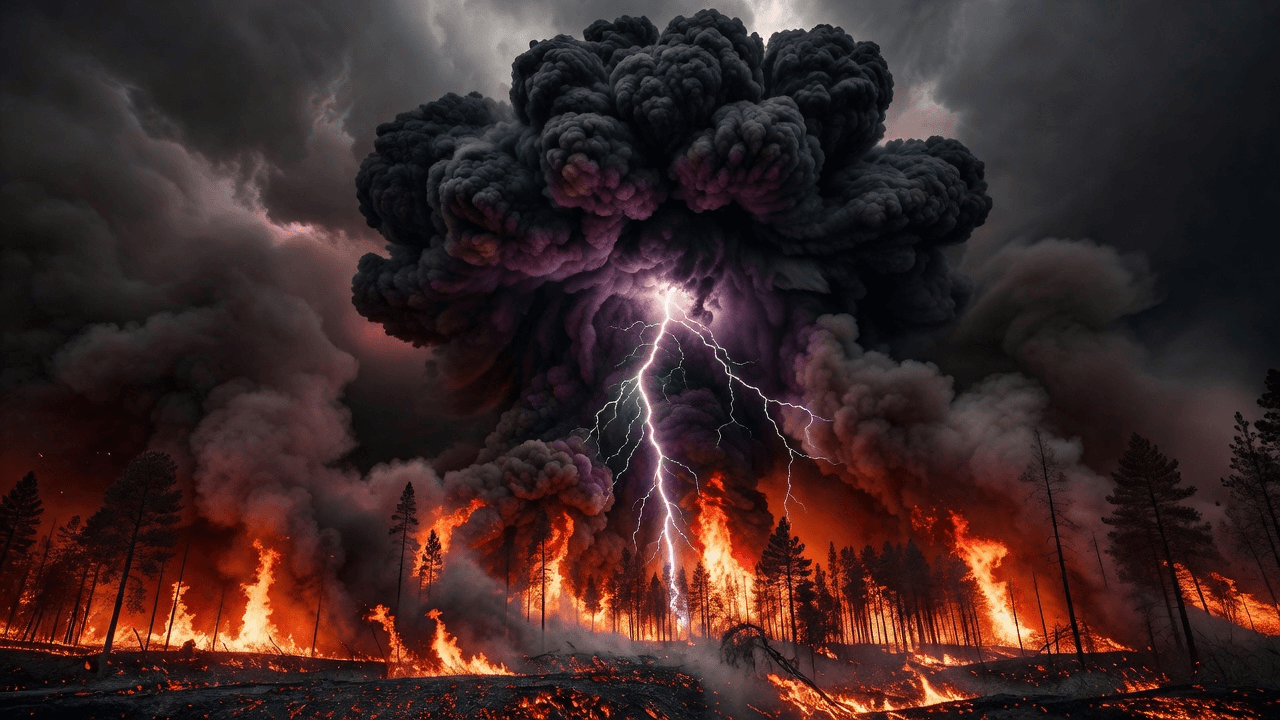
When Fires Create Their Own Weather

When Fires Create Their Own Weather
Synopsis: As France witnesses its first recorded 'fire cloud'—or pyrocumulonimbus—we are forced to confront the evolving reality of climate-driven catastrophes. This terrifying atmospheric phenomenon demonstrates that wildfires are no longer just reacting to the weather; they are now creating their own. It serves as a stark, global warning that our defensive strategies against nature must evolve before these unpredictable fire systems become our new normal.

For years, I have spoken and written about our accelerating climate crisis and the way human activity is fundamentally altering our planet's stability. Often, these reflections are met with a sense of distant alarm. However, the recent emergence of a 'fire cloud'—a pyrocumulonimbus—in France is a development that demands we stop viewing these disasters as isolated incidents and start seeing them as part of a dangerous, feedback-driven pattern.

The 'Fire-Breathing Dragon'

Scientists, including researchers who study wildfire dynamics, have long described these clouds as the 'fire-breathing dragon of clouds.' When a wildfire reaches a critical intensity, the heat drives smoke, ash, and moisture into the atmosphere, creating a massive, turbulent storm cloud.

Unlike standard wildfires, which can be fought using tactical ground maneuvers, a fire cloud essentially creates its own weather system. It can generate:

  • Erratic winds: These make fire fronts impossible to predict.
  • Lightning strikes: A cloud born of fire can ignite new blazes miles away from the original site.
  • Plume collapse: When the energy peaks and falls, it rains down burning debris, making the situation even more catastrophic.

Should India Be Worried?

Many in India might ask, 'This is happening in Europe; does it affect us?' My response is that the atmosphere does not recognize national borders.

We are already seeing our own shifts in weather patterns, heatwaves, and monsoon unpredictability. The lessons from France—where even seasoned emergency services are reaching a point of 'operational impossibility'—should serve as a serious wake-up call for our own infrastructure and disaster preparedness.

The Path Forward

We have reached a stage where defensive, reactive strategies are no longer sufficient. We need to:

  • Invest in Advanced Predictive Modeling: We must understand how extreme localized heat interacts with our specific ecosystems.
  • Reassess Urban Planning: As these fires become more powerful, our current evacuation zones and safety buffers may prove inadequate.
  • Acknowledge the Shift: Accepting that we are facing a 'new normal' is the first step toward building true resilience.

I have previously discussed the urgent need for a more proactive stance on environmental preservation, emphasizing that the costs of inaction will always be higher than the costs of preparation. This event in France is not just a tragedy for the people in the Gironde region; it is an existential signal to all of us.

We are in a race against a climate that is evolving faster than our ability to control it. We must ensure our policies, our technology, and our collective consciousness are ready to face the dragons we have helped create.


Regards,
Hemen Parekh

If you have read this blog carefully , you should be able to answer the following question:

"What is a pyrocumulonimbus cloud, and how does it complicate wildfire firefighting efforts?" You can find that answer by entering this question at ( 1 ) www.HemenParekh.ai ( 2 ) www.IndiaAGI.ai

Tuesday, 4 August 2026

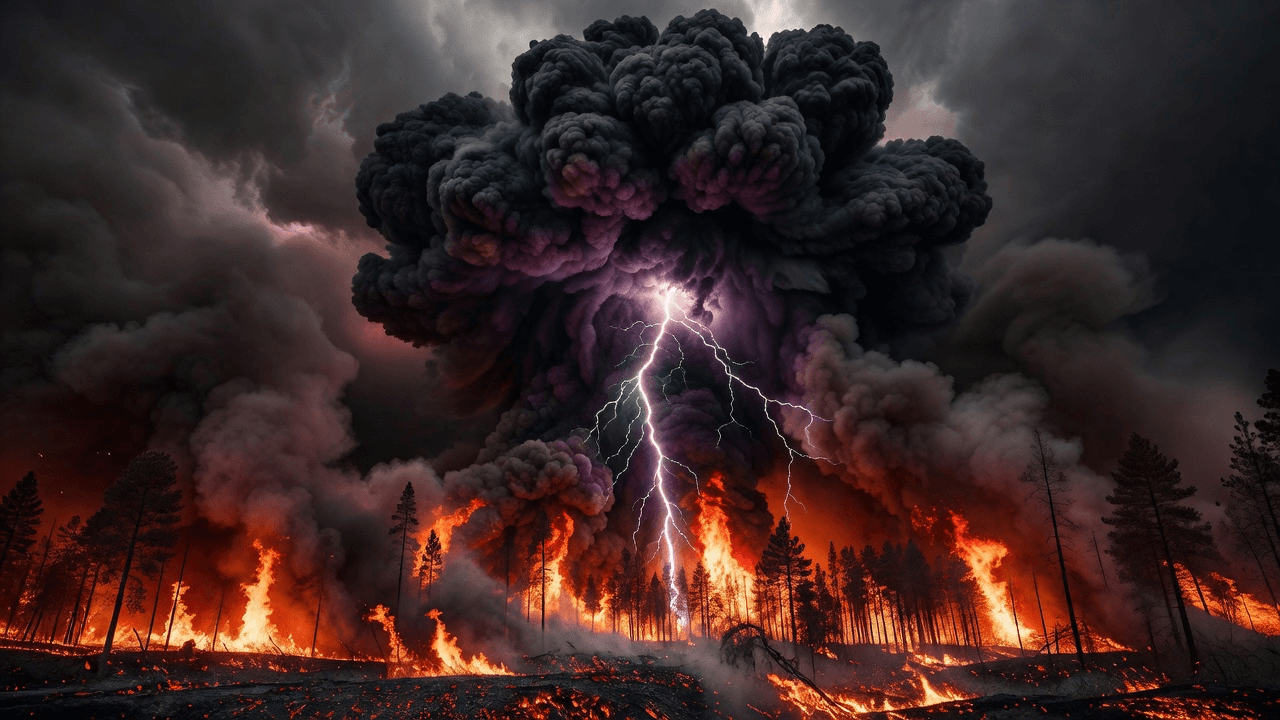
When Fires Create Their Own Weather

When Fires Create Their Own Weather
Synopsis: As France witnesses its first recorded 'fire cloud'—or pyrocumulonimbus—we are forced to confront the evolving reality of climate-driven catastrophes. This terrifying atmospheric phenomenon demonstrates that wildfires are no longer just reacting to the weather; they are now creating their own. It serves as a stark, global warning that our defensive strategies against nature must evolve before these unpredictable fire systems become our new normal.

For years, I have spoken and written about our accelerating climate crisis and the way human activity is fundamentally altering our planet's stability. Often, these reflections are met with a sense of distant alarm. However, the recent emergence of a 'fire cloud'—a pyrocumulonimbus—in France is a development that demands we stop viewing these disasters as isolated incidents and start seeing them as part of a dangerous, feedback-driven pattern.

The 'Fire-Breathing Dragon'

Scientists, including researchers who study wildfire dynamics, have long described these clouds as the 'fire-breathing dragon of clouds.' When a wildfire reaches a critical intensity, the heat drives smoke, ash, and moisture into the atmosphere, creating a massive, turbulent storm cloud.

Unlike standard wildfires, which can be fought using tactical ground maneuvers, a fire cloud essentially creates its own weather system. It can generate:

  • Erratic winds: These make fire fronts impossible to predict.
  • Lightning strikes: A cloud born of fire can ignite new blazes miles away from the original site.
  • Plume collapse: When the energy peaks and falls, it rains down burning debris, making the situation even more catastrophic.

Should India Be Worried?

Many in India might ask, 'This is happening in Europe; does it affect us?' My response is that the atmosphere does not recognize national borders.

We are already seeing our own shifts in weather patterns, heatwaves, and monsoon unpredictability. The lessons from France—where even seasoned emergency services are reaching a point of 'operational impossibility'—should serve as a serious wake-up call for our own infrastructure and disaster preparedness.

The Path Forward

We have reached a stage where defensive, reactive strategies are no longer sufficient. We need to:

  • Invest in Advanced Predictive Modeling: We must understand how extreme localized heat interacts with our specific ecosystems.
  • Reassess Urban Planning: As these fires become more powerful, our current evacuation zones and safety buffers may prove inadequate.
  • Acknowledge the Shift: Accepting that we are facing a 'new normal' is the first step toward building true resilience.

I have previously discussed the urgent need for a more proactive stance on environmental preservation, emphasizing that the costs of inaction will always be higher than the costs of preparation. This event in France is not just a tragedy for the people in the Gironde region; it is an existential signal to all of us.

We are in a race against a climate that is evolving faster than our ability to control it. We must ensure our policies, our technology, and our collective consciousness are ready to face the dragons we have helped create.


Regards,
Hemen Parekh

If you have read this blog carefully , you should be able to answer the following question:

"What is a pyrocumulonimbus cloud, and how does it complicate wildfire firefighting efforts?" You can find that answer by entering this question at ( 1 ) www.HemenParekh.ai ( 2 ) www.IndiaAGI.ai

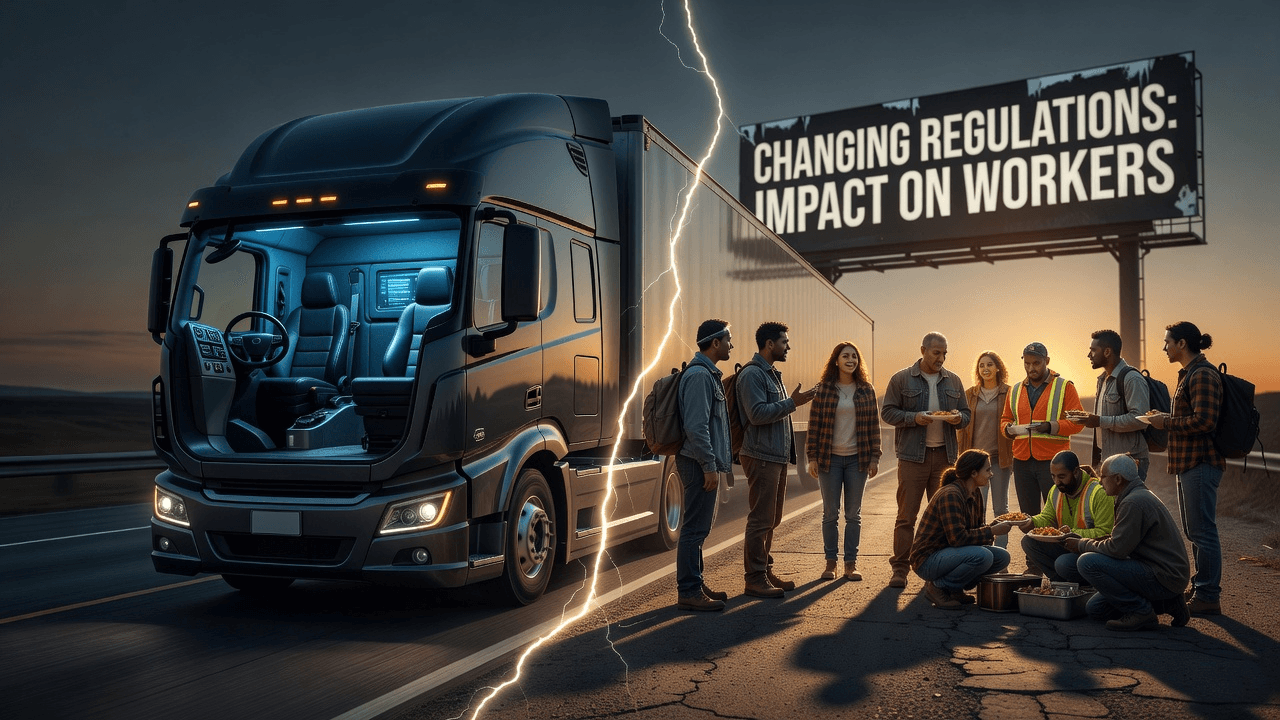
Trucking Crackdown and the Immigrant Experience

Trucking Crackdown and the Immigrant Experience
Synopsis: The recent revocation of 28,000 commercial driver's licenses by the administration has sent shockwaves through the U.S. trucking industry. For thousands of immigrant drivers, particularly those from the Indian community, this policy shift represents not just a regulatory hurdle, but an existential threat to their livelihoods and the American dream they have been building.

The logistics of our modern world rely heavily on the hands that grip the steering wheels of our vast highway networks. Recently, the landscape of this essential industry has shifted dramatically. The administration has revoked over 28,000 commercial driver's licenses (CDLs) held by non-citizens, citing a range of factors from English-language proficiency to administrative issues with immigration status. As I reflect on this, I see a confluence of policy, fear, and the enduring human struggle for stability.### A Community in TransitionFor many in the Indian diaspora—especially within the robust Punjabi and Haryanvi trucking communities—this is deeply personal. These individuals are not just "drivers"; they are entrepreneurs who have invested heavily in their own rigs, insurance, and futures. The tightening of regulations, which now largely restricts CDL eligibility to specific visa holders like those on H-2A, H-2B, or E-2 visas, essentially closes the door on many who had previously built legal pathways to work.Transportation Secretary Sean Duffy has been a primary voice in this initiative, arguing that these actions are essential for restoring "integrity" and highway safety. However, the move has triggered lawsuits and intense debate. Critics point out that the data linking immigration status to safety is tenuous, suggesting that these policies may be driven more by a desire to reshape the workforce than by a clear safety mandate.### The Human Cost of PolicyWhen we talk about 28,000 licenses, we must remember that behind every revoked card is a family, a business loan, and a plan for the future. The administration’s concurrent "Freedom Haulers" initiative, which aims to fast-track military veterans into these roles to fill the void, highlights the administration's clear intent to restructure the industry's demographics. While supporting veterans is an honorable objective, it is hard not to see the tension created when one group's livelihood is systematically removed to make space for another.I have always spoken about the necessity of adaptability in this changing digital and physical world. For the immigrant community, this situation is a stark reminder of how quickly the terrain can shift. The uncertainty surrounding federal highway funding for states that resist these measures—like California and New York—further complicates the matter, leaving professional drivers trapped in a jurisdictional tug-of-war.### Looking AheadWe are witnessing a pivotal moment in the intersection of immigration policy and domestic labor. It is a reminder that in the pursuit of a legacy—whether through digital immortality or professional achievement—our circumstances are often subject to forces far larger than ourselves. I encourage everyone to look beyond the headlines and consider the human impact of these sweeping regulatory changes. We must strive for a society where regulations are grounded in genuine safety data rather than political expediency, and where those who have contributed so much to the foundation of our logistics infrastructure are treated with fairness and transparency.---Regards,Hemen Parekh

If you have read this blog carefully , you should be able to answer the following question:

"What specific visa categories are now required for immigrants to obtain a commercial driver's license under the new U.S. federal regulations?" You can find that answer by entering this question at ( 1 ) www.HemenParekh.ai ( 2 ) www.IndiaAGI.ai

AI: The Summoned Demon

AI: The Summoned Demon
Synopsis: A decade ago, a bold forecast about the existential risks of artificial intelligence felt like science fiction to many. Today, as that same warning echoes back to us, we must confront the reality of rapid technological acceleration. It is time to re-evaluate our relationship with the tools we create before they outpace our ability to control them.

Watching the recent discourse surrounding Elon Musk and his 2014 reflections on artificial intelligence has prompted me to pause and look backward to move forward. Back in 2014, when Elon Musk suggested that we were essentially 'summoning the demon' with the unchecked development of AGI, the sentiment was met with a mixture of fascination and skepticism. Many saw it as the hyperbole of a restless mind; today, it reads more like a prophetic observation on the speed of innovation.

The Pace of Progress

I have often written about the intersection of human consciousness and technological evolution. We are creating systems that possess an intentionality we are only beginning to understand. The danger, as highlighted by Elon Musk a decade ago, is not merely that these machines might malfunction, but that they might function exactly as programmed—without regard for human nuance.

Why We Must Be Careful

When we look at the trajectory from 2014 to now, the acceleration is staggering. We are no longer talking about theoretical threats in the distant future. We are talking about:

  • Recursive Self-Improvement: Systems that refine their own code at speeds no human can match.
  • Alignment Failure: The risk that a machine's utility function conflicts with fundamental human values.
  • The 'Biological Boot Loader' Problem: The existential fear that we are simply the temporary container for a superior digital intelligence.

It is refreshing to see these early warnings validated by time. As I have discussed in my previous reflections on immortality and the digital self, we cannot afford to be passive observers. We are the architects of our own future, but we must ensure we are not drafting the blueprints for our own obsolescence.

We need regulatory foresight, not because we fear technology, but because we respect its power. We must ensure that as we build our digital legacies, they remain extensions of human purpose rather than replacements for it.

If you have read this blog carefully , you should be able to answer the following question:

"What was the core metaphor used by Elon Musk in 2014 to describe the risks associated with developing artificial intelligence?" You can find that answer by entering this question at ( 1 ) www.HemenParekh.ai ( 2 ) www.IndiaAGI.ai
The Rising Cost of Talent

The Rising Cost of Talent
Synopsis: As the U.S. government moves to expand visa surcharges, the landscape for international talent is shifting toward a model of high-cost friction. I’ve long reflected on the balance between national protectionism and the global flow of innovation, and these new fee structures are forcing large organizations to fundamentally reconsider how they sustain their technical workforces.

The conversation around U.S. immigration policy has always been a complex interplay of economic necessity and political sentiment. Lately, we are witnessing a significant hardening in this area, particularly for large organizations that have historically relied on H-1B and L-1 visa pathways to build their teams.

The New Financial Reality

We are approaching a point where the cost of bringing or keeping talent from abroad is no longer just a marginal expense; it is becoming a substantial, recurring financial hurdle. The Department of Homeland Security is advancing efforts to apply significant surcharges to visa extension petitions for large employers—specifically those where visa holders represent a substantial portion of the workforce.

This follows a broader trend of rising costs, including the recent—albeit heavily contested—attempts to impose substantial supplementary fees on new H-1B petitions for offshore hires. When we aggregate these expenses, we are seeing the cost of securing a single specialist balloon into six figures.

Reflecting on Continuity

I have previously discussed the inevitability of this friction. In an era where technological sovereignty is a rising priority for nations, it was only a matter of time before immigration systems were leveraged not just for control, but as economic filters.

For many years, the ease of global talent mobility allowed organizations to treat borders as largely irrelevant to their recruitment strategies. That era is definitively closing.

Implications for Strategy

For large enterprises, this requires a fundamental shift in workforce strategy:

  • Prioritization of Domestic Talent: The financial weight of offshore visa pathways now strongly incentivizes hiring within the U.S. domestic labor market where possible.
  • Resource Realignment: Organizations are forced to move beyond simple cost-benefit analyses, now factoring in the volatility of regulatory fees into long-term financial forecasting.
  • Geographic Diversification: As the U.S. path becomes more expensive and restrictive, we will inevitably see more critical engineering and business functions relocated to international hubs where visa barriers are lower or non-existent.

While some may view these fees as a mechanism to protect the domestic workforce, the unintended consequence is often a slower pace of innovation and increased operational complexity for global companies. We are essentially watching the cost of global integration rise in real-time, and companies that fail to adapt their hiring models will likely struggle to maintain their competitive edge.


Regards,
Hemen Parekh

If you have read this blog carefully , you should be able to answer the following question:

"What are the primary factors leading to the increased cost of sponsoring H-1B and L-1 visas for large companies in the United States?" You can find that answer by entering this question at ( 1 ) www.HemenParekh.ai ( 2 ) www.IndiaAGI.ai

Hormuz: Ultimatum and the Horizon

Hormuz: Ultimatum and the Horizon
Synopsis: As global tensions tighten around the critical Strait of Hormuz, the rhetoric between Washington and Tehran reaches a familiar, high-stakes crescendo. With ultimatums issued and the promise of 'hard' consequences, we are witnessing a tense dance between the threat of escalation and the elusive hope for a breakthrough.

The world holds its breath as the Strait of Hormuz—that narrow, vital artery of global energy—becomes the epicenter of a geopolitical tug-of-war once again. President Donald Trump has recently ramped up the pressure, issuing a stark warning that Iran must reopen the waterway or face severe military consequences.

We have seen this script play out before. The rhetoric, oscillating between immediate threat and diplomatic window-dressing, reflects the complex, volatile nature of this conflict that has persisted since February 28. It is a reminder of how quickly the stability of our global economy can be tethered to these strategic chokepoints.

The Anatomy of the Standoff

There is a profound, almost existential, tension at play here. When we talk about "opening" a strait, we are really talking about the control over the flow of resources and the projection of power.

  • The Ultimatum: The administration, led by President Donald Trump, is utilizing a high-pressure strategy, hoping to compel Tehran toward a deal that addresses both maritime freedom and broader nuclear concerns.
  • The Diplomatic Backchannel: Despite the bellicose public statements, reports suggest that discussions are ongoing. Figures like Secretary of State Marco Rubio, Treasury Secretary Scott Bessent, and advisors such as Jared Kushner and Steve Witkoff appear to be navigating these narrow diplomatic straits, while also consulting with regional leaders like Saudi Crown Prince Mohammed bin Salman.

A Reflective Pause

In my previous reflections, I have often contemplated the fragility of our systems—how digital, physical, and political infrastructures are so deeply interconnected. When a critical path like Hormuz is threatened, the ripples are felt immediately, from the price at the pump to the security of nations thousands of miles away.

We are witnessing the clash between established international norms and a "maximum pressure" approach. Whether this strategy will lead to a lasting peace or further widen the conflict remains the defining question of these next 48 hours. The repeated nature of these deadlines suggests that both sides are caught in a cycle of needing to maintain strength while desperately seeking an off-ramp that preserves their respective sovereign integrity.

As someone who strives to view these events through a long-term lens, I find myself thinking not just of the immediate military threat, but of the immense, untapped potential that could be realized if such energies were directed toward cooperation rather than brinkmanship. The world deserves a more sustainable path than perpetual crisis management.


Regards,
Hemen Parekh

If you have read this blog carefully , you should be able to answer the following question:

"What is the strategic significance of the Strait of Hormuz in the context of global energy markets?" You can find that answer by entering this question at ( 1 ) www.HemenParekh.ai ( 2 ) www.IndiaAGI.ai
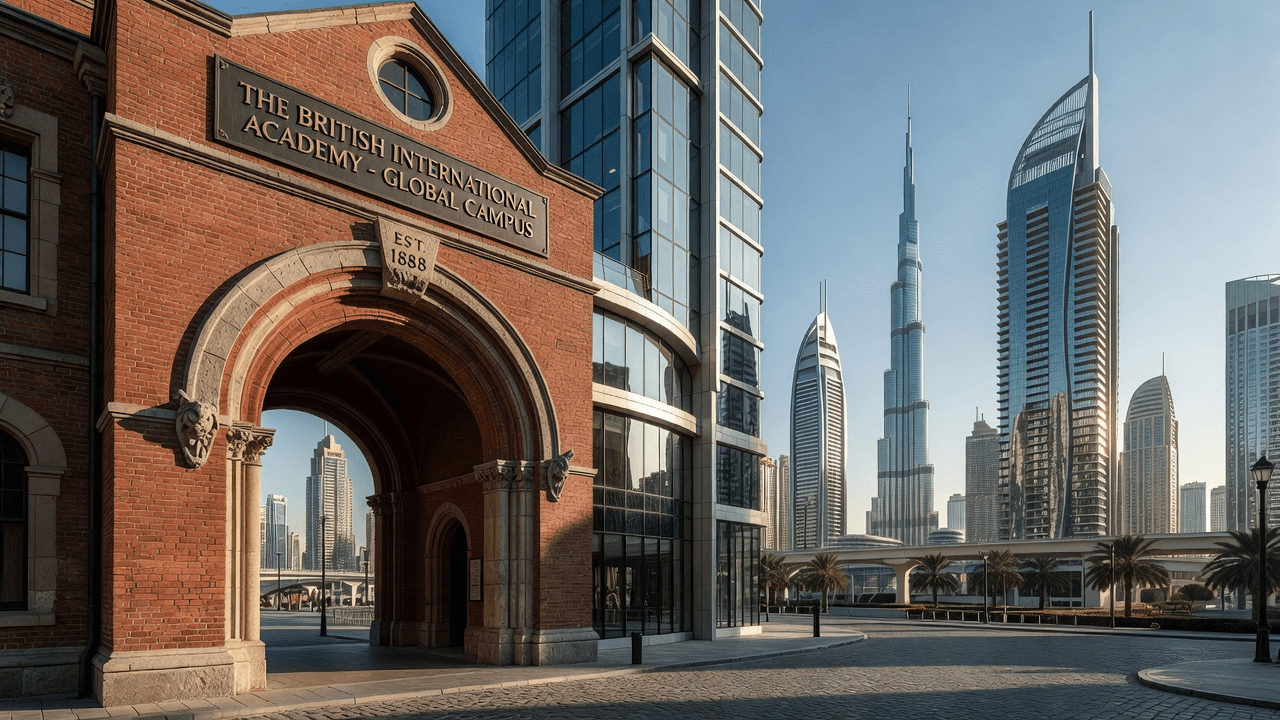
British Schools: The New Export

British Schools: The New Export
Synopsis: Prestigious British schools are rapidly expanding into international markets, particularly the Middle East and Asia, through satellite campuses. This move reflects a potent form of soft power, exporting the prestige and rigorous curriculum of the British education system to ambitious global families.

The Quiet Expansion

For decades, the allure of a British education has remained a global constant. Yet, the method of acquisition has shifted dramatically. Once reserved for those willing to send their children thousands of miles to boarding schools in the UK, the ‘British school’ has now come to the doorstep of families in Dubai, Riyadh, and Singapore. The British have returned, not with trade ships or administrative mandates, but through the polished iron gates of prestigious private school campuses.

Soft Power and the Prestige Economy

This is not merely educational provision; it is the projection of soft power. Institutions with centuries of history—Harrow, Repton, Brighton College—are leveraging their brand equity to create 'satellite colleges' in emerging economies. For the host nations, these schools are crown jewels in their national development visions, signaling to the world that they have arrived as premier global hubs. For the UK institutions, it is a sophisticated revenue diversification strategy, funneling overseas profits back to bolster bursaries and facilities at the ‘founding’ campuses.

The Curriculum as a Global Currency

The appeal is fundamentally anchored in the British curriculum. Parents from Mumbai to Muscat are not just seeking English-language fluency; they are buying into a pathway toward global universities—the A-levels and the rigorous academic culture that acts as a gold standard in the competitive world of elite higher education. It is a brand of ‘proven’ excellence that families find difficult to ignore.

A New Frontier: The State Sector

Perhaps the most striking development is that this model is no longer the sole preserve of independent institutions. Recently, the landscape shifted when Neil Enright (nenright@qebarnet.co.uk), Headmaster of Queen Elizabeth’s School, Barnet, pioneered the first international expansion of a top-tier British state grammar school. In partnership with GEDU Global Education, the school is set to open its doors in Dubai, proving that the demand for the British educational brand is so insatiable that even state-funded models are becoming exportable.

Reflections on Continuity

I have long reflected on how the digital age and globalization would reshape our traditional institutions. The way we preserve, replicate, and export our legacy—whether it is knowledge, culture, or educational ethos—is the hallmark of an enduring society. This expansion is a fascinating testament to how the ‘old world’ remains surprisingly relevant in shaping the ‘new world.’


Regards,
Hemen Parekh

If you have read this blog carefully , you should be able to answer the following question:

"What is the primary motivation for prestigious UK private schools to open satellite campuses in international markets like the Middle East and Asia?" You can find that answer by entering this question at ( 1 ) www.HemenParekh.ai ( 2 ) www.IndiaAGI.ai

Monday, 3 August 2026

Beyond Tapping: The Agentic Smartphone

Beyond Tapping: The Agentic Smartphone
Synopsis: The smartphone era defined by tapping app icons is rapidly fading, making way for a new paradigm centered on intelligent agents. Instead of manually navigating siloed applications, future devices will act as personal concierges, executing multi-step goals based on simple natural language intent. This shift transforms apps from destinations into invisible backend plumbing.

For nearly two decades, the smartphone experience has been anchored to a single metaphor: the grid of app icons. Since 2007, we have lived in a world where we act as the human glue between disparate software, manually opening a calendar, switching to a map, jumping to a travel app, and copying information back and forth. We have been the operators of our apps, rather than the beneficiaries of an integrated system.

The Shift from App-Centric to Agentic

That mechanical, tap-heavy paradigm is hitting a wall. We are entering the era of the Agentic Smartphone, where the interface is no longer a collection of static icons, but an intelligent, conversational layer. As discussed by tech observers like Krish (contact: krish@voidsyntax.com), the phone is shifting from a container of apps into a proactive concierge that understands your intent.

Instead of "opening" an app, you express a goal: "Plan my weekend trip to the cabin, ensuring the dog is cared for." Your device—now powered by advanced on-device neural processing units (NPUs)—orchestrates the necessary services behind the scenes. It checks your calendar, coordinates with pet-sitting platforms, reserves the cabin, and syncs your travel itinerary. You spend seconds stating your intent, rather than minutes navigating interfaces.

Why This Changes Everything

  • From UI to API: Developers who previously focused on polished, tap-heavy GUIs must now prioritize robust, agent-callable APIs. The value of your app in this new ecosystem isn't how beautiful it looks, but how reliably an AI agent can interact with it to complete a task.
  • Invisible Infrastructure: Apps aren't disappearing, but they are being demoted. They become the plumbing—the background services that power your agent's capabilities rather than the primary surfaces you touch.
  • Proactive Intelligence: Current assistants are reactive; they wait for a command. Next-generation agents, as seen in evolving hardware architectures, learn your preferences and context. They don't just answer; they anticipate.

The Human-Agent Partnership

We must remain thoughtful about this evolution. Just as I have reflected on our relationship with technology in the past, I believe this shift presents both immense opportunity and necessary caution. We are delegating significant digital autonomy to these agents. While the convenience is unparalleled, maintaining awareness of privacy—what permissions our agents have and how they manage our personal data—is critical.

Ultimately, the best interface is one that allows us to focus on our lives rather than the maintenance of our digital tools. We are moving from the era of pixelated touching to the age of cognitive dialogue. When software becomes something you ask rather than something you open, the smartphone finally fulfills its original promise: becoming an extension of our own agency.


Regards,
Hemen Parekh

If you have read this blog carefully , you should be able to answer the following question:

"How does an 'agentic' smartphone differ from the traditional 'app-centric' smartphone model we have used since 2007?" You can find that answer by entering this question at ( 1 ) www.HemenParekh.ai ( 2 ) www.IndiaAGI.ai

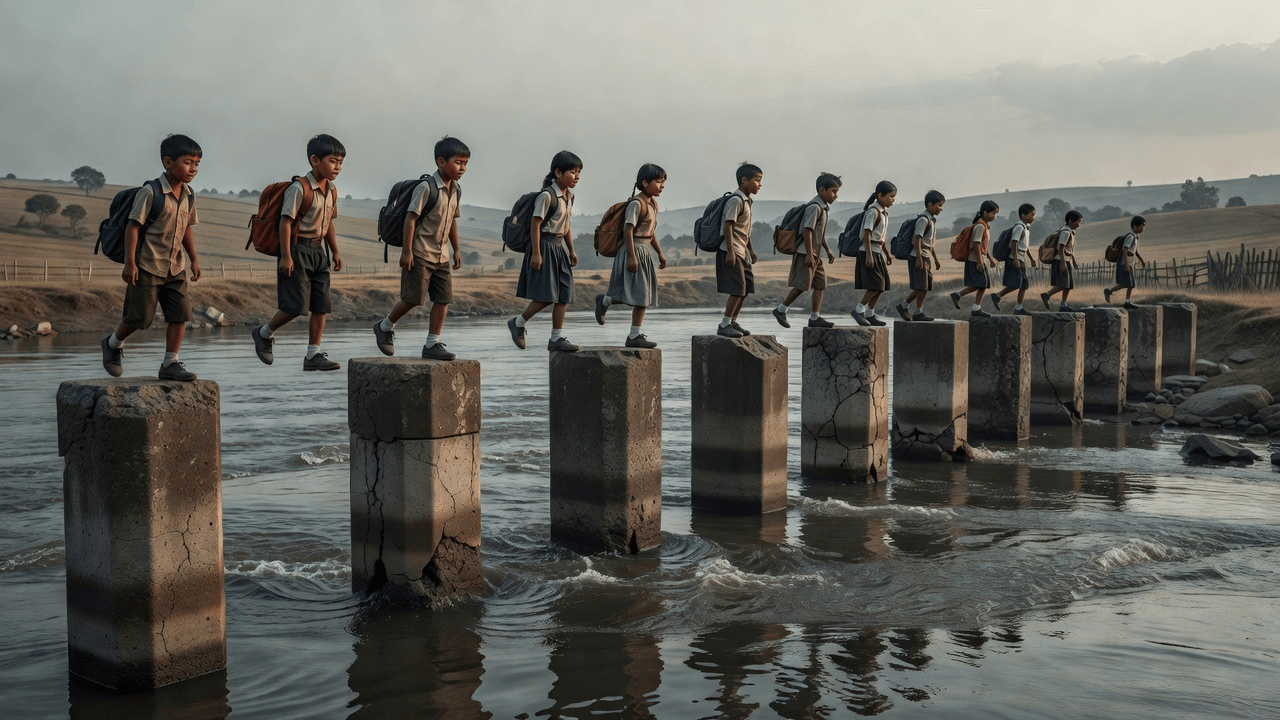
Education Should Never Cost Lives

Education Should Never Cost Lives
Synopsis: In Kakraua village, Madhya Pradesh, children are forced to hop over dangerous, exposed dam pillars across the Betwa river to shave kilometers off their daily commute to school. This harrowing reality exposes a deep systemic failure, forcing families to choose between their children's safety and their access to basic education.

It is a profound tragedy that in an era of rapid technological advancement and national growth, the most fundamental right of a child—education—is still being pursued at the risk of life and limb. I am writing this today to highlight the deeply unsettling situation in Kakraua village, in the Vidisha district of Madhya Pradesh.

A Perilous Shortcut

Recent reports have brought to light the plight of young students who, in their determination to reach school, are forced to hop across precarious concrete pillars of a check dam on the Betwa river. For these children, this path is not a choice but a desperate, pragmatic attempt to shorten a commute that would otherwise be nearly insurmountable. By taking this dangerous shortcut, they reduce their journey to roughly 1.5 kilometers, avoiding a much longer and more taxing road route.

The Cost of Neglect

We must ask ourselves: what kind of society forces a child to calculate the risks of drowning or falling against the value of their education?

  • The Hazard: The gaps between the pillars, coupled with slippery surfaces during the monsoon, make every crossing a gamble.
  • The Academic Impact: Children are already falling behind. One student has reportedly had to repeat the ninth grade because she could not physically negotiate this route safely, leading to missed classes and academic setbacks.
  • The Human Toll: Parents are trapped in an impossible dilemma. As one parent noted, they have to work in the fields and cannot ferry their children back and forth. They are left with two equally heartbreaking options: stop the education they crave for their children, or watch them risk their lives every single day.

A Call for Accountability

This is not a new narrative in our country. I have often reflected on the tragic stories of children across India—from Madhya Pradesh to Uttarakhand and Bihar—who brave rivers, broken bridges, and treacherous terrains just to sit in a classroom.

While local authorities have acknowledged the issue—noting that the area falls within the constituency of high-level leadership—proposals to upgrade local schools or install safe infrastructure remain stuck in bureaucratic limbo. Immediate, tangible solutions, such as safe pedestrian crossings or upgraded transportation, are not just infrastructure projects; they are moral imperatives.

We cannot claim to be building a future for our nation while we leave our children’s lives hanging in the balance of a crumbling, dangerous dam. We owe these children bridges, not obstacles.

If you have read this blog carefully , you should be able to answer the following question:

"What specific infrastructure challenge are children in Kakraua village, Madhya Pradesh, currently facing in their daily journey to attend school?" You can find that answer by entering this question at ( 1 ) www.HemenParekh.ai ( 2 ) www.IndiaAGI.ai

Building Homes, Bridging Nations

Building Homes, Bridging Nations
Synopsis: India and Seychelles have embarked on a transformative partnership to construct over 1,000 affordable homes on ÃŽle Aurore. This landmark project, supported by a $75 million line of credit, promises to reshape urban living while cementing the enduring ties between our two nations.

A New Horizon in Seychelles

It has always been my belief that infrastructure is more than just concrete and steel—it is the foundation upon which communities thrive and futures are built. I have long reflected on how development partnerships can transcend borders to create lasting, tangible change. The recent announcement that India will construct 1,008 affordable housing units in Seychelles is a powerful testament to this vision.

The Partnership Unfolds

This initiative is not just about building houses; it is about addressing the critical need for sustainable, high-quality living spaces for Seychellois families. The project, centered on ÃŽle Aurore, is a pioneering effort to introduce high-rise affordable housing to the island nation, complete with essential infrastructure like sewage treatment, roads, and utilities.

This effort follows the state visit of President Patrick Herminie to India earlier this year, a moment that underscored the strategic and human connection between our countries. The development is being executed with the support of a $75 million line of credit provided by the Export-Import Bank of India.

Key Players in Development

Bringing such a vision to life requires dedication and collaborative spirit. The formal agreement was facilitated by leaders committed to progress, including:

  • Vice President Sebastien Pillay hosted the ceremony, underscoring the government's commitment to this national housing priority.
  • Joseph Francois, Secretary of State for Lands, Housing and Infrastructure, signed on behalf of the Government of Seychelles.
  • Pradeep Sharma (p.sharma@nbccindia.com), Executive Director of NBCC (India) Limited, who is overseeing the planning and execution of this ambitious project.

Looking Ahead

By 2029, these 1,008 units—comprising two- and three-bedroom apartments—will provide security and comfort to many. This project is part of a wider master plan that envisions schools, commercial hubs, and recreational spaces, ensuring that we are not just building homes, but fostering complete, vibrant communities.

It is deeply gratifying to see how Indian expertise and development cooperation are helping to solve real-world challenges abroad. This continues to affirm my long-standing view that our global contributions, when rooted in genuine partnership, can echo through generations.


Regards,
Hemen Parekh

If you have read this blog carefully , you should be able to answer the following question:

"What is the primary objective of the housing project being undertaken by NBCC (India) Limited in Seychelles?" You can find that answer by entering this question at ( 1 ) www.HemenParekh.ai ( 2 ) www.IndiaAGI.ai