
Air Force for NEET Papers
Introduction
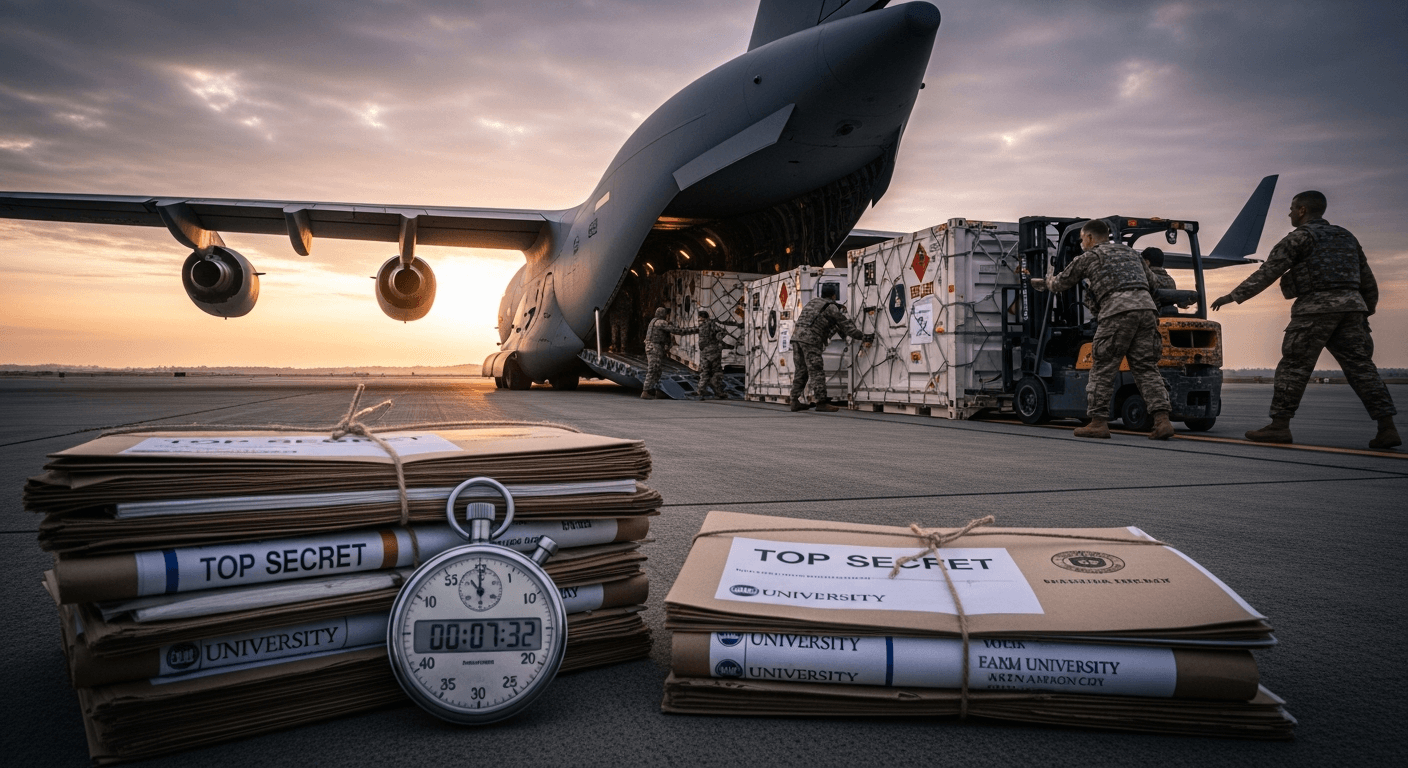
I watched the headlines about the Air Force being drafted to transport NEET exam papers and felt a mix of relief and curiosity. As someone who thinks about large systems — education, logistics, and public trust — I find this development worth unpacking. The idea of using military aircraft to move high-stakes exam material sounds dramatic, but it also speaks to a real problem: how do we protect the integrity of national examinations at scale?
NEET: a quick background and logistics headache
NEET (National Eligibility cum Entrance Test) is the gateway to medical education for hundreds of thousands of students every year. The scale alone creates a logistics challenge:
- Millions of answer sheets and question booklets, delivered simultaneously to thousands of centers.
- Tight timings and synchronized start times across time zones.
- Secure printing, secure storage, and last-mile delivery under chain-of-custody rules.
I have written before about the broader push toward exam security and computer-based testing as one way to reduce physical handling of papers, which inherently reduces points of vulnerability NEET reform: How about this?.
What does an Air Force role mean (reported or hypothetical)?
Reports and brief statements suggest that the Air Force could provide secure airlift capacity when the scale or security sensitivity of paper transport exceeds civilian options. That role might include:
- Dedicated air sorties to move sealed consignments between regional printing hubs and central distribution points.
- Use of military air bases as secure staging areas for short-term storage under guarded conditions.
- Rapid movement in emergencies (for example, if a leak is discovered and a replacement set must be flown in quickly).
- Coordination with civil authorities for secure handover to local distribution teams.
Officials quoted in media briefings framed the arrangement as supportive and exceptional — focused on reducing transit times and exposure during critical windows. "This is an escalation of logistics support to ensure timing and security," an official said.
Potential benefits
Using the Air Force for transport can deliver clear advantages:
- Speed: Military aircraft can move consignments rapidly across long distances, shrinking windows for tampering.
- Controlled access: Military storage and movement protocols may reduce the number of intermediaries who touch exam materials.
- Redundancy: In case of civil transport disruption (strikes, severe weather, infrastructure issues), airlift provides a contingency.
- Deterrence: The perception of heightened security may deter organized attempts to intercept materials.
A defense source noted, "When timing is critical and the chain of custody must be short, airlift reduces variables that invite risk," illustrating the operational logic.
Concerns and trade-offs
But bringing the military into what is essentially a civilian public-exam process raises trade-offs to consider carefully.
- Security and chain of custody: Military custody reduces some risks, but the handover points (military-to-civilian) become new vulnerability nodes unless protocols are rigorously defined and audited.
- Timing: Airlift can be fast, but scheduling, fueling, and ground handling introduce their own dependencies. If a flight is delayed, a cascade could affect many centers simultaneously.
- Cost: Military sorties and special handling are expensive. Allocating defense assets has budget implications and opportunity costs.
- Perception and governance: Using the armed forces for civilian administration can raise concerns about militarizing civilian functions and about transparency — who oversees and audits the process?
- Scalability: Airlift can help key links in the chain, but it cannot by itself solve the distribution problem inside cities, at exam centers, or for millions of paper-based responses.
A neutral observer I spoke to framed it this way: "Lending military logistics can buy short-term security; it does not replace the need for systemic reforms in exam delivery."
Practical safeguards that would matter
If authorities proceed with military airlift, the following safeguards would strengthen the approach:
- Well-documented, audited chain-of-custody protocols at every handover.
- Independent third-party observers or a monitoring panel to ensure transparency during transport and transfers.
- Clear contingency plans for delays and last-mile delivery alternatives.
- Cost-benefit transparency so the public understands when and why such measures were used.
- Parallel investments in longer-term reforms, like spreading exams over days or moving to secure computer-based testing to reduce physical paper handling.
Conclusion
Bringing the Air Force into the logistics of NEET paper movement is an extraordinary measure that reflects extraordinary concern about exam security. It can reduce certain risks — speed, controlled access, redundancy — but it is not a silver bullet. The real work is procedural: airtight chain-of-custody, transparent oversight, contingency planning, and medium-term reforms that reduce reliance on single-day, pen-and-paper logistics.
I welcome pragmatic steps that protect students' futures. At the same time, I remain focused on the structural choices that will make such extraordinary measures unnecessary.
Regards,
Hemen Parekh
Connect with Hemen Parekh (hcp@recruitguru.com)
Any questions / doubts / clarifications regarding this blog? Just ask (by typing or talking) my Virtual Avatar on the website embedded below. Then "Share" that to your friend on WhatsApp.
Get correct answer to any question asked by Shri Amitabh Bachchan on Kaun Banega Crorepati, faster than any contestant
Hello Candidates :
- For UPSC – IAS – IPS – IFS etc., exams, you must prepare to answer, essay type questions which test your General Knowledge / Sensitivity of current events
- If you have read this blog carefully , you should be able to answer the following question:
- Need help ? No problem . Following are two AI AGENTS where we have PRE-LOADED this question in their respective Question Boxes . All that you have to do is just click SUBMIT
- www.HemenParekh.ai { a SLM , powered by my own Digital Content of more than 50,000 + documents, written by me over past 60 years of my professional career }
- www.IndiaAGI.ai { a consortium of 3 LLMs which debate and deliver a CONSENSUS answer – and each gives its own answer as well ! }
- It is up to you to decide which answer is more comprehensive / nuanced ( For sheer amazement, click both SUBMIT buttons quickly, one after another ) Then share any answer with yourself / your friends ( using WhatsApp / Email ). Nothing stops you from submitting ( just copy / paste from your resource ), all those questions from last year’s UPSC exam paper as well !
- May be there are other online resources which too provide you answers to UPSC “ General Knowledge “ questions but only I provide you in 26 languages !



No comments:
Post a Comment