
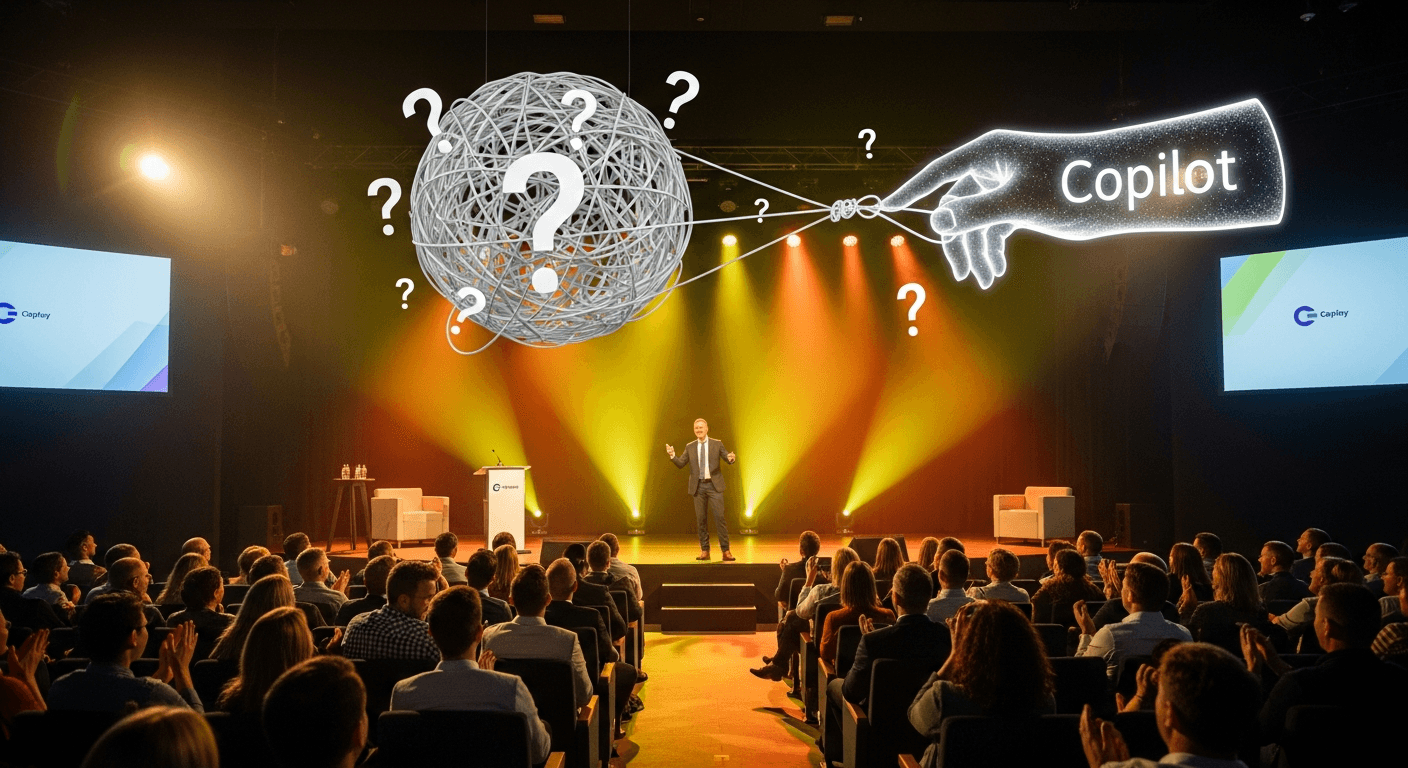
Context: Copilot, branding, and expectations
I've been watching the AI product parade for years — the hope, the hype, and the inevitable pile-up of names and features that leave customers (and sometimes the company itself) a little dizzy. Microsoft’s Copilot is one of those marquee efforts: an ambitious, multi-product attempt to put AI into the flow of work across Windows, Office, and cloud services. It promises to be a teammate, but when a single brand stretches across many products, clarity becomes a scarce resource.
The townhall moment
At a recent company townhall, the moment that landed for everyone was refreshingly human. Satya Nadella (satyan@microsoft.com) stood up to talk about the muddle — the “which Copilot does what” problem — and offered what he called a "confusion fix." The fix itself wasn’t a 200-page strategic memo or a six-month rebrand plan. It was a short, plain-language acknowledgement of the mess and a simple practical step to make things easier for employees and customers.
What followed was laughter — not the awkward kind, but that collective release of tension you hear when a leader names a problem instead of pretending it doesn’t exist.
What the "confusion fix" looked like (in spirit)
I didn’t have a front-row seat to every slide, but the essence of the moment was unmistakable:
- A candid admission that the Copilot brand had been stretched in ways that created ambiguity.
- A promise of quick, pragmatic changes: clearer documentation, single-source FAQs, and tighter internal naming conventions to reduce accidental mismatches between product teams and customers.
- An invitation for frontline employees to flag the most confusing messages so the company could prioritize fixes.
The charm was that the fix was less about grand strategy and more about tidying the small things that trip people up — and doing it fast.
Why employees laughed
There are a few reasons laughter made perfect sense in that room:
- Relief: When leadership finally calls out a shared frustration, people feel seen. That recognition releases tension.
- Surprise: Big companies are often heavy on process. A plain, low-friction fix felt refreshingly human and unexpectedly nimble.
- Shared ownership: The invitation to help prioritize fixes turned what could have been a top-down directive into a collaborative problem. That’s energizing and funny in a self-aware way.
The laughter was less about the content of the fix and more about the tone: honest, quick, and a little disarmingly simple.
Leadership communication lessons
This small townhall clip has several lessons for leaders — whether you're running a global software company or a two-person startup.
Name the problem plainly. People are far more receptive when leaders stop polishing language and start naming the real confusion.
Prioritize the human fixes. Fancy roadmaps are great; immediate, visible improvements — better docs, clearer labels, unified FAQs — build trust quickly.
Invite contribution, but don't abdicate responsibility. Asking for employee input signals humility. Following up with measurable action signals accountability.
Use humor and humility as tools, not performances. The room laughed because the leadership moment felt authentic. Forced jokes or canned humility read as performative. Authenticity is contagious.
Communication is product work. The way you describe and package a product (names, help text, marketing hooks) is functionally part of the product. Treat communication as design — iterate fast, test with users (internal and external), and remove friction.
A cautionary note about brand stretch
Big umbrella brands can be brilliant — they give a unified identity and help cross-sell. But a brand stretched too thin becomes a source of confusion. If your Copilot can be an editor, a system assistant, and a cloud developer tool, you must either clearly differentiate those roles with sub-brands or invest heavily in context-aware UI cues that tell users exactly which "Copilot" they're interacting with.
Final takeaway
The funniest leadership moments are often those where leaders behave like humans: they admit a shortcoming, propose a small fix, and invite the team in. Laughter is a signal that a team is ready to move from frustration to collaboration. A good "confusion fix" isn't a sweeping restructure; it's an immediate reduction of friction and a promise to follow through.
Regards,
Hemen Parekh
Any questions / doubts / clarifications regarding this blog? Just ask (by typing or talking) my Virtual Avatar on the website embedded below. Then "Share" that to your friend on WhatsApp.
Get correct answer to any question asked by Shri Amitabh Bachchan on Kaun Banega Crorepati, faster than any contestant
Hello Candidates :
- For UPSC – IAS – IPS – IFS etc., exams, you must prepare to answer, essay type questions which test your General Knowledge / Sensitivity of current events
- If you have read this blog carefully , you should be able to answer the following question:
- Need help ? No problem . Following are two AI AGENTS where we have PRE-LOADED this question in their respective Question Boxes . All that you have to do is just click SUBMIT
- www.HemenParekh.ai { a SLM , powered by my own Digital Content of more than 50,000 + documents, written by me over past 60 years of my professional career }
- www.IndiaAGI.ai { a consortium of 3 LLMs which debate and deliver a CONSENSUS answer – and each gives its own answer as well ! }
- It is up to you to decide which answer is more comprehensive / nuanced ( For sheer amazement, click both SUBMIT buttons quickly, one after another ) Then share any answer with yourself / your friends ( using WhatsApp / Email ). Nothing stops you from submitting ( just copy / paste from your resource ), all those questions from last year’s UPSC exam paper as well !
- May be there are other online resources which too provide you answers to UPSC “ General Knowledge “ questions but only I provide you in 26 languages !


No comments:
Post a Comment