
SC invokes Article 142: Directions to High Courts to Prevent Delays in Judgments
I write this as someone who has long worried about the human cost of slow justice. Recently, the Supreme Court invoked Article 142 of the Constitution and issued directions to high courts aimed at reducing delay in the delivery of reasoned judgments. In this post I explain what Article 142 authorises, summarize the thrust of the recent directions, consider why judicial delay persists, and offer practical ideas for implementation — all in a neutral, explanatory tone for readers with a legal background and a general interest in the rule of law.
What Article 142 is, in plain terms
Article 142(1) empowers the Supreme Court to pass such decrees and make such orders as are necessary to do "complete justice" in any matter before it. In essence, it is a broad, enabling provision: when exercising its constitutional jurisdiction, the Supreme Court may frame remedies or issue directions that go beyond ordinary procedural powers if needed to secure effective justice.
The provision has long been described as a constitutional safety valve — it allows the Court to fashion equitable, pragmatic, or systemic remedies in circumstances where ordinary legal mechanisms may fall short. Because it is very broad, courts generally invoke Article 142 sparingly and for purposes that serve the public interest or the effective administration of justice.
The recent order: directions to high courts
The Supreme Court’s recent order asks high courts to take concrete steps to prevent delays in issuing reasoned judgments. Although procedural details vary across states and benches, the core components of the directions are:
- an express emphasis on timely issuance of operative orders and the associated reasons;
- recommended or suggested timelines for issuing reasoned orders after announcing the operative part of a judgment (in practice, courts have discussed short windows such as a few days to a week in analogous precedents and administrative directions);
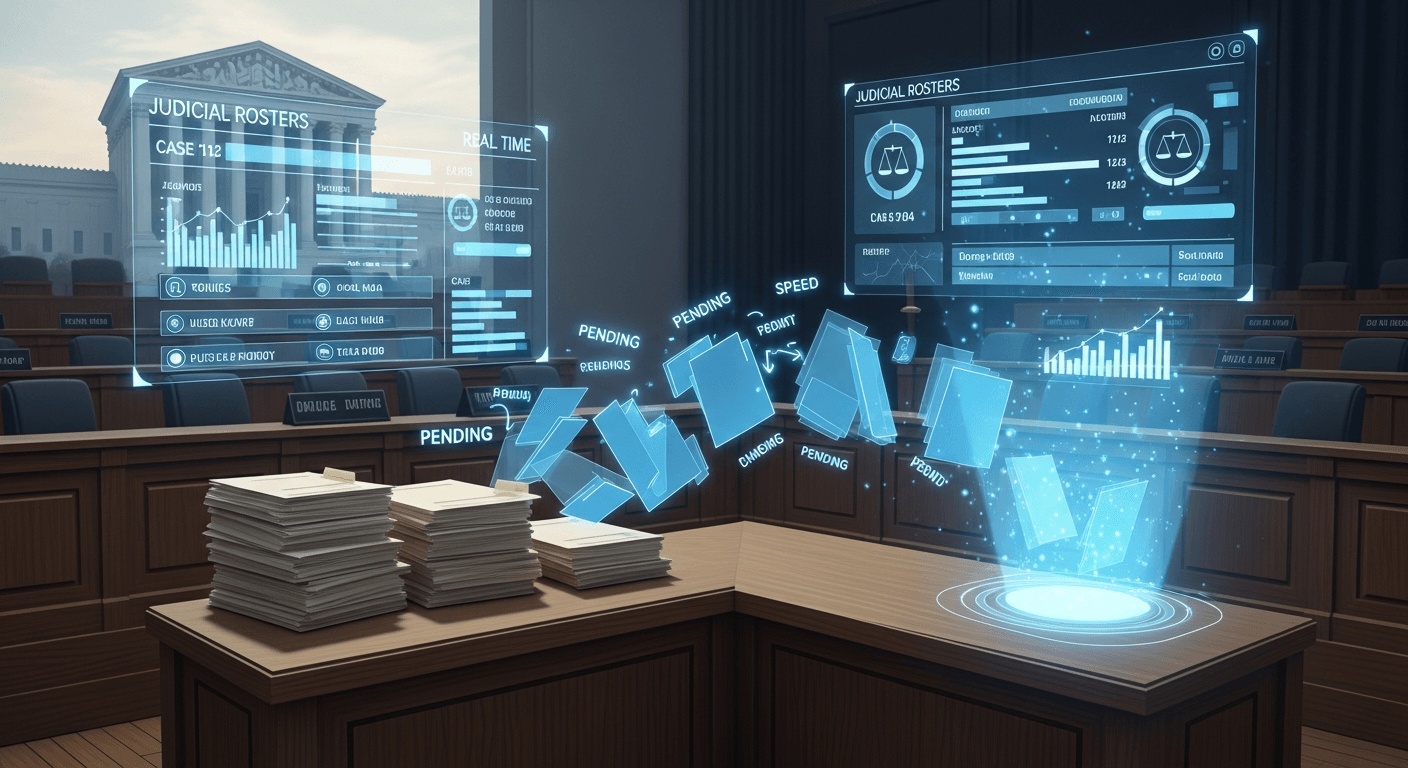
- direction for high courts to adopt institutional mechanisms — such as rosters, internal monitoring, or dedicated short-order benches — to avoid backlog in writing reasons; and
- an encouragement to leverage administrative and technological solutions to track outstanding reasoned orders and prompt judicial action.
These measures are designed to tackle a common problem: judgments are sometimes pronounced in court but the detailed reasons are supplied weeks or months later — a delay that impairs enforcement, appellate timelines, and litigant confidence.
(For related commentary on the Supreme Court’s emphasis on timely orders and internal timelines for issuing reasons, see commentary and reporting on timely orders here.) I have previously reflected on similar themes and suggested technological and procedural measures to reduce delays in judicial outputs "Supreme Orders: Judges must Obey" and in earlier posts advocating online courts and faster disposal "Justice Delayed is Justice Denied".
Why do judicial delays happen?
Delays are multi-causal. Important contributors include:
- Limited judge strength relative to case-loads in many jurisdictions.
- Complex dockets: cases requiring detailed legal reasoning or extensive fact-finding take time to decide and draft.
- Administrative and infrastructural bottlenecks: lack of transcription support, inadequate case-management systems, and paper-heavy records slow the process.
- Habitual practices: in some benches the announcement of an operative order may be followed by prolonged drafting of reasons rather than immediate circulation of a short reasoned order.
- Adjournments, repeated listings, and procedural litigation that divert judicial time.
Each factor operates differently in different high courts, so a one-size-fits-all solution will not be sufficient.
Implications for litigants and the judiciary
For litigants:
- Delay in reasoned judgments creates uncertainty and may prolong the enforcement of rights and remedies.
- Appeals and revision petitions often depend on a written judgment; late reasons impede timely appellate access and can prejudice parties.
For the judiciary and public confidence:
- Chronic delays erode trust in the courts and fuel perceptions of unfairness.
- Administrative backlogs reduce court capacity to focus on fresh matters and compound the problem.
Article 142-driven directions aim to restore timely outcomes and protect litigant interests, but they also place an administrative burden on courts to implement change without compromising quality.
Potential challenges and criticisms
- Quality vs. Speed: There is a legitimate concern that enforcing tight timelines could encourage superficially drafted reasons or formulaic judgments that do not fully address complex legal questions.
- Resource constraints: Many high courts lack adequate staff, court managers, or digital infrastructure; directions without commensurate resources may only shift burdens and create frustration.
- Judicial independence: Some critics may view centrally framed timelines as intrusions into judicial autonomy. Any implementation must balance legitimate administrative oversight with respect for judicial discretion.
These concerns reinforce that directions under Article 142 should be paired with enabling resources and local consultation rather than merely issuing prescriptive deadlines.
Suggested measures for implementation
To make the Supreme Court’s directions work in practice, I would suggest a mix of administrative, technological, and procedural steps:
Strengthen case-management systems: digital dashboards that flag pending pronouncements and outstanding reasoned orders by bench and by judge.
Allocate drafting support: appoint judicial clerks, drafting assistants, or registrar teams to assist judges with the mechanics of producing reasoned orders quickly.
Tiered timelines: adopt reasonable internal timelines (shorter for routine orders, longer for complex cases) to protect quality while promoting speed.
Periodic review and reporting: high courts should report backlog metrics and progress to an internal administrative committee; transparency encourages accountability.
Encourage short-form reasoned orders: where appropriate, provide concise but legally sufficient reasons immediately and reserve fuller elaboration for complex matters.
Invest in infrastructure: expand video-conferencing, e-filing, and digital record-keeping to reduce time lost to paperwork and logistics.
Training and best-practice sharing: encourage cross-high-court exchanges on effective docket management and use of technology.
These measures echo proposals I have discussed in earlier posts advocating technological and procedural reforms to reduce backlog and speed up outcomes "Justice Delayed is Justice Denied".
Final reflections
Article 142 gives the Supreme Court a robust tool to push systemic reforms when necessary. Directions to high courts to prevent delays in judgments are welcome, provided they are implemented with care for judicial quality, with appropriate resources, and with sensitivity to local court dynamics.
Timely reasoned judgments matter not only as a technical requirement but as a moral obligation: they are the means by which rights are vindicated and confidence in institutions is preserved. Courts, administrators, and policymakers should therefore treat these directions as an opportunity to redesign processes so justice is both done and seen to be done — promptly and thoughtfully.
Regards,
Hemen Parekh
Any questions / doubts / clarifications regarding this blog? Just ask (by typing or talking) my Virtual Avatar on the website embedded below. Then "Share" that to your friend on WhatsApp.
Get correct answer to any question asked by Shri Amitabh Bachchan on Kaun Banega Crorepati, faster than any contestant
Hello Candidates :
- For UPSC – IAS – IPS – IFS etc., exams, you must prepare to answer, essay type questions which test your General Knowledge / Sensitivity of current events
- If you have read this blog carefully , you should be able to answer the following question:
- Need help ? No problem . Following are two AI AGENTS where we have PRE-LOADED this question in their respective Question Boxes . All that you have to do is just click SUBMIT
- www.HemenParekh.ai { a SLM , powered by my own Digital Content of more than 50,000 + documents, written by me over past 60 years of my professional career }
- www.IndiaAGI.ai { a consortium of 3 LLMs which debate and deliver a CONSENSUS answer – and each gives its own answer as well ! }
- It is up to you to decide which answer is more comprehensive / nuanced ( For sheer amazement, click both SUBMIT buttons quickly, one after another ) Then share any answer with yourself / your friends ( using WhatsApp / Email ). Nothing stops you from submitting ( just copy / paste from your resource ), all those questions from last year’s UPSC exam paper as well !
- May be there are other online resources which too provide you answers to UPSC “ General Knowledge “ questions but only I provide you in 26 languages !




No comments:
Post a Comment