
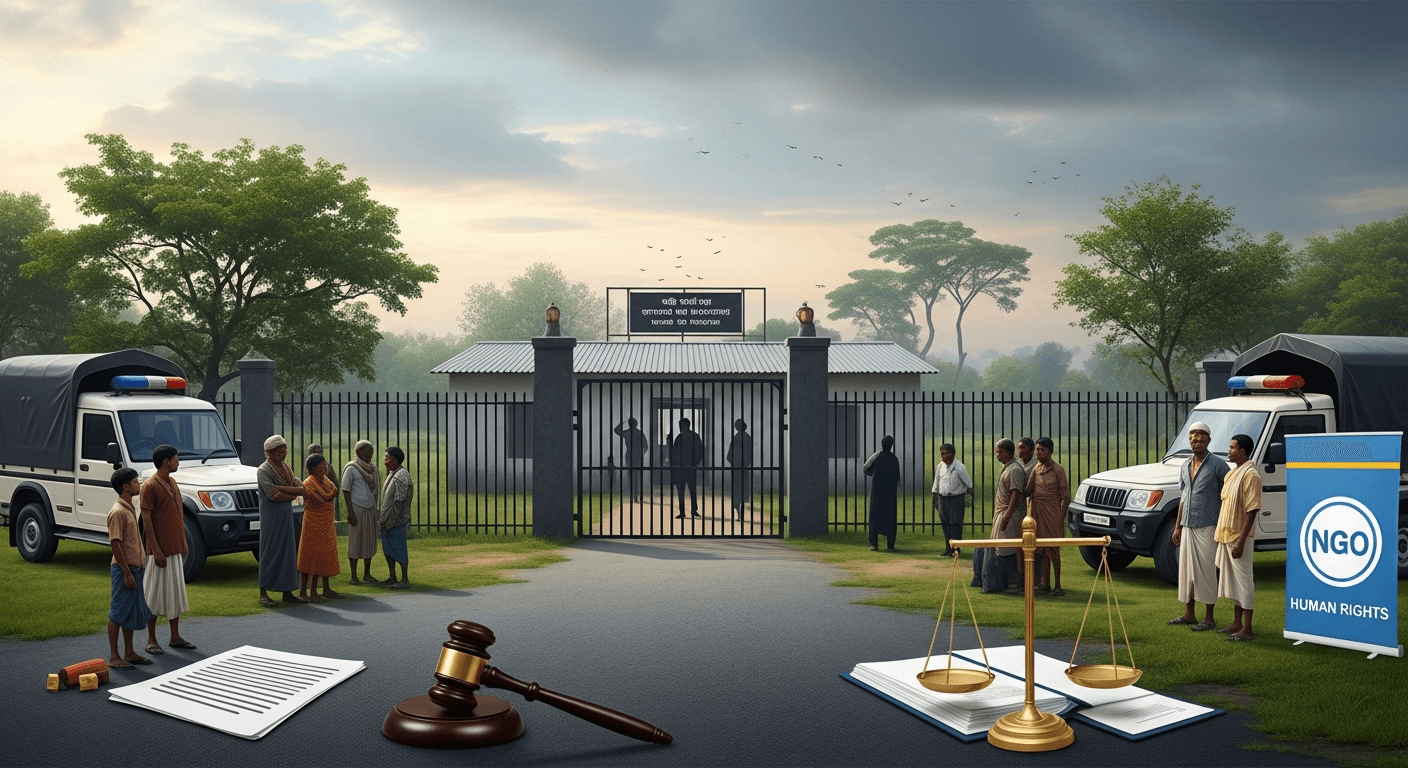
Detention Centers in West Bengal
I write this with a mix of concern and a desire for clarity. Last week the West Bengal government opened what it described as the state's first holding centres for people labelled "illegal" — a move that placed 12 individuals in facilities reported to be in Malda and Murshidabad districts. The reports say those placed include people alleged to be from Bangladesh and some described as Rohingya. The development raises immediate questions about process, rights, and regional diplomacy.
What happened — the basics
- Authorities have announced and activated holding centres in Malda and Murshidabad, initially housing 12 people reported as undocumented or "illegal" migrants.
- Local administrations have framed these centres as places to detain individuals pending identification, legal processing, and, where applicable, deportation or transfer. The state release outlining the move emphasized law-and-order and migration management.
I want to be explicit: reporting on such sensitive actions requires careful sourcing. Immediate primary sources to consult are the official state government releases, district magistrate orders from Malda and Murshidabad, and local police statements.
Background: citizenship, migration and West Bengal
West Bengal sits on a long international border with Bangladesh and has a complex history of migration, cultural exchange, and periodic political contention over citizenship. A few contextual points:
- Citizenship and undocumented migration have been politically salient for years, especially since national laws and proposals such as the Citizenship Amendment Act (CAA) and periodic discussions around a National Register have surfaced.
- The Foreigners Act (and associated rules) empowers authorities to identify, detain and arrange the removal of persons deemed foreign/illegal. However, detention must still conform to legal safeguards and due process.
- Unlike Assam — which completed a controversial National Register of Citizens (NRC) exercise — West Bengal resisted a similar NRC process at the state level while debates around CAA intensified nationally.
These legal instruments — the Foreigners Act, the debates around NRC, and the CAA — form the framework within which actions like the opening of holding centres are being justified and contested.
Reactions on the ground
Local communities in Malda and Murshidabad have shown mixed reactions.
- Some residents and local leaders welcomed steps framed as addressing illegal migration and perceived pressures on local resources.
- Others — including civil society activists and community groups — expressed alarm, fearing that detention could target vulnerable, marginalised people and inflame communal tensions.
Human rights NGOs and activists have urged restraint. Their concerns focus on potential arbitrary detention, lack of transparent identification procedures, limited access to legal counsel, and the risk of statelessness if people cannot be returned or certified as citizens.
Legal and human-rights concerns
Key legal and rights-related issues to watch:
- Due process: Are detainees being informed of charges and given access to lawyers and independent verification of identity?
- Detention conditions: Transparency about the centres’ conditions, duration of detention, medical access, and oversight is essential.
- Refugee protections: Rohingya people are widely recognised as refugees from Myanmar. India is not a party to the 1951 UN Refugee Convention, which complicates formal refugee protections and resettlement pathways. International and domestic NGOs may press for humane treatment and international engagement (including UN agencies where appropriate).
- Risk of statelessness: Without clear, fair processes for determining nationality or refugee status, there is a real danger that people will fall into legal limbo.
Statements and positions
Official statements so far appear to come primarily from state government releases and district administrations framing the centres as administrative steps for managing unauthorized crossings and pending deportation processes. Activist voices and NGOs have issued critiques calling for transparency and adherence to legal safeguards. Local media have reported interviews from both supporters and dissenters in the affected districts.
For readers seeking verification, I suggest looking first to the state government press notes and the district magistrate notifications for Malda and Murshidabad, followed by coverage from regional newspapers and verified NGO statements.
Implications for India–Bangladesh relations
Opening detention centres near the border has diplomatic dimensions:
- If the detained individuals are nationals of Bangladesh, formal repatriation would require coordination through diplomatic channels, identity verification, and agreement from Bangladesh authorities — a process that can be politically sensitive.
- Rohingya individuals are not Bangladesh nationals in the standard sense; they are refugees originally from Myanmar. Bangladesh itself has hosted large Rohingya populations and has been reluctant or unable to absorb further forced returns without diplomatic solutions involving Myanmar and international partners.
- Such actions can raise bilateral tensions if not managed through established diplomatic protocols and clear communication.
Possible next steps
Several paths are likely or possible in the coming weeks:
- Legal challenges: Civil society and legal aid groups may move to court seeking clarity on detention legality, access to counsel, and humane conditions.
- Administrative processing: Authorities may undertake biometric and documentary verification; some individuals may face formal proceedings under the Foreigners Act.
- Diplomatic engagement: Where nationality is claimed for Bangladesh, formal diplomatic approaches will be necessary for repatriation — a process that can take time and negotiation.
- International engagement: For Rohingya or other refugees, involvement from UN agencies and international NGOs may increase, particularly if detention expands or conditions are questioned.
What to watch and how to follow responsibly
I recommend monitoring these sources for reliable updates:
- Official state government releases and district administration orders (Malda, Murshidabad)
- Credible local and national media reporting with named on-the-record sources
- Statements and briefings from human-rights NGOs and legal-aid organisations
- Diplomatic statements from the Ministry of External Affairs and Bangladesh’s foreign ministry for cross-border implications
Avoid relying solely on social media claims; verify identities and official documents before drawing conclusions or sharing reports.
My reflection
As someone who follows social and civic trends closely, I find this situation emblematic of the tensions between sovereign control of borders and human rights obligations. Managing migration is a legitimate state function, but it must be pursued with transparency, legal safeguards, and respect for human dignity. Detention for administrative reasons becomes deeply problematic when oversight is limited and pathways to resolution are unclear.
This will be a story of law, politics and human lives — and how the authorities, civil society, and neighbouring states navigate those forces will determine whether the next steps soothe tensions or inflame them.
Regards,
Hemen Parekh
Any questions / doubts / clarifications regarding this blog? Just ask (by typing or talking) my Virtual Avatar on the website embedded below. Then "Share" that to your friend on WhatsApp.
Get correct answer to any question asked by Shri Amitabh Bachchan on Kaun Banega Crorepati, faster than any contestant
Hello Candidates :
- For UPSC – IAS – IPS – IFS etc., exams, you must prepare to answer, essay type questions which test your General Knowledge / Sensitivity of current events
- If you have read this blog carefully , you should be able to answer the following question:
- Need help ? No problem . Following are two AI AGENTS where we have PRE-LOADED this question in their respective Question Boxes . All that you have to do is just click SUBMIT
- www.HemenParekh.ai { a SLM , powered by my own Digital Content of more than 50,000 + documents, written by me over past 60 years of my professional career }
- www.IndiaAGI.ai { a consortium of 3 LLMs which debate and deliver a CONSENSUS answer – and each gives its own answer as well ! }
- It is up to you to decide which answer is more comprehensive / nuanced ( For sheer amazement, click both SUBMIT buttons quickly, one after another ) Then share any answer with yourself / your friends ( using WhatsApp / Email ). Nothing stops you from submitting ( just copy / paste from your resource ), all those questions from last year’s UPSC exam paper as well !
- May be there are other online resources which too provide you answers to UPSC “ General Knowledge “ questions but only I provide you in 26 languages !




No comments:
Post a Comment