
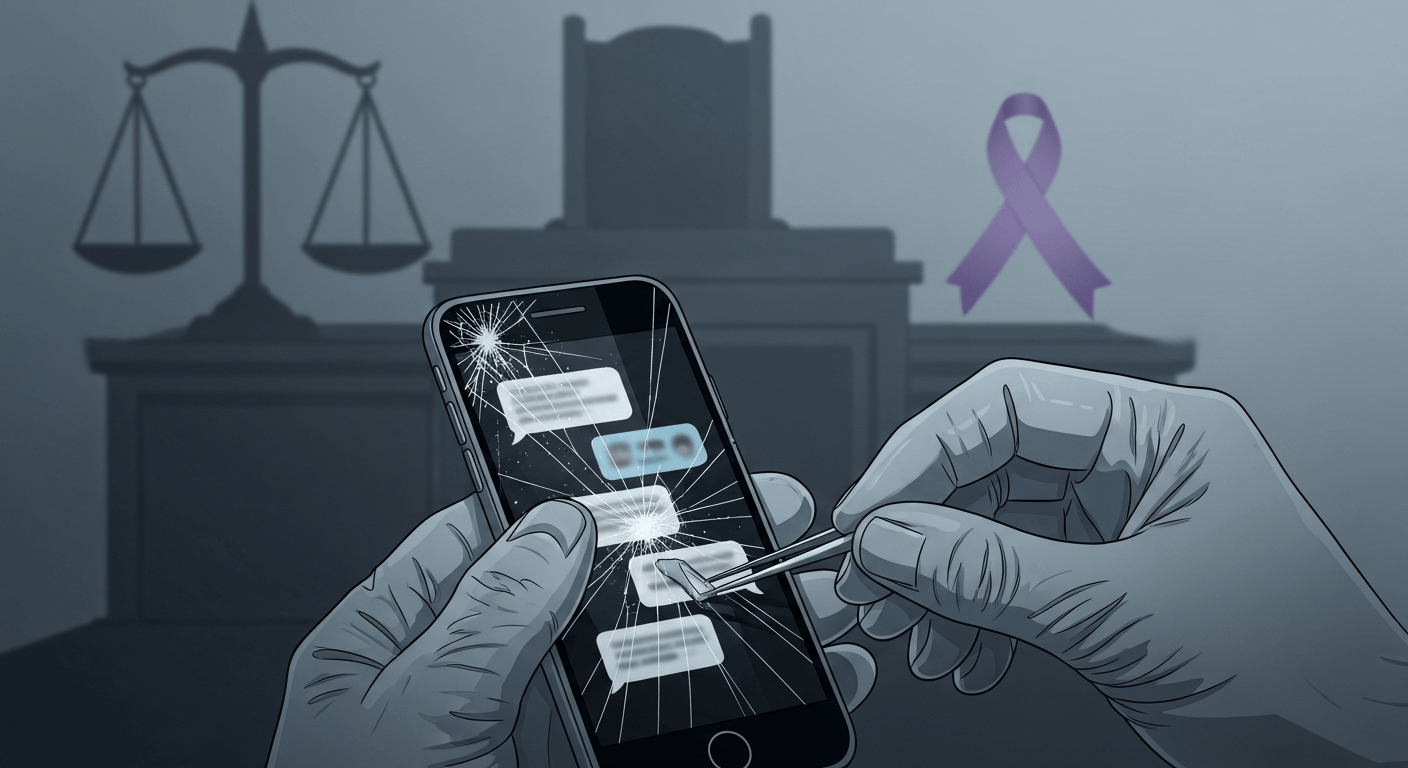
I write this with a heavy heart and with the caution that such cases demand: grief, sharp public interest, and the slow-moving machinery of formal inquiry. Recent media coverage says that the Central Bureau of Investigation (CBI) will examine the final digital communications, injuries, and an alleged abortion angle described in reports as a possible “trigger point.” My aim here is to explain the background, sketch the investigative and legal contours, and reflect on the ethical and social sensitivities such a probe raises — without treating preliminary or contested claims as settled fact.
What happened: background and context
In the story at the centre of public attention, a young woman was found critically injured and later died. Media outlets have reported several strands that investigators will scrutinize: final chat messages on mobile devices, visible injuries, hospital and medical records, and claims about a recent pregnancy termination that some reports say may have been a factor. Because these elements are deeply personal and legally consequential, authorities — and many voices in the public sphere — have called for an independent investigation.
I will not rehearse unverified allegations here. What is clear from past high-profile cases is this: when a death involves contested medical history, digital traces and physical injuries, investigators and courts must balance the search for truth with protections for privacy and fair process.
Timeline (typical steps investigators follow)
- Initial report and first responders: police records, scene documentation, emergency care notes.
- Hospitalisation and medical records: clinical notes, imaging, surgery or treatment records, and chain-of-custody for biological samples.
- Post-mortem and forensic pathology: autopsy reports, cause-of-death findings, and histopathology where needed.
- Early investigative leads: witness statements, CCTV, phone records and telecom metadata, and identification of persons of interest.
- Supplementary evidence gathering: digital forensics (phones, chat backups, cloud records), medical records from clinics/hospitals, and interviews with treating clinicians.
In this case, public reports suggest investigators will focus on final chats and injuries, and will seek clarity on whether the alleged abortion — and the circumstances around it — were connected to the death. A CBI probe indicates that state authorities or courts have requested a federal-level investigative agency, typically to ensure an independent, technically resourced inquiry.
What a CBI probe typically entails
A CBI investigation in cases with digital and medical complexity will usually include:
- Digital forensics: extracting data from phones, backups, social apps and cloud services with careful attention to preserving timestamps and metadata.
- Medical forensics and records audit: reviewing hospital files, treatment notes, lab reports and any medication or procedure documentation.
- Forensic pathology review: independent examination of autopsy findings and any tissue tests necessary to establish cause and timing of injuries.
- Chain-of-custody and evidence management: ensuring all samples and digital images are logged, preserved and handled to remain admissible in court.
- Interviews and reconstruction: detailed statements from family, health-care providers, and others; reconstruction of events using timelines and corroborating evidence.
Throughout, investigators must follow legal procedures for warrants, consent and access to encrypted or third-party data. Courts and investigators are increasingly sensitive to questions about admissibility of digital evidence and its proper collection.
Legal angles to watch
- Criminal liability: investigators will examine whether there is evidence of homicide, culpable negligence, abetment, or other criminal conduct. Any determination depends on forensic facts and proof beyond reasonable doubt.
- Medical regulation: if medical care, including any termination of pregnancy, is involved, investigators may explore whether procedures were lawful, certified personnel were involved, and required documentation exists under applicable medical law and regulation.
- Digital evidence law: admissibility of chat messages, backups and cloud-stored data raises questions about authentication, tampering, and lawful access (warrants, mutual legal assistance, or provider cooperation).
- Privacy, confidentiality and patient rights: medical records and reproductive-health information enjoy protections under law and ethics; investigators must follow statutory safeguards and judicial oversight when accessing them.
I emphasise: these are legal pathways investigators commonly pursue; they are not pronouncements about guilt or innocence in any particular case.
Reactions — family, legal experts and police
- Family: families in such tragedies almost always demand a thorough, impartial inquiry and swift answers. They commonly call for transfer of investigation to an agency perceived as independent, and for protection of the deceased’s dignity and privacy.
- Legal experts: commentators typically urge careful preservation of evidence and stress due process. Many will emphasise that digital chats are contextual and that investigators should corroborate messages with other evidence before drawing conclusions.
- Police: local police often cooperate with or hand over complex probes to central agencies when politically sensitive, technically demanding, or when questions of impartiality arise. Official statements generally promise full cooperation with judicial oversight.
Ethical and societal considerations
- Reproductive health and privacy: allegations touching on pregnancy or abortion require extreme sensitivity. Medical histories are intimate; investigators, media and the public should avoid treating such facts as evidence of moral wrongdoing absent sober proof. Laws and medical-ethics frameworks protect patient confidentiality — and those protections must be respected in investigative steps and public reporting.
- Digital dignity and victim protection: final chats and private communications can be crucial evidence, but publication or sensational use of such material can deepen harm to families and friends. Courts and investigators should limit disclosure and enforce strict safeguards for handling intimate data.
- Presumption of innocence and media responsibility: rapid social-media narratives can create trial-by-public-opinion. Responsible reporting clarifies what is alleged, what is being investigated, and what remains unproven.
- Gendered stigma and social bias: discussions about reproductive choice or sexual relationships can trigger victim-blaming. Society and institutions must resist reflexes that stigmatise and instead focus on facts and fair procedure.
Why this matters beyond one case
Cases that sit at the intersection of digital traces, medical privacy, and potential violence test our institutions: forensic capacity, legal safeguards, and norms of public discourse. They force us to ask how to investigate thoroughly while preserving privacy, how to treat reproductive health as a medical matter rather than a moral headline, and how to prevent media sensationalism from harming vulnerable people.
I have written about the inevitability of digital traces and the tension between privacy and investigative necessity in earlier pieces — for example, my reflections on privacy and technology A Question of Privacy. Those essays urged caution: our devices record more than we realise, and as that data becomes central to truth-seeking, the legal and ethical frameworks around it must keep pace.
Closing thoughts
We must let the investigators do their work, and we must insist that they do it transparently, lawfully and with respect for human dignity. Public demand for answers is understandable; public appetite for immediate judgment is not. I will watch this inquiry with attention to facts, to process, and to the protections that keep justice fair for everyone involved.
Regards,
Hemen Parekh
Any questions / doubts / clarifications regarding this blog? Just ask (by typing or talking) my Virtual Avatar on the website embedded below. Then "Share" that to your friend on WhatsApp.
Get correct answer to any question asked by Shri Amitabh Bachchan on Kaun Banega Crorepati, faster than any contestant
Hello Candidates :
- For UPSC – IAS – IPS – IFS etc., exams, you must prepare to answer, essay type questions which test your General Knowledge / Sensitivity of current events
- If you have read this blog carefully , you should be able to answer the following question:
- Need help ? No problem . Following are two AI AGENTS where we have PRE-LOADED this question in their respective Question Boxes . All that you have to do is just click SUBMIT
- www.HemenParekh.ai { a SLM , powered by my own Digital Content of more than 50,000 + documents, written by me over past 60 years of my professional career }
- www.IndiaAGI.ai { a consortium of 3 LLMs which debate and deliver a CONSENSUS answer – and each gives its own answer as well ! }
- It is up to you to decide which answer is more comprehensive / nuanced ( For sheer amazement, click both SUBMIT buttons quickly, one after another ) Then share any answer with yourself / your friends ( using WhatsApp / Email ). Nothing stops you from submitting ( just copy / paste from your resource ), all those questions from last year’s UPSC exam paper as well !
- May be there are other online resources which too provide you answers to UPSC “ General Knowledge “ questions but only I provide you in 26 languages !




No comments:
Post a Comment