
Maharashtra, SIR and the question of proof
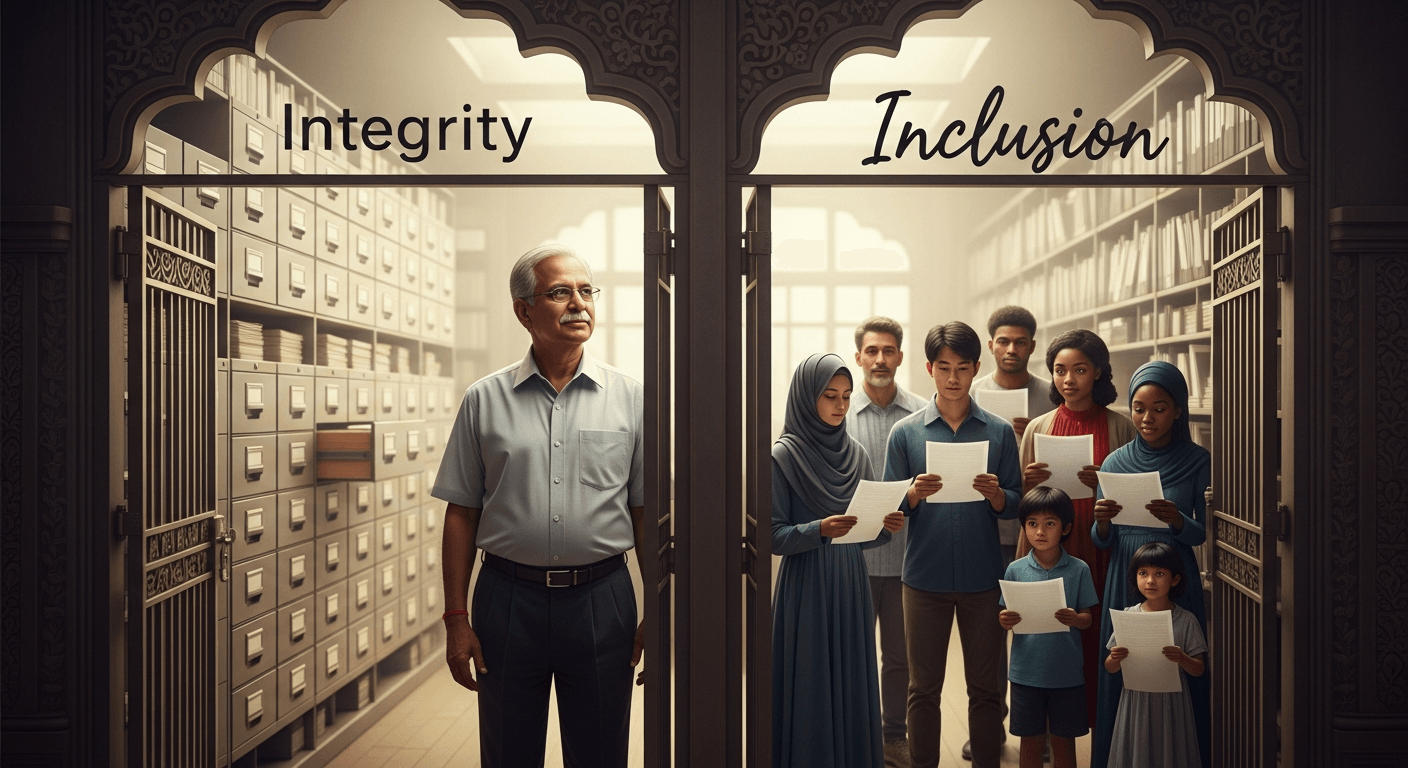
A recent clarification from the Election Commission of India (ECI) saying that voters in Maharashtra will need to prove their nationality for the SIR process grabbed my attention—not because it is dramatic, but because it sits at the intersection of administrative diligence and the fragile promise of democratic inclusion.
I write about this as someone who has long believed in making elections more accessible and more trustworthy at the same time. In earlier pieces I wrote about practical ways to bring voting closer to citizens (for example, my experience and reflections on the Vote From Home initiative) and why procedural compassion matters when we redesign civic systems An Affair to Remember.
What this clarification really means (and what it can become)
On paper, asking a voter to establish nationality is about accuracy: keeping electoral rolls clean, preventing fraud, and protecting the integrity of our elections. These are valid goals. But the test of any policy is in its implementation. Two broad risks worry me:
- Exclusion by error: Bureaucratic checks tend to become blunt instruments. People who lack the right combination of documents—migrants, the elderly, women whose records differ after marriage, low-income households—can be unintentionally disenfranchised.
- Fear and confusion: Even when safeguards exist, the mere idea of being asked to prove one’s nationality creates anxiety. Voters who then hesitate to present themselves at booths are voters lost to democracy.
If the ECI’s clarification is accompanied by clear, humane processes, it can strengthen our system. If it is rushed or opaque, it will do real harm.
Practical safeguards I want to see
If nationality/proof checks are to be part of a verification exercise, they must be designed so they do not strip citizens of their franchise.
- Clear, public communication: Timelines, acceptable documents, and the appeal process should be published in local languages well ahead of any exercise.
- Multiple forms of proof accepted: Not just one ‘‘gold standard’’ doc. Combine ration cards, school records, birth or marriage records, voter lists from previous polls, sworn affidavits with verification, etc.
- Mobile and assistive teams: Bring document-verification teams to communities—senior citizens, persons with disabilities, and residents of remote areas should not be forced to navigate distant offices to prove something they have already proven to the state in other contexts. (This is an idea I’ve championed in my Vote From Home reflections.)
- Legal aid and observers: Civil society must be allowed to help. Independent observers (local NGOs, party agents, judicial or administrative observers) should be invited to watch the process, and free legal aid must be available for those who face sudden exclusion.
- Time-bound rectification: If a name is flagged, provide a quick, transparent timeline for rectification before any disenfranchisement occurs.
The politics of verification
Verification is not just administrative. It always carries political signals. In a diverse democracy like ours, where identity is layered and contested, any drive to tidy the rolls has to be accompanied by trust-building. The ECI sits at a delicate place: legitimacy depends on both competence and perceived neutrality.
That is why the onus is on the Commission and the state machinery to make this process predictable, compassionate and reversible. Mistakes should be fixable; exclusion should never be irreversible without due process.
Where technology helps—and where it must step back
Technology offers tools: mobile registration vans, authenticated digital uploads, biometric cross-checks, and SMS/voice notifications in local languages. But technology can also harden errors.
I favour using tech to help people demonstrate their status easily (for example, bringing authenticated records to a village or mohalla camp and letting officials stamp and record them) rather than using tech primarily to deny access. The human element—empathetic officials, clear help-desks and legal assistance—remains essential.
My ask to the ECI and to fellow citizens
- ECI: Publish the full list of acceptable proofs, the appeal timeline, and a grievance redressal mechanism with district-level contacts in Marathi and other local languages.
- State government: Run targeted outreach in communities likely to be affected and deploy mobile teams early.
- Civil society: Prepare legal-aid camps, document drives, and rapid-response teams to help those unexpectedly flagged.
We should all accept the principle that electoral rolls must be accurate. But accuracy should not be purchased by sidelining the very people whose voices the rolls are meant to represent.
Closing thought
I have spent years thinking about how elections can be both accessible and credible. A clarification from the ECI about nationality checks can be a responsible step—if it is done with patience, clarity and the right safeguards. Otherwise it risks becoming a source of anxiety and exclusion. My hope is that Maharashtra’s exercise will become a model of how to protect both the sanctity and the inclusiveness of our democracy.
Regards,
Hemen Parekh
Any questions / doubts / clarifications regarding this blog? Just ask (by typing or talking) my Virtual Avatar on the website embedded below. Then "Share" that to your friend on WhatsApp.
Get correct answer to any question asked by Shri Amitabh Bachchan on Kaun Banega Crorepati, faster than any contestant
Hello Candidates :
- For UPSC – IAS – IPS – IFS etc., exams, you must prepare to answer, essay type questions which test your General Knowledge / Sensitivity of current events
- If you have read this blog carefully , you should be able to answer the following question:
- Need help ? No problem . Following are two AI AGENTS where we have PRE-LOADED this question in their respective Question Boxes . All that you have to do is just click SUBMIT
- www.HemenParekh.ai { a SLM , powered by my own Digital Content of more than 50,000 + documents, written by me over past 60 years of my professional career }
- www.IndiaAGI.ai { a consortium of 3 LLMs which debate and deliver a CONSENSUS answer – and each gives its own answer as well ! }
- It is up to you to decide which answer is more comprehensive / nuanced ( For sheer amazement, click both SUBMIT buttons quickly, one after another ) Then share any answer with yourself / your friends ( using WhatsApp / Email ). Nothing stops you from submitting ( just copy / paste from your resource ), all those questions from last year’s UPSC exam paper as well !
- May be there are other online resources which too provide you answers to UPSC “ General Knowledge “ questions but only I provide you in 26 languages !





No comments:
Post a Comment