
Operation Sindoor 2.0
I write this as a reflection on how modern armies — hypothetically under the banner of a notional campaign I call “Operation Sindoor 2.0” — prepare for the next battle. My aim is to stitch together the strategic logic, training rhythms, technological investments, logistics practices, intelligence tradecraft, diplomatic framing, and ethical guardrails that public, non-sensitive sources and common practice suggest matter most in contemporary conflict preparation.
Note: everything below is written in neutral, hypothetical terms and avoids classified or operationally sensitive specifics.
Strategic background: ends, ways, and means
When I imagine a next-generation campaign, I start with strategy: clear political objectives, credible deterrence, and pathways that minimize escalation while preserving freedom of maneuver.
- Objectives must be calibrated to political goals and constrained by law, public tolerance, and international norms.
- The “ways” are multi-domain: land, air, maritime, space, cyber and information. True preparedness connects those domains rather than treating them as separate silos.
- The “means” are a blend of human capital, matériel, alliances, and industrial depth. Planning focuses on resilience — redundant supply lines, modular units, and the ability to operate under degraded conditions.
A modern doctrine prioritizes flexibility: small, distributed units with interoperable communications; a layered defense that can deny the adversary’s objectives while preserving the option to escalate or de-escalate as needed.
Training: realism, integration, and human factors
Preparation is ultimately about people. Training for Operation Sindoor 2.0 emphasizes:
- Multi-domain exercises that pair ground maneuver with ISR (Intelligence, Surveillance, Reconnaissance), electronic warfare, and cyber resilience.
- Distributed, mission-command style training that empowers junior leaders to act within intent — reducing latency in decision cycles.
- High-fidelity simulation and live-virtual-constructive (LVC) environments to practice large-scale coordination without exhausting live resources.
- Rehearsals of logistics and medical evacuation under contested conditions, to ensure sustainment is not an afterthought.
- Human performance programs: fatigue management, resilience training, and ethical judgment under stress.
Training also incorporates civilian responders and host-nation partners in peacetime drills to sharpen whole-of-society responses and minimize friction when crises arrive.
Technology: force multipliers, not magic bullets
Technology features prominently, but I avoid the common trap of treating it as a substitute for sound strategy.
Key technology threads in a hypothetical Operation Sindoor 2.0 include:
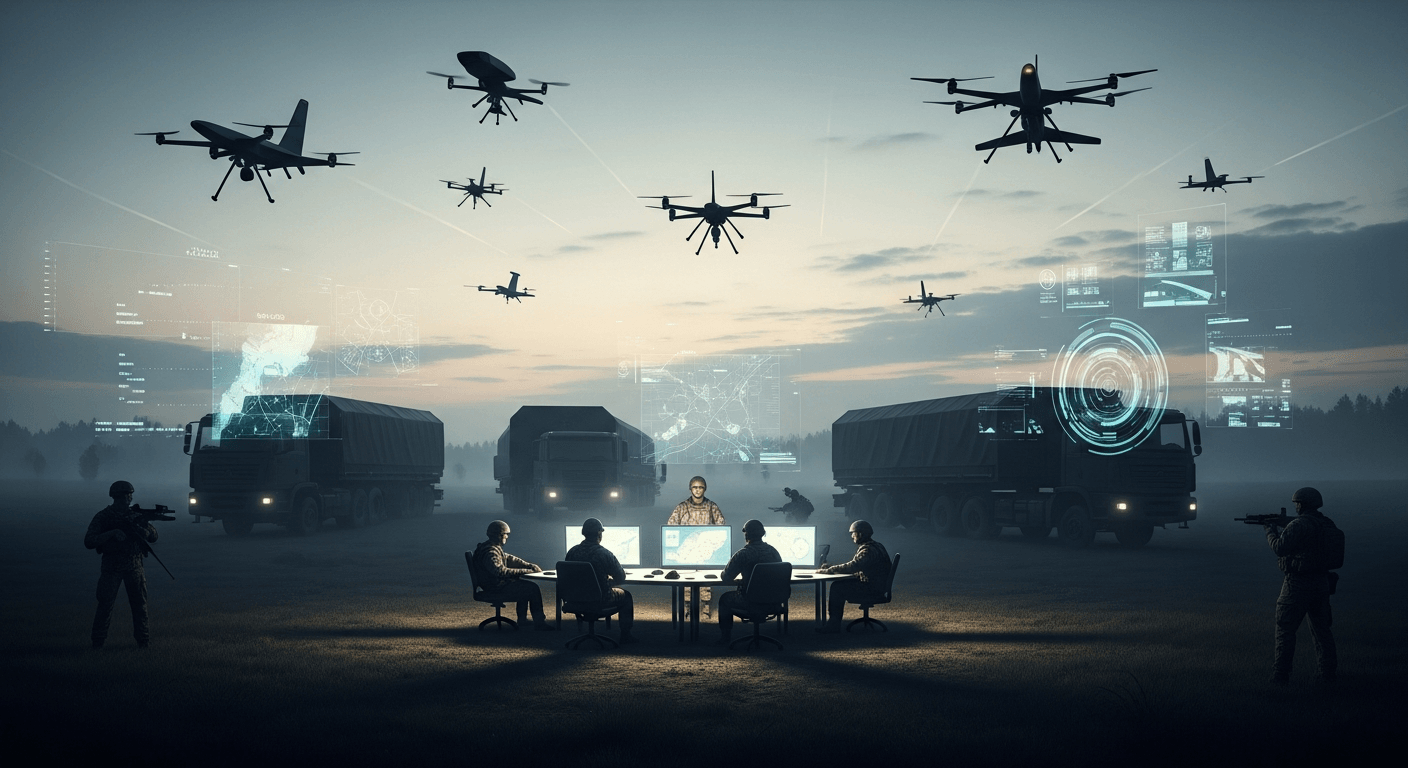
- Enhanced ISR: persistent sensing from a mix of satellites, manned aircraft, unmanned aerial systems (UAS), and ground sensors — all feeding fused, timely intelligence to commanders.
- Unmanned systems and robotics for logistics, reconnaissance, and force protection — reducing risk to personnel and accelerating tempo.
- Decision-support tools powered by AI/ML for data fusion, targeting support, predictive logistics, and risk assessment — with human-in-the-loop safeguards.
- Electronic warfare (EW) and cyber capabilities to protect friendly nets, deny adversary communications, and defend critical infrastructure.
- Resilient command, control, and communications (C3): mesh networking, HF/line-of-sight fallbacks, and hardened nodes so the force can operate when parts of the system are degraded.
I stress again: these are force multipliers that require doctrine, training, and maintenance to be effective. Procurement timelines, sustainment, and interoperability are where many programs succeed or falter.
Logistics: the invisible decisive factor
No campaign succeeds without logistics. Preparing for a major operation emphasizes speed, redundancy, and inventory discipline:
- Prepositioning critical stocks at secure forward sites, balanced against the risk of conspicuous buildup.
- Agile supply chains using commercial partners, modular supply nodes, and enhanced tracking to reduce loss, spoilage, and misallocation.
- Transportation mix: strategic airlift, rail, sealift, and convoy operations with layered security plans.
- Maintenance pipelines and depot-level repair capacity to keep platforms available rather than stockpiled assets becoming stranded.
- Medical logistics — scalable trauma care, rapid casualty evacuation, and mental health support — to preserve force cohesion.
In my view, investments in logistics automation and inventory visibility pay outsized dividends in sustained operations.
Intelligence: fusion, speed, and counterintelligence
Intelligence preparation for a hypothetical operation combines several mutually reinforcing capabilities:
- Multi-source intelligence fusion (IMINT, SIGINT, HUMINT, OSINT) to build a robust common operating picture while explicitly acknowledging uncertainty and gaps.
- Timely analytic tradecraft: structured analytic techniques to avoid bias and to present probability-weighted options to commanders.
- Counterintelligence and deception: protecting plans from discovery while presenting calibrated signals to shape adversary choices.
- Open-source intelligence (OSINT) and social-media monitoring as part of situational awareness and information operations; carefully curated to respect privacy and legal frameworks.
A core theme for me is that speed of insight — getting actionable intelligence to the point of decision — often matters more than absolute sensor density.
Diplomacy and strategic signaling
Military preparedness is inseparable from diplomacy. Preparing for a complex campaign requires:
- Alliance management: ensuring interoperability, clear rules of engagement, and coordinated political messaging with partners.
- Deterrence signaling that is clear enough to dissuade aggression without creating misperception or unnecessarily escalating tensions.
- Backchannel communications and crisis-management hotlines to create space for de-escalation.
- Legal and normative framing — aligning posture and actions with international law to preserve legitimacy and reduce the risk of sanctions or reputational harm.
I think the healthiest security posture blends credible defense with active diplomacy; the two are not opposites but complements.
Ethical considerations: law, limits, and accountability
Preparing for conflict raises hard ethical questions. Even in a hypothetical, non-sensitive discussion I insist on three core principles:
- Compliance with international humanitarian law and the law of armed conflict: distinction, proportionality, and necessity must be embedded in planning and execution.
- Responsible use of autonomy and AI: clear policies on human oversight, explainability of decision-support outputs, and audit trails to assign accountability.
- Civilian protection and minimizing harm: planning for evacuation corridors, humanitarian access, and rapid civil-military coordination to reduce collateral damage.
Beyond legal compliance, ethical readiness includes training officers and political leaders to make morally informed choices under pressure.
Balancing readiness and restraint
What strikes me most when thinking about an operation like Sindoor 2.0 is the tension between being ready and remaining restrained. High readiness deters, but visible preparations can also increase tensions. The right balance combines:
- Measured visible deterrence that reassures allies and signals resolve to adversaries.
- Quiet resilience-building — hardening critical infrastructure, stockpiling critical items discreetly, and building industrial surge capacity.
- Continuous dialogue with diplomatic and civilian oversight channels so policy choices stay aligned with democratic values.
Closing reflections
If there’s a single lesson I take from studying modern preparations for conflict it is that success depends less on any single platform or technology and more on integration: of doctrine, people, logistics, intelligence, and law. Preparing for the next battle is as much about moral and institutional muscles as it is about sensors and ammunition.
As a final note, I try to keep my curiosity open: how will concepts of operations evolve as artificial intelligence, resilient communications, and geopolitical alignments change? My answer is that flexibility, ethical clarity, and logistics discipline will remain the timeless pillars of preparedness.
Regards,
Hemen Parekh
Any questions / doubts / clarifications regarding this blog? Just ask (by typing or talking) my Virtual Avatar on the website embedded below. Then "Share" that to your friend on WhatsApp.
Get correct answer to any question asked by Shri Amitabh Bachchan on Kaun Banega Crorepati, faster than any contestant
Hello Candidates :
- For UPSC – IAS – IPS – IFS etc., exams, you must prepare to answer, essay type questions which test your General Knowledge / Sensitivity of current events
- If you have read this blog carefully , you should be able to answer the following question:
- Need help ? No problem . Following are two AI AGENTS where we have PRE-LOADED this question in their respective Question Boxes . All that you have to do is just click SUBMIT
- www.HemenParekh.ai { a SLM , powered by my own Digital Content of more than 50,000 + documents, written by me over past 60 years of my professional career }
- www.IndiaAGI.ai { a consortium of 3 LLMs which debate and deliver a CONSENSUS answer – and each gives its own answer as well ! }
- It is up to you to decide which answer is more comprehensive / nuanced ( For sheer amazement, click both SUBMIT buttons quickly, one after another ) Then share any answer with yourself / your friends ( using WhatsApp / Email ). Nothing stops you from submitting ( just copy / paste from your resource ), all those questions from last year’s UPSC exam paper as well !
- May be there are other online resources which too provide you answers to UPSC “ General Knowledge “ questions but only I provide you in 26 languages !



No comments:
Post a Comment