
Why this framework matters to me
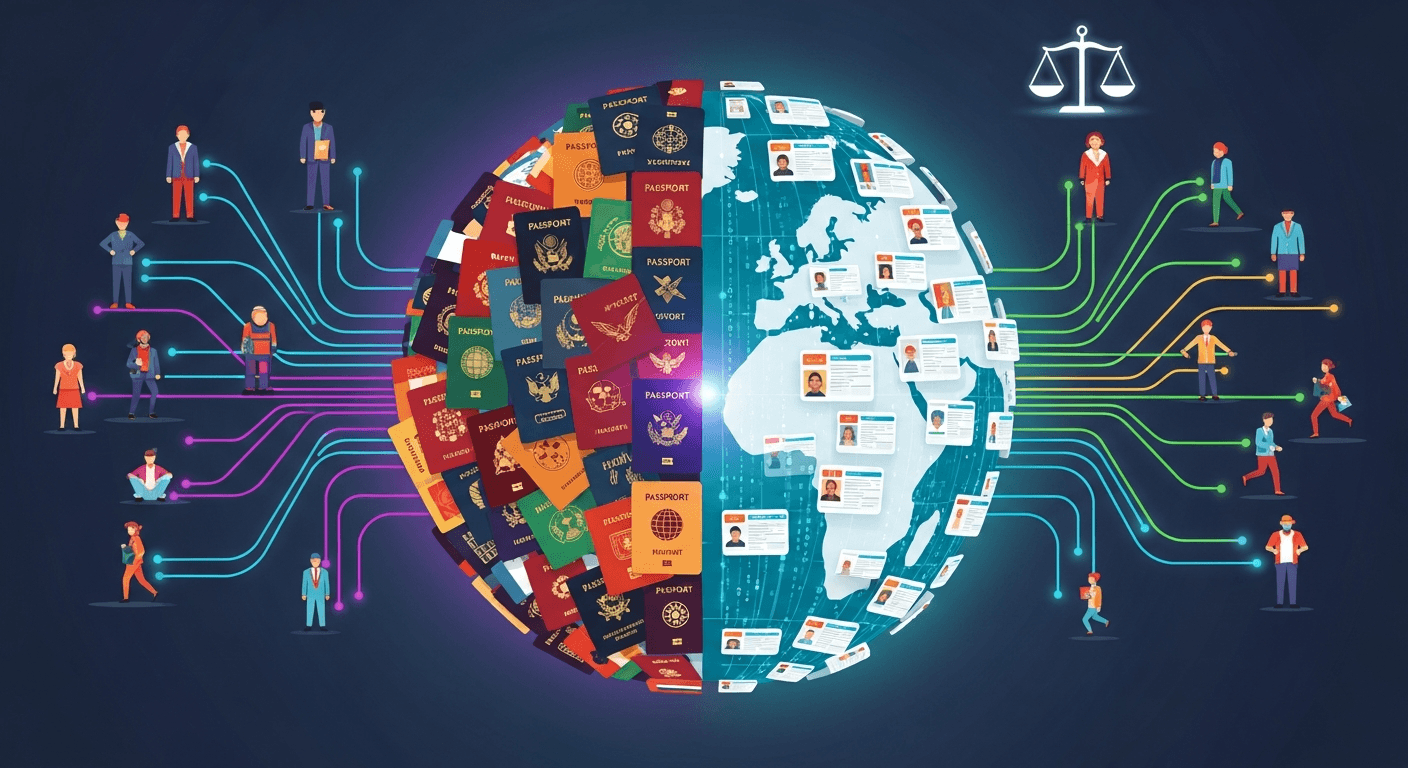
When I read that NITI Aayog has mooted an international mobility framework, I felt a familiar mix of hope and impatience. Hope, because the world is finally wrestling seriously with something I have been thinking about for years: how people, skills and work cross borders in an era of digital delivery, demographic shifts and geopolitical friction. Impatience, because good ideas become meaningful only when converted into clear actions with measurable outcomes.
A short personal history: I’ve said this before
I have argued for elements of this for nearly a decade. In 2015 I laid out the idea of a Virtual Employment Exchange and the opportunity for India’s graduates to offer digital services globally (The Missing Link). In 2016 I explored the prospects and perils of exporting manpower and urged that we make India the "skill capital" of the world (Exporting Manpower; Skill Capital of the World). And in 2019 I suggested a sharper, accountable role for NITI that focuses on policy design and measurable targets rather than implementation theatre (NITI V 2.0: a Concept Note). These posts are not nostalgia — they are a trail of argument about what such a mobility framework must include.
What an international mobility framework should fix
If NITI is serious, the framework should be more than aspirational language. At minimum it must address:
- Clear definitions and categories: short-term skilled mobility, permanent migration, digital labour, apprentices and trainees — each needs tailored rules.
- Credential portability and trust: recognized digital credentials, standardized assessments, and cross-border verification so a plumber, nurse or software engineer isn’t blocked by paperwork.
- Social protection portability: pensions, medical portability, and insurance mechanisms so mobility doesn’t mean vulnerability.
- Bilateral/multilateral labour pacts with enforceable rights for workers and simple dispute-resolution channels.
- A Virtual Employment Exchange (VEE): searchable jobs, profiles and transparent recruitment (something I recommended in 2015) to reduce predatory intermediaries and illegal migration.
- Data governance and privacy: mobility depends on sharing personal and credential data — citizens must control consent and privacy.
- Measurable targets and monitoring: each policy plank must name responsible ministries/agencies and publish measurable KPIs at regular intervals.
Practical, politically-feasible steps I’d push for now
- Start with pilots: choose two or three corridors (for example, specific Indian states paired with partner economies) and test credential portability and VEE integration.
- Create a common digital credential standard: adopt an interoperable standard for skills and apprenticeships so hiring is frictionless across borders.
- Fast-track social security MOUs: simple portability pacts for pensions and healthcare for workers on temporary contracts.
- Engage the diaspora: treat diaspora institutions as partners in skills validation, mentoring and job linkages.
- Insist on measurable accountability from day one: NITI should publish the framework, invite public comments, set timelines, and name the ministry and third-party monitors for each deliverable (a point I argued in 2019).
Risks I worry about
- Tokenism: a glossy framework without teeth will only move headlines, not people’s lives.
- Local backlash: mobility without local skilling and employment programmes can fuel political resistance in destination countries.
- Predatory intermediation: if recruitment remains opaque, workers will continue to pay heavy costs — VEE-like transparency is essential.
- Digital exclusion: unless we invest in digital access and assessment for rural and disadvantaged populations, mobility will deepen inequality.
Why this matters beyond remittances or GDP
Mobility is not just about dollars sent home or filling labour shortages. It is about dignity — the dignity of being able to work abroad or online without losing your rights, your savings and your identity. It is about converting India’s demographic dividend into decent livelihoods rather than desperation. It is about building institutions that measure outcomes, not just craft slogans.
My final ask to NITI (and to myself)
Design the framework as a pragmatic instrument: specific pilots, interoperable digital credentials, social-protection portability, and an honest accountability map. And keep citizens — not just ministries — in the feedback loop. I’ve been writing about these ideas for years because I believe they can work. Now is the time for NITI to make the transition from idea to implementation with the humility to start small and the courage to scale when pilots prove out.
Regards,
Hemen Parekh
Any questions / doubts / clarifications regarding this blog? Just ask (by typing or talking) my Virtual Avatar on the website embedded below. Then "Share" that to your friend on WhatsApp.
Get correct answer to any question asked by Shri Amitabh Bachchan on Kaun Banega Crorepati, faster than any contestant
Hello Candidates :
- For UPSC – IAS – IPS – IFS etc., exams, you must prepare to answer, essay type questions which test your General Knowledge / Sensitivity of current events
- If you have read this blog carefully , you should be able to answer the following question:
- Need help ? No problem . Following are two AI AGENTS where we have PRE-LOADED this question in their respective Question Boxes . All that you have to do is just click SUBMIT
- www.HemenParekh.ai { a SLM , powered by my own Digital Content of more than 50,000 + documents, written by me over past 60 years of my professional career }
- www.IndiaAGI.ai { a consortium of 3 LLMs which debate and deliver a CONSENSUS answer – and each gives its own answer as well ! }
- It is up to you to decide which answer is more comprehensive / nuanced ( For sheer amazement, click both SUBMIT buttons quickly, one after another ) Then share any answer with yourself / your friends ( using WhatsApp / Email ). Nothing stops you from submitting ( just copy / paste from your resource ), all those questions from last year’s UPSC exam paper as well !
- May be there are other online resources which too provide you answers to UPSC “ General Knowledge “ questions but only I provide you in 26 languages !

No comments:
Post a Comment