
Lead
I want to take a close, practical look at what makes Russia’s so‑called "Oreshnik" — described in open-source reporting as a multi‑warhead ballistic weapon used against targets in Ukraine — especially difficult for defenders to stop. My aim here is to explain the underlying technology and tactics in clear language, weigh the real limits of air defenses, and consider the broader strategic consequences. I’ll try to separate confirmed facts from plausible analyst judgments and make the threats comprehensible for an informed general reader.
Design: a short primer on multi‑warhead concepts
What "multi‑warhead" can mean
MIRV (multiple independently targetable reentry vehicles): a single ballistic missile bus releases several reentry vehicles, each guided to a different target. MIRVs were developed for strategic nuclear forces because one missile could strike multiple targets and overwhelm defenses.
MaRV (maneuverable reentry vehicle): a reentry vehicle that can alter its path after reentry using aerodynamic or control surfaces and small thrusters, improving accuracy and complicating interception.
Cluster/submunition payloads: instead of separate RVs, a missile can carry fragmentation or shaped‑charge submunitions designed to spread damage across a wider area (useful against airfields, logistics nodes, or concentrations of soft targets).
How Oreshnik is usually described (carefully)
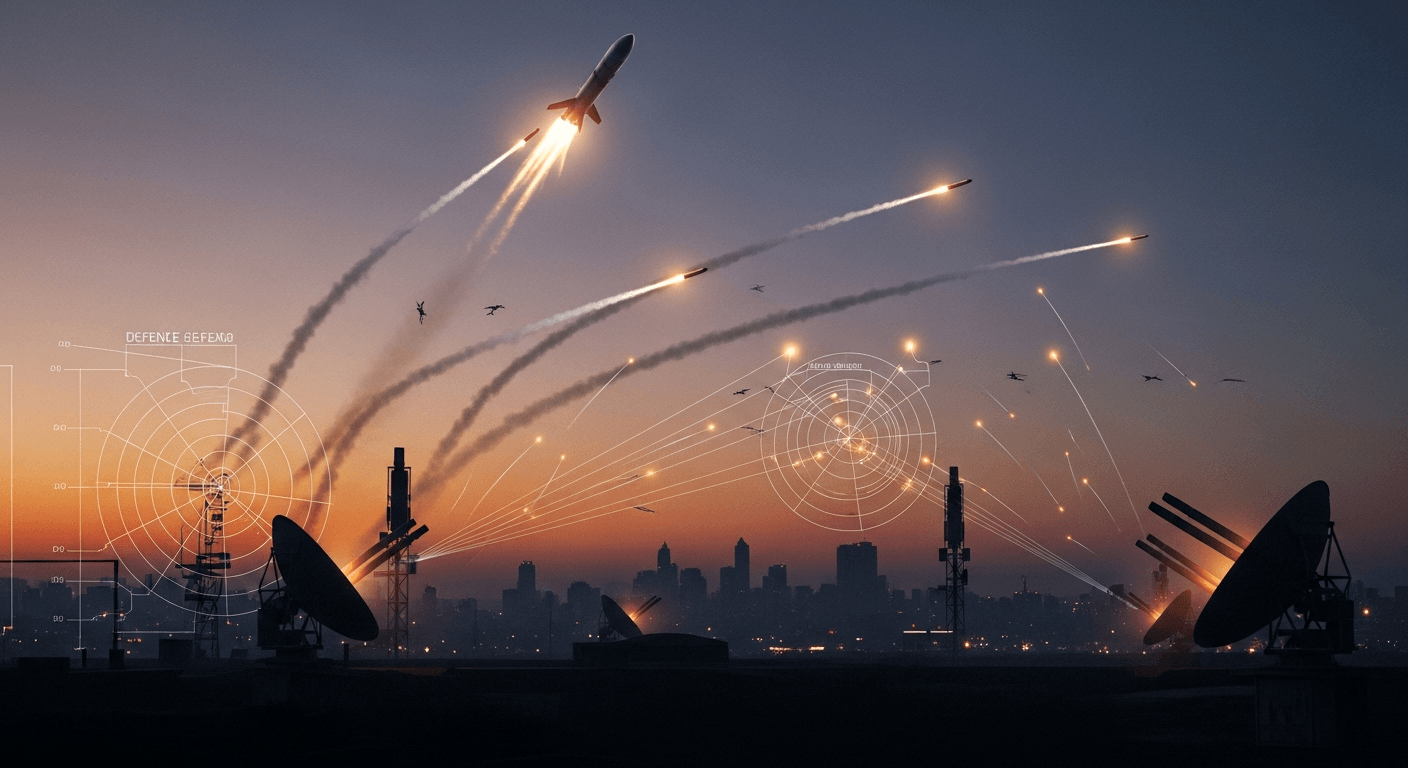
Open reporting and public analysts have labeled Oreshnik as a multi‑warhead ballistic system or a ballistic payload concept used operationally over Ukraine. Public sources have emphasized its ability to present multiple fast targets in the terminal phase — either through several RVs, maneuvering warheads, or a combination of warheads and decoys.
I’ll avoid quoting precise, unverified counts or exotic capabilities that aren’t corroborated publicly; the important point is that the weapon is designed to present defenders with multiple, fast, and in some cases maneuvering threats in the final seconds before impact.
Guidance and flight profile: how it reaches the target
The classical ballistic flight phases
Boost phase: rocket motors accelerate the missile above the atmosphere. Defensive advantage: very short window for detection and intercept from the ground.
Midcourse phase: the missile (and any bus that carries reentry vehicles) coast outside the atmosphere. This is the time when MIRV buses separate and can deploy countermeasures or RVs. Space‑based or long‑range sensors are most useful here, but midcourse intercept is technically hard against many small fast objects.
Reentry/terminal phase: warheads or submunitions re‑enter the atmosphere and approach the target at very high speed. This is when most national air‑defence and point‑defence systems engage.
How MIRV and MaRV features change the profile
MIRVs multiply the number of terminal objects defenders must detect, track and engage. Tracking three or five independently descending objects is much harder than tracking one.
MaRVs add unpredictability: a maneuvering warhead can change its descent path and angle, reducing interceptor kill probability and limiting the time that a defender knows the impact corridor in advance.
Deployment of simple decoys or chaff in midcourse can further clutter a defender’s sensor picture and force interceptors to waste shots.
Countermeasures and why they struggle
Modern layered air defenses (what they try to do)
Early warning with long‑range radars and space/overhead sensors to detect launches during boost or midcourse.
Long‑range interceptors for midcourse/near‑space engagement (rare outside strategic defense systems).
Point and area defenses that engage incoming warheads in the terminal phase (radars + short‑range interceptors, guns, or directed energy where available).
Why multi‑warhead ballistic threats challenge those layers
Saturation: a limited inventory of interceptors can be exhausted quickly. If an attacker sends multiple warheads from one missile or launches several missiles in a salvo, defenders face a resource problem.
Compression of decision time: high closing speeds in the terminal phase give human and automated systems only seconds to discriminate real warheads from decoys and cue interceptors. Maneuvering warheads shave off even more reaction time.
Sensor limitations: ground radars have good detection near the horizon and at low altitudes, but discrimination of very small, fast, and potentially low‑observable reentry vehicles — especially among decoys — is difficult. Space sensors are helpful but not omniscient, and not all states have a space sensor layer that's integrated into battlefield air defence in real time.
Interceptor constraints: intercepting hypersonic or high‑G‑maneuvering targets needs fast reaction, guidance precision, and a high probability‑of‑kill (P(k)). Many tactical interceptors were designed to stop cruise missiles or aircraft and are less effective against concentrated ballistic terminal threats.
Specific technical problems defenders face
The midcourse environment: in space, a MIRV bus can dispense multiple objects; distinguishing which objects are lethal RVs and which are decoys is often impossible until reentry begins.
Terminal maneuverability: a MaRV can change its approach vector late, forcing interceptors to burn more energy or even fail to reach the changed intercept geometry.
Cost asymmetry: cheaper offensive payloads or decoys can force defenders to spend many times more on expensive interceptors.
Operational use and observed effects in Ukraine
How such weapons have been used tactically
Reported use in a theater like Ukraine focuses on operational outcomes: striking hardened or dispersed infrastructure, overwhelming regional air defenses, and degrading logistics and command nodes.
Multiple warheads or submunitions are safer for an attacker when the aim is to guarantee damage across an area or to saturate a region of defenses — even if individual accuracy is lower than a precision guided glide vehicle.
Observed battlefield effects (careful phrasing)
Open reporting from the conflict has documented occasions when defensive systems struggled to engage multiple simultaneous terminal threats and when strikes damaged energy, transport, and military infrastructure. Those operational accounts align with the expected behavior of multi‑object ballistic payloads: intermittent success for defenders and significant disruption when even a subset of warheads reach target areas.
Those real‑world effects combine psychological impact on populations and real logistical consequences: outages, damaged repair facilities, and constrained movement.
Countering Oreshnik‑type threats: realistic options
Hardening and redundancy
Build redundancy into critical infrastructure (distributed power, backup command nodes), and harden key sites to reduce single‑strike effects.
Active defense improvements
Increase interceptor inventories, improve sensor fusion (ground, aerial, space) to improve discrimination and cueing, and integrate layered interceptors capable of higher terminal energy and agility.
Offensive and non‑kinetic options
Disrupting launch capabilities (intelligence, precision strike, cyber/EM operations against command and control) remains effective against systems that require prelaunch infrastructure.
Electronic warfare against guidance and communications can reduce the coordination that makes complex payloads effective.
Limits to mitigation
There is no foolproof defensive fix. Improving defenses reduces risk but usually at very high cost and with persistent vulnerabilities to surprise, decoys, or sheer numbers.
Geopolitical and strategic implications
Escalation and deterrence
Multi‑warhead systems historically change deterrence calculations because they can deliver multiple effects from a single launcher. In regional wars, their tactical use raises the political stakes: attacks on critical infrastructure have both military and political consequences.
Arms control and stability
Deployments that blur lines between conventional and strategic payloads complicate arms control efforts. If a system can carry many warheads — and if the public narrative about it is alarmist — it can push adversaries toward more aggressive posture or pre‑emotive planning.
Defence spending and doctrine shifts
States facing these threats may prioritize missile defenses, hardened infrastructure, and preemptive strike capabilities, shaping procurement and alliance cooperation priorities for years.
Concluding remarks: calibrating fear and response
I believe the right response is sober: acknowledge that multi‑warhead ballistic concepts introduce real and difficult challenges to air defenses, but also recognize limits. The offensive/defensive balance is not immutable — better sensors, greater interceptor stocks, smarter discrimination algorithms, and active measures against launch systems reduce risk, even if they never remove it.
At the tactical level, the presence of Oreshnik‑style payloads in a conflict encourages defenders to invest in layered awareness, redundancy for civilian systems, and international cooperation on early warning. Strategically, its use raises familiar—but important—questions about escalation, the blending of conventional and strategic capabilities, and the need for realistic arms control conversations.
I’ll keep watching the open reporting, technical analysis, and battlefield evidence. Where I have discussed related themes before — the cost asymmetry between attack and defense, and the power of sensor fusion — my earlier reflections feel unusually pertinent today: technology matters, but so do doctrine, integration, and the political will to build resilience.
Regards,
Hemen Parekh
Any questions / doubts / clarifications regarding this blog? Just ask (by typing or talking) my Virtual Avatar on the website embedded below. Then "Share" that to your friend on WhatsApp.
Get correct answer to any question asked by Shri Amitabh Bachchan on Kaun Banega Crorepati, faster than any contestant
Hello Candidates :
- For UPSC – IAS – IPS – IFS etc., exams, you must prepare to answer, essay type questions which test your General Knowledge / Sensitivity of current events
- If you have read this blog carefully , you should be able to answer the following question:
- Need help ? No problem . Following are two AI AGENTS where we have PRE-LOADED this question in their respective Question Boxes . All that you have to do is just click SUBMIT
- www.HemenParekh.ai { a SLM , powered by my own Digital Content of more than 50,000 + documents, written by me over past 60 years of my professional career }
- www.IndiaAGI.ai { a consortium of 3 LLMs which debate and deliver a CONSENSUS answer – and each gives its own answer as well ! }
- It is up to you to decide which answer is more comprehensive / nuanced ( For sheer amazement, click both SUBMIT buttons quickly, one after another ) Then share any answer with yourself / your friends ( using WhatsApp / Email ). Nothing stops you from submitting ( just copy / paste from your resource ), all those questions from last year’s UPSC exam paper as well !
- May be there are other online resources which too provide you answers to UPSC “ General Knowledge “ questions but only I provide you in 26 languages !



No comments:
Post a Comment