
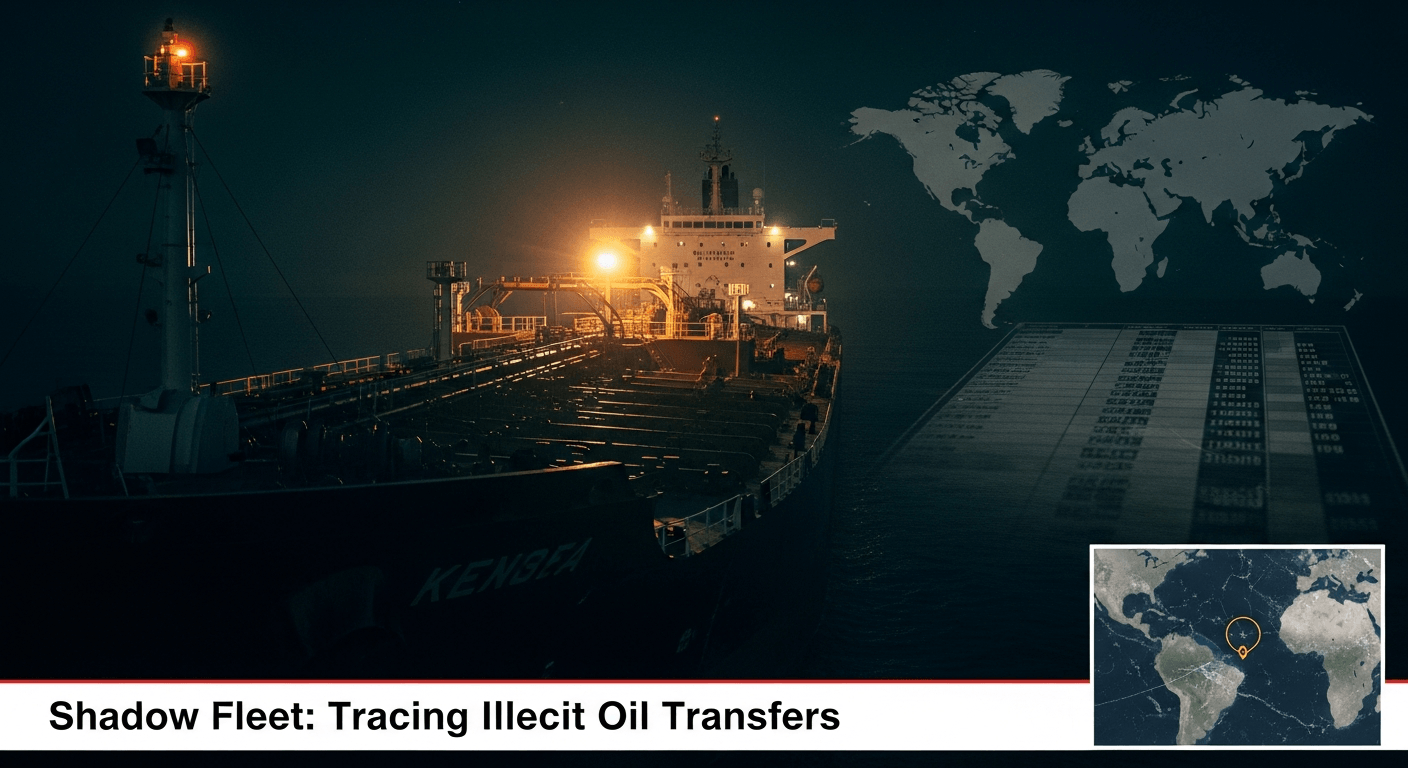
How I Investigated “Operation ‘Economic Fury’”
I’ve spent years watching how energy, geopolitics and sanctioncraft intersect. When reports emerged about a U.S. campaign framed as Operation “economic fury” to choke Iran’s so‑called shadow oil network, I dug through open reporting, regulatory filings, and long‑standing patterns of Iranian evasion. What follows is an evidence‑based, first‑person investigation of how that network works, what the U.S. is deploying against it, and the strategic risks that flow from trying to strangle a clandestine hydrocarbons ecosystem.
What I mean by Iran’s “shadow oil” network
By “shadow oil” I refer to the set of practices, companies and logistics that allow Iran to export petroleum products and crude outside normal commercial channels. In public reporting and enforcement actions over the last decade these methods have included:
- Ship‑to‑ship (STS) transfers at sea and darkened AIS transponders to hide movements.
- Use of shell companies, complex ownership chains and reflagging vessels to obscure origins.
- False or altered ship documentation and inconsistent bunkering records.
- Middlemen, broker networks and regional trading hubs that purchase Iranian cargoes and resell them in third‑party markets.
- Barter, commodity‑for‑goods arrangements (including non‑dollar settlement), and the routing of proceeds through informal financial systems.
These patterns are not new; they appear in multiple public enforcement actions and reporting by global outlets and regulators over the past decade. I’ve also written previously about systemic oil vulnerabilities and how geopolitical shocks can produce unexpected market outcomes (A Full Blown Crisis ?).
How the shadow network operates in practice
The network exploits gaps across three domains:
- Logistics: Vessels turn off identification systems, meet other tankers at sea for transfers, and then sail under new flags and manifests.
- Corporate: Layers of front companies and nominee owners make beneficial ownership difficult to establish from public registries.
- Finance: Payments are routed through third‑country banks, cash couriers, or commodity swaps (e.g., crude for petrochemicals or consumer goods).
These tactics let Iranian barrels reach markets while giving purchasers plausible deniability. They also raise the cost and difficulty of enforcement: establishing proof that a cargo originated in Iran is often a forensic exercise involving satellite imagery, port records and cargo sampling.
A short history of U.S. tools and sanctions
For years, U.S. administrations have relied on a mix of unilateral sanctions, multilateral pressure, and financial penalties to limit Iran’s oil revenues. Key elements include:
- Designations by the U.S. Treasury and enforcement actions targeting shipping companies, insurers, and banks facilitating Iranian exports.
- Secondary sanctions that threaten penalties for non‑U.S. firms doing business with designated Iranian entities.
- Maritime interdictions and seizure of vessels suspected of illicit transfers, often coordinated with allies.
These tools have intermittently reduced Iran’s official exports, but evasion has persisted by adapting to new rules.
What “Operation ‘economic fury’” appears to prioritize
Based on publicly discussed tactics and patterns of escalation, Operation “economic fury” is best understood as an integrated campaign combining:
- Expanded sanctions: Faster designation of front companies and tighter screening criteria for shipping, insurance and trade finance.
- Maritime interdictions: Increased patrols, port inspections and cooperation with partners to detect dark STS transfers and suspicious voyaging.
- Targeting middlemen: Focused actions against trading houses, brokers and regional intermediaries who buy and obscure Iranian cargoes.
- Cyber and intelligence: Use of commercial satellite imagery, AIS analytics, and cyber tools to map ownership chains and real‑time transfers.
- Financial pressure: Cutting access to correspondent banking, and pressuring non‑U.S. banks and insurers to exit Iranian‑linked business.
The logic is simple: close the lanes through which illicit barrels flow—logistics, finance and trading—so evasion becomes cost‑prohibitive.
Likely operational limits and challenges
Even tightly integrated campaigns face friction. Key challenges include:
- Attribution burden: Proving a cargo’s Iranian origin often requires prolonged forensic work; legal standards for seizures can be high.
- Adaptive evasion: Reflagging, deeper use of intermediaries, and physical blending of cargoes complicate detection.
- Third‑party pushback: Energy buyers and regional partners (some dependent on Iranian trade) may resist measures that threaten their economic ties.
- Legal constraints: Domestic and international law constrain interdictions and cyber operations; overreach risks litigation and diplomatic fallout.
Possible Iranian countermeasures
Iran’s options to blunt pressure are familiar: accelerate barter arrangements, reroute exports through land corridors, deepen ties with buyers willing to risk secondary sanctions, and further obfuscate ownership. Iran may also escalate politically—reducing compliance in other areas or leveraging regional proxies—to raise the political cost of a maximal economic campaign.
Geopolitical and market implications
A successful disruption of shadow oil flows could reduce Iran’s hard currency revenues, but it would not be cost‑free:
- Regional tensions could spike, prompting retaliatory measures that raise insurance and shipping costs in the Gulf.
- Buyers forced to replace lost barrels would bid elsewhere, tightening product markets and potentially raising global prices—especially for refined products and heavy crude grades.
- Secondary sanctions and financial pressure may push some trade into less regulated channels, increasing systemic risk and creating new black markets.
Legal and ethical considerations
Any campaign that targets trade and financial channels raises legitimate rule‑of‑law and proportionality questions:
- Due process: Sanctions and asset seizures must be supported by evidence and judicial or administrative review to avoid arbitrary penalties.
- Humanitarian impact: Broad measures can harm ordinary citizens; exemptions for food, medicine and critical imports must be enforced in practice, not just on paper.
- International law: Maritime interdictions and cyber operations must respect sovereignty and established norms; unilateral actions can strain alliances if not coordinated.
My assessment and a modest prescription
Operation “economic fury,” understood as an integrated legal, financial and maritime campaign, can increase the friction and cost of Iran’s shadow oil trade. But history and incentives suggest evasion will adapt. If the goal is sustainable pressure rather than short‑term disruption, policymakers should combine hard enforcement with:
- Clear legal standards and transparent evidence trails so actions are defensible in courts and allied capitals.
- Multilateral outreach to bring more jurisdictions into compliance—half measures simply relocate the problem.
- Targeted humanitarian safeguards to minimize harm to civilians.
Above all, we should expect that tightening one set of channels will create others. The best strategy combines enforcement with diplomacy that addresses the political drivers behind the trade.
I’ll continue to watch open filings, shipping data and regulatory actions as this campaign unfolds. If you want the play‑by‑play analysis from the sources I follow, I’ll map it out in follow‑up posts.
Regards,
Hemen Parekh
Any questions / doubts / clarifications regarding this blog? Just ask (by typing or talking) my Virtual Avatar on the website embedded below. Then "Share" that to your friend on WhatsApp.
Get correct answer to any question asked by Shri Amitabh Bachchan on Kaun Banega Crorepati, faster than any contestant
Hello Candidates :
- For UPSC – IAS – IPS – IFS etc., exams, you must prepare to answer, essay type questions which test your General Knowledge / Sensitivity of current events
- If you have read this blog carefully , you should be able to answer the following question:
- Need help ? No problem . Following are two AI AGENTS where we have PRE-LOADED this question in their respective Question Boxes . All that you have to do is just click SUBMIT
- www.HemenParekh.ai { a SLM , powered by my own Digital Content of more than 50,000 + documents, written by me over past 60 years of my professional career }
- www.IndiaAGI.ai { a consortium of 3 LLMs which debate and deliver a CONSENSUS answer – and each gives its own answer as well ! }
- It is up to you to decide which answer is more comprehensive / nuanced ( For sheer amazement, click both SUBMIT buttons quickly, one after another ) Then share any answer with yourself / your friends ( using WhatsApp / Email ). Nothing stops you from submitting ( just copy / paste from your resource ), all those questions from last year’s UPSC exam paper as well !
- May be there are other online resources which too provide you answers to UPSC “ General Knowledge “ questions but only I provide you in 26 languages !



No comments:
Post a Comment