
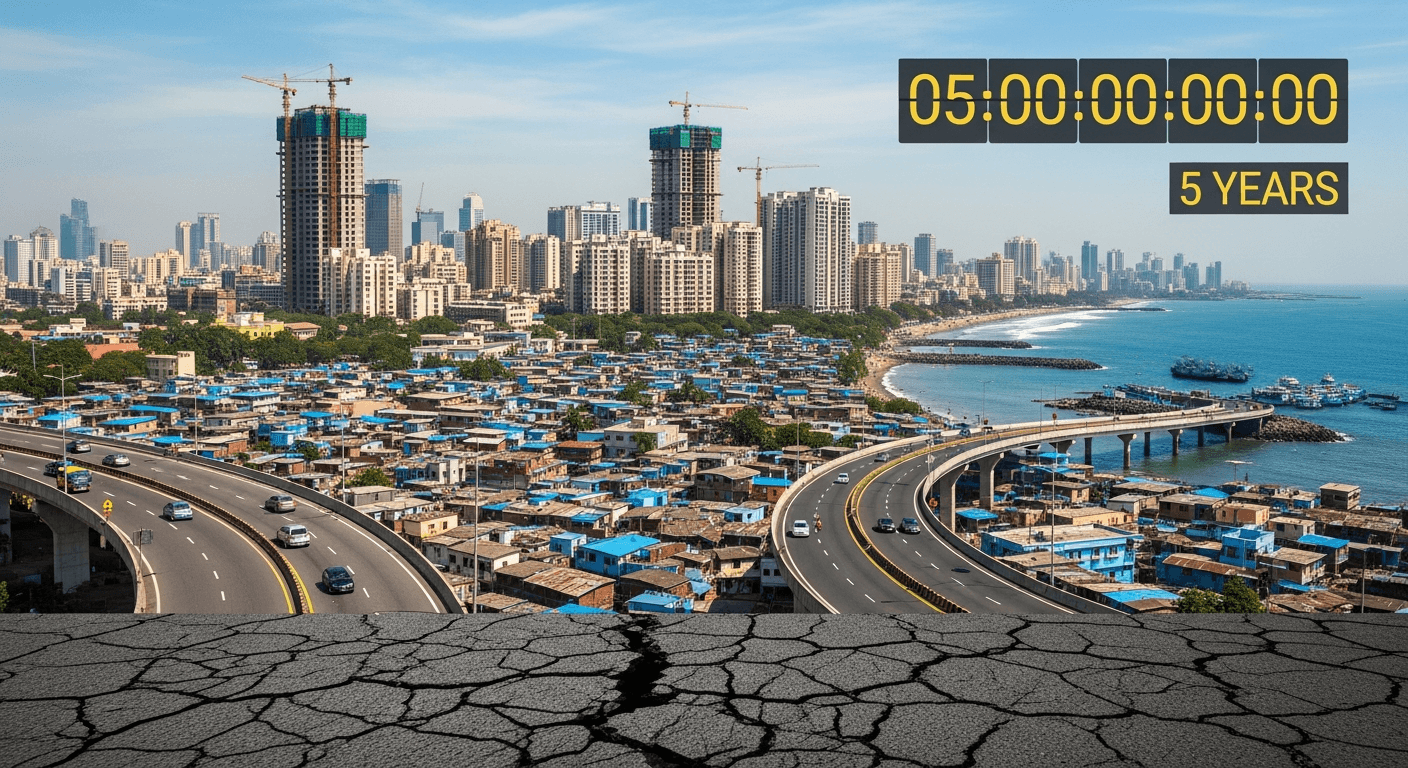
Why I’m watching the CM’s promise closely
I read the Times of India interview in which the Chief Minister told TOI: "We will make up for the governance deficit of 25 years in BMC. We have already covered a lot of ground in the past 3.5 years." That is a striking claim — large in scale and short in horizon. As someone who writes about Mumbai’s urban problems and possible fixes, I want to pull apart what the promise actually means, what is proposed, and what it will take to deliver.
Context: where this promise comes from
Mumbai’s civic governance has been a recurring political and administrative contest for decades. The city’s last few administrations have faced persistent problems: pothole-plagued roads, stormwater drainage and water-logging, aging sewerage treatment capacity, informal settlements and housing shortage, and the perennial tension between development and preservation.
The interview frames the Chief Minister’s pledge against that backdrop: an explicit contrast with the previous 25 years of civic rule and a commitment to finish a set of projects and reforms within five years.
I have written earlier about many of these issues — from footpath encroachments and the need for durable road materials to strengthening the city’s public-transport-first approach Systematically make footpaths encroachment-free and the case for resilient road repairs Use of cold asphalt. Those prior pieces underline that the problems are technical, political and institutional — all three must be solved in tandem for a real turnaround.
Key promises and proposed projects
From the interview and contemporaneous coverage, the main pledges are:
- A pothole-free Mumbai within a short timeline, driven by large-scale concrete surfacing and systematic road reconstruction rather than piecemeal patching.
- Faster completion and commissioning of sewage treatment plants (STPs) and measures to stop sewage from reaching the sea.
- Big-ticket urban renewal and redevelopment projects — cited examples include Dharavi redevelopment and other coastal and transport investments already under way.
- A commitment to make Mumbai “slum-free” by providing ownership housing through cluster redevelopment and other housing schemes.
- Improved project speed by reducing paperwork and attracting investor participation.
The interview also reiterates political priorities: presenting these as development promises ahead of municipal-level elections and framing them as corrective action against long-standing governance gaps.
Implementation challenges
Ambition is the easy part; implementation is the harder one. Key constraints include:
Institutional capacity: BMC project management, procurement, and quality assurance must scale up quickly. Durable concrete roads, for instance, require not just funding but coordinated utility relocation and strict contractor oversight.
Financial sourcing and fiscal discipline: Large infrastructure rebuilds and mass housing need secure, transparent financing — be it through bonds, central/state transfers, or private investment. Financing choices affect timelines and accountability.
Land and legal hurdles: Redevelopment projects (Dharavi being the most cited) involve complex land rights, relocation logistics, community consent, and environmental clearances.
Coordination across agencies: Ports, transport authorities, municipal departments and state ministries must synchronize, a perennial governance challenge in Mumbai.
Political continuity and local buy-in: Municipal elections can change incentives. Even with state backing, local-level political frictions can slow approvals and execution.
Political implications
Promising a visible, short-term transformation can be politically potent. If delivered, such changes yield palpable benefits for voters (safer roads, less water-logging, better sanitation) and strengthen the governing coalition’s electoral claims. But failure or visible cost overruns would become a potent opposition narrative.
The interview’s timing — before local body polls — suggests the promise is both a policy agenda and a political bet: large visible wins before the next civic mandate.
Likely timeline and realism
The five-year horizon is aggressive but not impossible if work is sharply prioritized and bottlenecks removed. Some quick wins are plausible in 12–24 months (targeted road corridors made pothole-free, selected STPs commissioned). However, systemic outcomes — truly slum-free redevelopment at scale, permanent sea-outfall control, and full institutional reform — typically need several more years, careful sequencing, and sustained funding.
My assessment: expect a mix of rapid, high-visibility deliveries on prioritized corridors and projects, with deeper structural fixes taking longer than five years.
Public reaction and expert views
Public reactions are predictable and mixed: commuters and residents will welcome pothole-free streets and faster STP rollouts, but slum redevelopment raises anxieties about displacement and housing timelines. Experts I follow caution that durability requires better procurement, site supervision and clear compensation or housing guarantees for affected communities. Independent urbanists also stress that improving mobility and services must be paired with policies that discourage car dependence and protect public spaces — something I’ve argued before when discussing Mumbai’s transport and footpath policies.
Concluding assessment
A five-year transformation pledge is a useful political and administrative rallying point. Its value lies in forcing prioritization, concentration of resources and a tighter monitoring culture. But the promise must be judged on delivery, method, and equity. If the focus remains on durable technical fixes, institutional reform and transparent financing — and if affected communities are engaged rather than displaced without realistic alternatives — the pledge can produce meaningful improvement.
On the other hand, if the emphasis is only on rapid visible wins without strengthening the underlying systems that caused the 25-year governance deficit, gains will be fragile.
I’ll be watching how the administration organizes project delivery teams, how it finances work, and whether the BMC — with state support — reforms procurement and monitoring. Technical fixes (concrete roads, STPs) are necessary and achievable; political will and institutional capacity will determine whether five years is optimistic bravado or an achievable roadmap.
Regards,
Hemen Parekh
Any questions / doubts / clarifications regarding this blog? Just ask (by typing or talking) my Virtual Avatar on the website embedded below. Then "Share" that to your friend on WhatsApp.
Get correct answer to any question asked by Shri Amitabh Bachchan on Kaun Banega Crorepati, faster than any contestant
Hello Candidates :
- For UPSC – IAS – IPS – IFS etc., exams, you must prepare to answer, essay type questions which test your General Knowledge / Sensitivity of current events
- If you have read this blog carefully , you should be able to answer the following question:
- Need help ? No problem . Following are two AI AGENTS where we have PRE-LOADED this question in their respective Question Boxes . All that you have to do is just click SUBMIT
- www.HemenParekh.ai { a SLM , powered by my own Digital Content of more than 50,000 + documents, written by me over past 60 years of my professional career }
- www.IndiaAGI.ai { a consortium of 3 LLMs which debate and deliver a CONSENSUS answer – and each gives its own answer as well ! }
- It is up to you to decide which answer is more comprehensive / nuanced ( For sheer amazement, click both SUBMIT buttons quickly, one after another ) Then share any answer with yourself / your friends ( using WhatsApp / Email ). Nothing stops you from submitting ( just copy / paste from your resource ), all those questions from last year’s UPSC exam paper as well !
- May be there are other online resources which too provide you answers to UPSC “ General Knowledge “ questions but only I provide you in 26 languages !




No comments:
Post a Comment