
Introduction
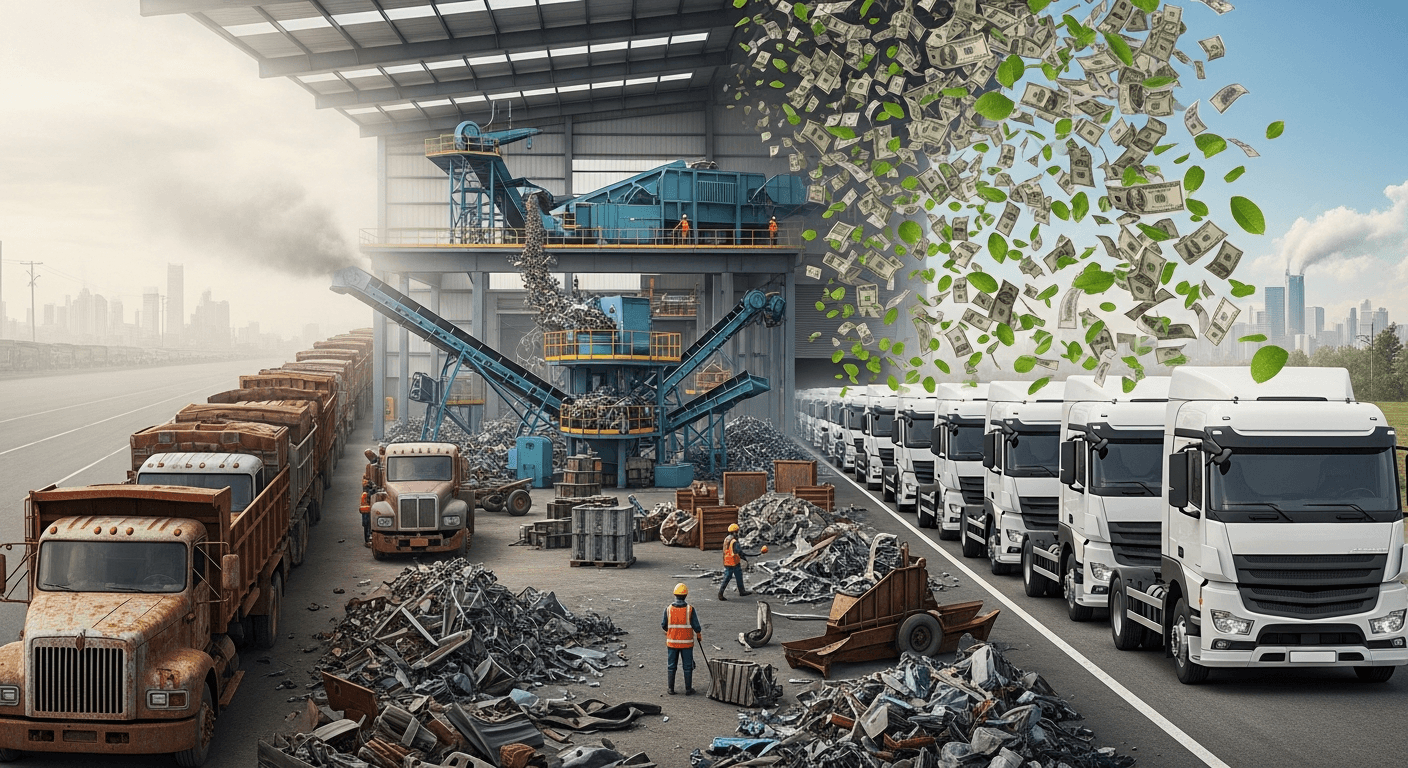
In Budget 2026-27 conversations, one of the quieter but important asks comes from the commercial-vehicle sector: an incentive scheme to encourage the scrapping of old trucks. I’ve been watching this debate for years. Today, Ashok Leyland — one of India’s largest truck makers — has urged the government to add a demand stimulus tied to vehicle scrappage, arguing it would boost replacement demand, cut emissions and lower logistics costs Economic Times.
Why this matters
Older commercial vehicles are less fuel-efficient, more polluting and often costlier to maintain. The average age of India’s truck fleet has risen above 10 years — well past the historical replacement cycle — so the argument for a policy nudge is straightforward: create a financial reason for owners to retire worn-out trucks and buy modern, cleaner ones.
Background: Who is asking, and why
Ashok Leyland, a long-time leader in India’s commercial-vehicle sector, has been pushing for tougher action to accelerate fleet renewal. The company is also investing in scrappage centres and new product lines, hoping to be ready for a broad replacement cycle. Their pitch is not ideological: it is pragmatic. Newer trucks offer better payloads, improved fuel economy and lower lifecycle costs — benefits that can be unlocked faster with a short-term subsidy or incentive scheme Business Standard.
I’ve written about vehicle scrappage and the idea of a "vehicle recycle" policy in the past — this is not new thinking for me — and the present ask feels like a long-awaited practical test of those earlier ideas Rename it - Vehicle Recycle Policy.
What a scrappage incentive could look like
Policymakers have several levers they can use. A credible scheme for trucks could include:
- Tonnage-linked cash incentives: higher subsidy for heavier vehicles, lower for smaller ones, to reflect replacement value and emissions impact.
- Tax breaks: accelerated depreciation or one-time GST/registration concessions for new commercial vehicles bought in exchange for scrapping an old one.
- Trade-in support: guaranteed minimum salvage value or credit vouchers towards new purchases.
- Finance facilitation: subsidised interest rates or credit guarantees to help small fleet owners afford new trucks.
- Infrastructure tie-ins: support for certified scrapping centres and a digital platform to ease resale and recycling.
Economic and environmental impacts to expect
Positive effects could be significant:
- Job creation: scrapping centres, recycling operations and expanded production lines all create employment across manufacturing and services.
- Emissions reduction: replacing older engines with modern, lower-emission trucks reduces particulate and NOx emissions and improves urban air quality.
- Lower logistics costs: newer trucks often carry more payload at better fuel efficiency — that lowers per-ton transport costs and can shrink downstream consumer prices.
- Supply-chain momentum: OEMs, component suppliers and financing companies will see renewed orders, which can support broader industrial activity.
- Used-vehicle market formalisation: a structured scrappage route and trading platform can stabilise used-truck prices and reduce shady dismantling.
Potential challenges and counterarguments
The idea is attractive, but not without pitfalls:
- Fiscal cost: incentives mean a direct cost to the exchequer. The scheme must be well-targeted and time-bound to avoid open-ended subsidies.
- Equity for small owners: many truck owners are small operators whose incomes are irregular. Cash incentives must be paired with affordable finance so the poorest operators aren’t left behind.
- Implementation hurdles: verifying vehicle age/condition, preventing fraud, and ensuring scrapping happens at certified facilities will require robust digital tracking and enforcement.
- Market distortion: poorly designed incentives can spur speculative behaviour in the used-vehicle market or result in premature scrapping that hurts livelihoods.
Realistic industry tone
Industry spokespeople have been careful in their ask: they favour voluntary, well-designed incentives rather than mandatory scrappage. The core message is practical — a temporary nudge to overcome the inertia of replacement decisions and to crowd in benefits across logistics, emissions and manufacturing.
My recommendations
If I were advising the Finance Minister, I’d suggest the following approach for Budget 2026-27:
- Announce a pilot, time-bound scrappage incentive for commercial vehicles focused on high-emission segments (heavy-duty trucks).
- Pair subsidies with low-cost finance and strict digital verification so benefits reach genuine truck owners and not speculators.
- Require that scrapped vehicles be processed at certified facilities that meet environmental and worker-safety standards.
- Build a resale/scrap-tracking digital platform to stabilise the used-truck market and capture value for recycling.
What to watch in Budget 2026-27
Look for a targeted pilot rather than a sweeping, permanent subsidy. The right signal is a short, well-monitored program that can be scaled if outcomes — reduced emissions, healthy replacement demand and minimal fraud — are demonstrated. If the Budget shows this kind of calibrated design, we may finally see a meaningful refresh of India’s ageing truck fleet.
Conclusion
A scrappage incentive for trucks is not a silver bullet, but it is a sensible policy lever at a moment when fleet renewal can deliver environmental and economic returns. With careful targeting, robust verification and support for small owners, a Budget-led nudge could deliver cleaner roads, cheaper logistics and a manufacturing cycle that benefits many. I’ll be watching the Budget for signs that the government wants to test this idea in a responsible way.
Regards,
Hemen Parekh
Any questions / doubts / clarifications regarding this blog? Just ask (by typing or talking) my Virtual Avatar on the website embedded below. Then "Share" that to your friend on WhatsApp.
Get correct answer to any question asked by Shri Amitabh Bachchan on Kaun Banega Crorepati, faster than any contestant
Hello Candidates :
- For UPSC – IAS – IPS – IFS etc., exams, you must prepare to answer, essay type questions which test your General Knowledge / Sensitivity of current events
- If you have read this blog carefully , you should be able to answer the following question:
- Need help ? No problem . Following are two AI AGENTS where we have PRE-LOADED this question in their respective Question Boxes . All that you have to do is just click SUBMIT
- www.HemenParekh.ai { a SLM , powered by my own Digital Content of more than 50,000 + documents, written by me over past 60 years of my professional career }
- www.IndiaAGI.ai { a consortium of 3 LLMs which debate and deliver a CONSENSUS answer – and each gives its own answer as well ! }
- It is up to you to decide which answer is more comprehensive / nuanced ( For sheer amazement, click both SUBMIT buttons quickly, one after another ) Then share any answer with yourself / your friends ( using WhatsApp / Email ). Nothing stops you from submitting ( just copy / paste from your resource ), all those questions from last year’s UPSC exam paper as well !
- May be there are other online resources which too provide you answers to UPSC “ General Knowledge “ questions but only I provide you in 26 languages !


No comments:
Post a Comment