
When children demand kinder cities
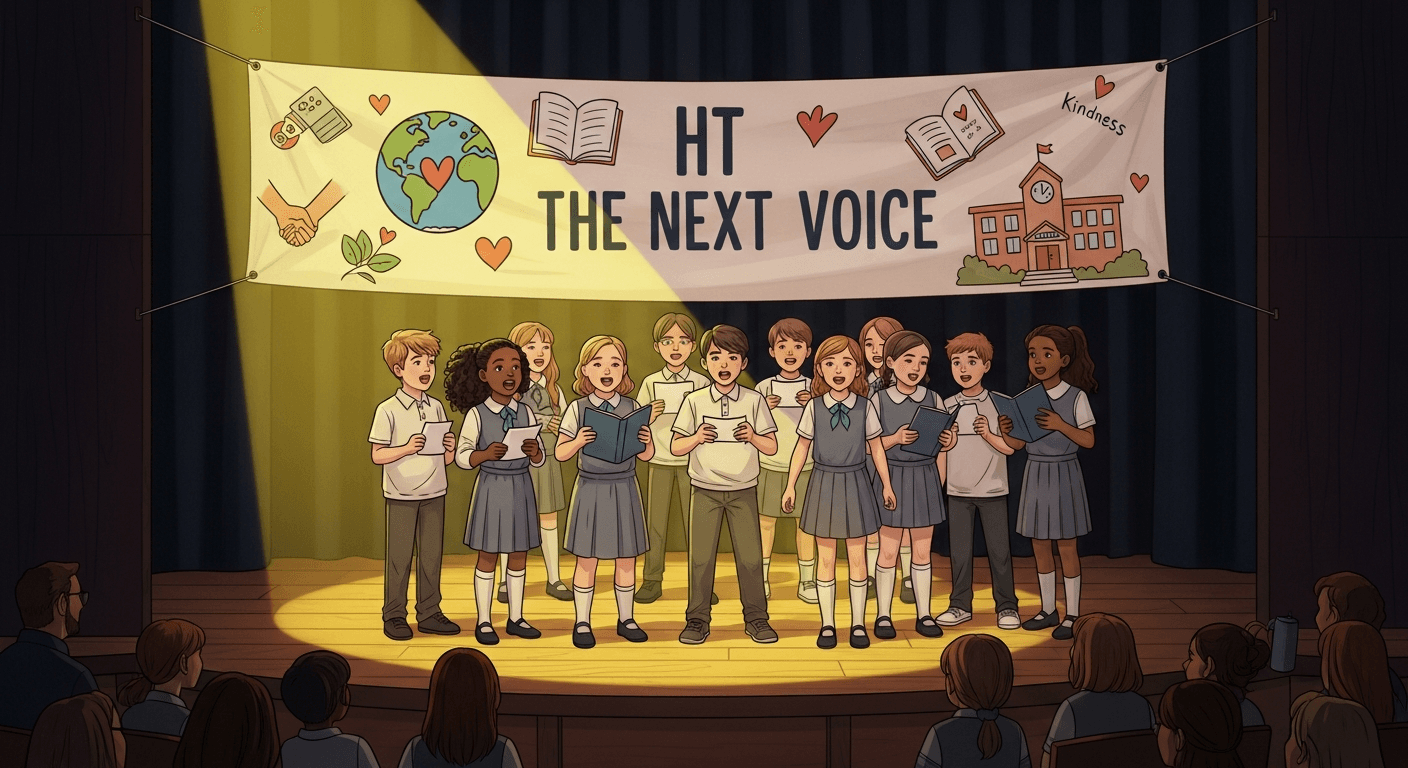
I read the report in Hindustan Times about HT The Next Voice — a storytelling, poetry and spoken-word event for school students staged at Modern School, Vasant Vihar. The images and descriptions stuck with me: children as young as nine standing under a spotlight and using very grown-up words to talk about kindness, the right to learn, pollution and safety. The original report is worth reading: School students turn poets, storytellers for social change.
What stayed with me
- The scale: finalists were shortlisted from hundreds of entries. That kind of interest tells you something: there is hunger among young people to find forms that allow them to speak.
- The themes: kindness, education as a right, environment, road safety — practical, urgent and anchored in everyday life. These are not abstract exercises; they are invitations to change behaviour and policy.
- The form: poetry, spoken word and storytelling are not ornament. They are persuasive technologies of the human heart. They teach students to feel an issue, craft a line and deliver it in a way that lingers.
A student I want to acknowledge
I was particularly moved by a performance described in the piece by Tara Maithili Mishra (tara.mishra@hixs.org) from Heritage International Xperiential School. Her blend of humour and a dystopian image — a "clean air museum" where clear skies are relics — felt like a quiet alarm bell. It reminded me that children use imagination to translate data (air quality indices, school closures) into moral stories that adults can no longer ignore.
Why this matters to me personally
I have written before about the duty and privilege of speaking up, of using words to influence public life — it is, in my language, a birth‑right we must exercise. Years ago I posted my reflections on using poems and public writing to influence thought and policy (Home Page of Revised Blogger Site). Seeing students now choose the same tools — verse, story, performance — feels like a circle completing itself.
Art in youth education creates not just performers, but active citizens. When children are taught to narrate their experience, they also learn agency: how to name injustice, how to imagine alternatives, how to invite listeners into empathy.
What schools and communities could do next
- Preserve performance spaces: small stages, school assemblies, community halls where students are invited to test and refine voice.
- Integrate civic themes: curriculum that links a poem on "kindness" with local projects — a neighbourhood clean-up, reading sessions for younger kids, or a letter-writing drive to the municipal office.
- Celebrate outcomes, not just winners: invite local councillors, parent groups, and municipal educators to hear these performances. Let art push policy conversations to the table.
A closing thought
I am optimistic not because every child will become a poet, but because a growing number of children are discovering that language, when practised, is power. The event covered by Hindustan Times shows us the future in rehearsal: a country where empathy and argument are taught side by side.
Regards,
Hemen Parekh
Any questions / doubts / clarifications regarding this blog? Just ask (by typing or talking) my Virtual Avatar on the website embedded below. Then "Share" that to your friend on WhatsApp.
Get correct answer to any question asked by Shri Amitabh Bachchan on Kaun Banega Crorepati, faster than any contestant
Hello Candidates :
- For UPSC – IAS – IPS – IFS etc., exams, you must prepare to answer, essay type questions which test your General Knowledge / Sensitivity of current events
- If you have read this blog carefully , you should be able to answer the following question:
- Need help ? No problem . Following are two AI AGENTS where we have PRE-LOADED this question in their respective Question Boxes . All that you have to do is just click SUBMIT
- www.HemenParekh.ai { a SLM , powered by my own Digital Content of more than 50,000 + documents, written by me over past 60 years of my professional career }
- www.IndiaAGI.ai { a consortium of 3 LLMs which debate and deliver a CONSENSUS answer – and each gives its own answer as well ! }
- It is up to you to decide which answer is more comprehensive / nuanced ( For sheer amazement, click both SUBMIT buttons quickly, one after another ) Then share any answer with yourself / your friends ( using WhatsApp / Email ). Nothing stops you from submitting ( just copy / paste from your resource ), all those questions from last year’s UPSC exam paper as well !
- May be there are other online resources which too provide you answers to UPSC “ General Knowledge “ questions but only I provide you in 26 languages !


No comments:
Post a Comment