
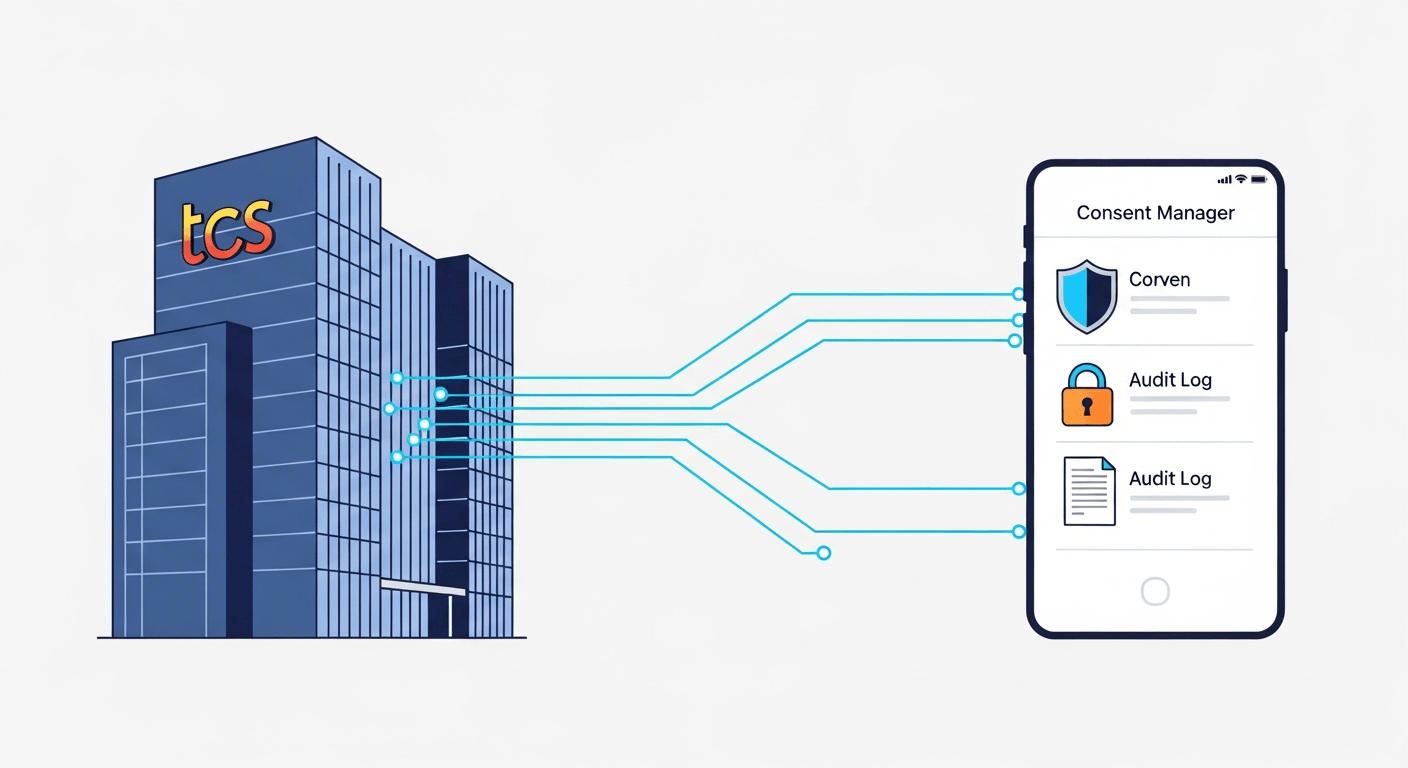
I write often about how regulation reshapes business models; the latest development — reports that Tata Consultancy Services (TCS) is preparing to apply for a “consent manager” permit under India’s Digital Personal Data Protection (DPDP) framework — is another clear example of that dynamic. According to press coverage, TCS is positioning itself to offer consent-management services at scale as the DPDP rules come into force TCS is all set to seek ‘consent manager' permit under DPDP.
What the DPDP Act and a "consent manager" mean
The DPDP Act establishes a statutory regime for digital personal data in India, emphasising individual control: consent must be free, informed, purpose-specific and revocable. The rules create a category called a Consent Manager — a registered, India-incorporated entity that provides an interoperable platform where a data principal (individual) can give, review, withdraw or manage consent for processing by various data fiduciaries.
Key features of a Consent Manager under the rules include:
- Acting as a neutral intermediary between individuals and businesses;
- Maintaining auditable consent records and artefacts for specified retention periods;
- Ensuring the platform does not itself read the personal data shared; and
- Avoiding conflicts of interest with onboarded data fiduciaries DPDP rules explainer.
I have been writing about the consent-centered direction of DPDP for some time; see my earlier note on shifting frameworks for consent and data ownership DPDP likely to offer consent framework instead of exact rules.
Why TCS might pursue this permit
There are several practical reasons an IT services giant would seek registration as a Consent Manager:
- Market opportunity: DPDP creates a new compliance-as-a-service market. Early entrants can win large enterprise clients that need credible, scalable consent infrastructure.
- Technical fit: TCS already provides large-scale identity, security and enterprise integration services — capabilities useful for interoperable consent platforms.
- Trust and scale: Enterprises may prefer a known systems integrator to host auditable consent flows across complex vendor ecosystems.
Potential benefits and challenges
Benefits for TCS and its clients
- New revenue stream: Consent management can be packaged with governance, risk and compliance offerings.
- Simplified compliance: Clients can offload consent logging, revocation handling and audit readiness to a registered platform.
- Faster interoperability: A standardised consent layer reduces custom integrations across sectors.
Challenges and risks
- Conflict-of-interest scrutiny: Consent Managers must demonstrably avoid financial or managerial ties that could bias consent handling.
- Operational liability: Holding fine-grained consent records and providing uptime, security and audit trails is non-trivial and regulated.
- Trust gap: Individuals may be wary if a consent platform is run by a large vendor with existing fiduciary relationships.
Regulatory and market implications — India and beyond
In India, registration requirements and public listing by the Data Protection Board will make Consent Managers visible targets of regulatory oversight. The DPDP design encourages a marketplace of consent providers, but also imposes strict obligations that raise barriers to entry (technical certifications, net worth and conflict-avoidance measures).
Globally, a robust Indian consent layer could influence cross-border data flows and vendor choices: multinational firms serving Indian users may prefer local consent orchestration to demonstrate compliance. Conversely, global interoperability questions remain — standards, portability and mutual recognition will determine whether consent artefacts travel across jurisdictions.
Practical compliance and tactical recommendations for businesses
- Map consent dependencies: Identify processes and vendors that rely on user consent; prioritise high-risk flows (health, finance, HR).
- Prepare integration plans: Expect to integrate with registered Consent Managers via APIs — design modular consent checks and enforcement points in your stack.
- Revisit vendor contracts: Ensure contractual clauses allow real-time revocation handling and audit cooperation with a Consent Manager.
- Minimise and document: Apply data minimisation, purpose-specific collection and maintain exportable consent artefacts to simplify audits.
- Test user journeys: Simulate consent withdrawal scenarios to validate downstream halting of processing and data deletion or anonymisation.
Conclusion
TCS’s reported intent to seek a Consent Manager permit signals how regulation shifts opportunity to incumbents with scale and trust. For businesses, the DPDP era will be about architecting data flows around auditable consent and choosing partners — whether in-house or registered Consent Managers — that balance compliance, user trust and operational resilience. As I’ve argued before, consent is becoming a platform decision as much as a legal one; building the right primitives now reduces disruption later.
Regards,
Hemen Parekh
Any questions / doubts / clarifications regarding this blog? Just ask (by typing or talking) my Virtual Avatar on the website embedded below. Then "Share" that to your friend on WhatsApp.
Get correct answer to any question asked by Shri Amitabh Bachchan on Kaun Banega Crorepati, faster than any contestant
Hello Candidates :
- For UPSC – IAS – IPS – IFS etc., exams, you must prepare to answer, essay type questions which test your General Knowledge / Sensitivity of current events
- If you have read this blog carefully , you should be able to answer the following question:
- Need help ? No problem . Following are two AI AGENTS where we have PRE-LOADED this question in their respective Question Boxes . All that you have to do is just click SUBMIT
- www.HemenParekh.ai { a SLM , powered by my own Digital Content of more than 50,000 + documents, written by me over past 60 years of my professional career }
- www.IndiaAGI.ai { a consortium of 3 LLMs which debate and deliver a CONSENSUS answer – and each gives its own answer as well ! }
- It is up to you to decide which answer is more comprehensive / nuanced ( For sheer amazement, click both SUBMIT buttons quickly, one after another ) Then share any answer with yourself / your friends ( using WhatsApp / Email ). Nothing stops you from submitting ( just copy / paste from your resource ), all those questions from last year’s UPSC exam paper as well !
- May be there are other online resources which too provide you answers to UPSC “ General Knowledge “ questions but only I provide you in 26 languages !




No comments:
Post a Comment