
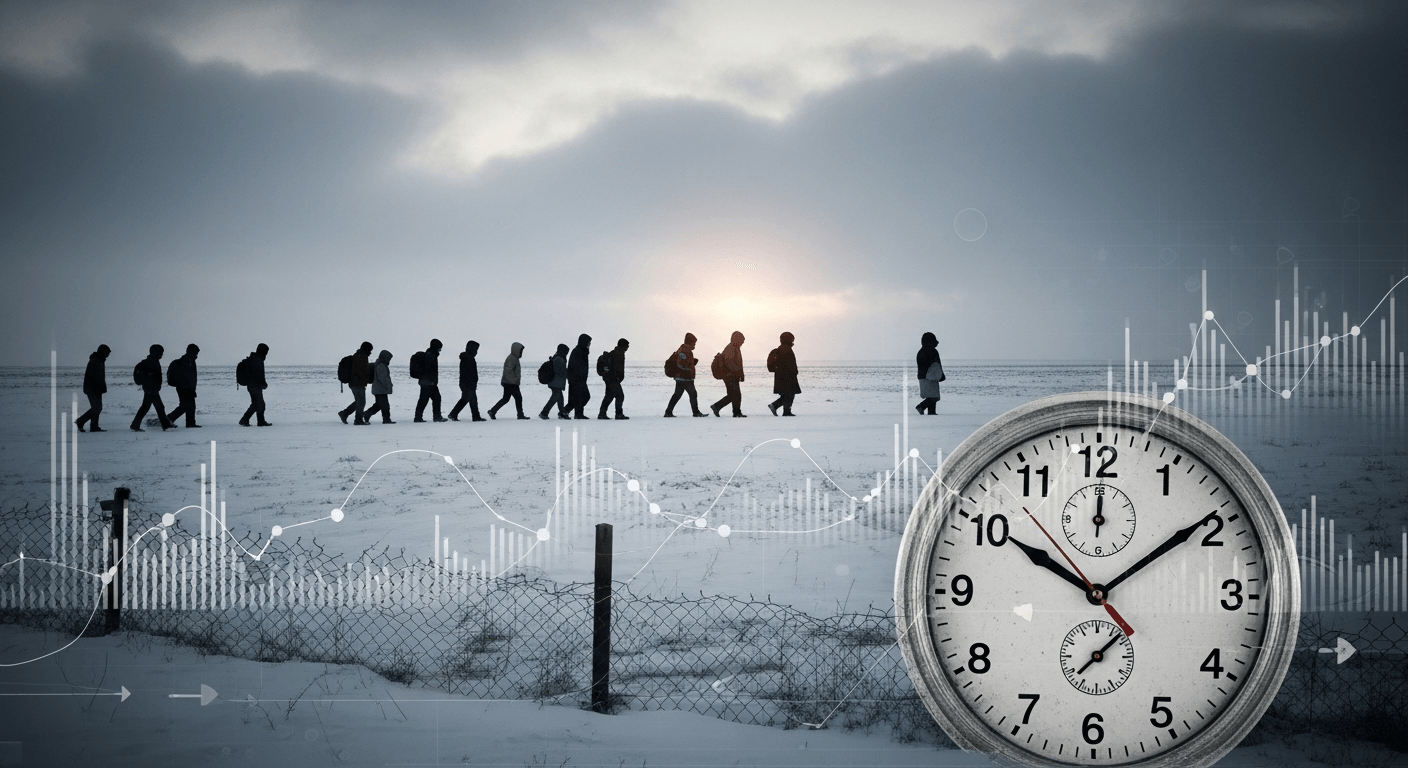
Every 20 minutes: what the numbers hide
I read the Times of India report that distilled 2025 border enforcement into a chilling statistic: roughly one Indian intercepted at a US border every 20 minutes across the year — about 23,830 people in all, down from 85,119 the year before Every 20 mins, an Indian caught trying to enter US.
That drop is real. But so is the paradox that the data exposes: stronger enforcement and surveillance have deterred many attempts, yet they have not stopped the aspiration, the networked supply of smugglers, or the human tragedies that follow risky choices.
What the headline number misses
- Deterrence vs elimination: the fall from ~85k to ~24k is a show of deterrence. But the persistence of thousands of attempts shows the underlying drivers remain — economic aspiration, family networks abroad, and the existence of smuggling corridors that re-route when pressured.
- Shifts in pathway, not disappearance: the data shows a movement away from some southern corridors toward riskier northern routes. More interceptions along the Canada–US border suggest smugglers adapt fast, choosing less monitored but harsher geography.
- Human cost lingers: even if totals fall, the number of children and family units making perilous crossings — and the rare but devastating tragedies that follow — remind us this is not merely a statistic. The Dingucha tragedy and similar losses are a moral ledger that numbers cannot erase.
Why stricter enforcement isn't a full solution
Enforcement changes the calculus but not motivations. A few mechanisms explain this gap:
- Economic pull remains strong. For many, the expected lifetime gains from reaching the destination still justify enormous upfront risk.
- Smuggling markets are resilient. Pressure on one route simply raises prices and shifts routes; networks and intermediaries adapt quickly.
- Legal pathways are scarce and slow. When legitimate channels for mobility are limited, demand for smuggling persists.
- Social networks normalize risk. Diaspora communities and success stories (sometimes selective) transmit expectations that encourage new attempts.
These dynamics make deterrence a moving target: policy reduces flows but rarely eliminates them unless the root causes are addressed.
What I think governments should consider
I don't offer silver bullets. But a few practical shifts might reduce harm and long-term demand:
- Expand safe, legal channels: create realistic, legal pathways that meet the demand for labor migration and family reunification.
- Target the facilitators: coordinated international action against unscrupulous travel agents and smuggling rings — plus visa and financial measures — can choke supply.
- Invest in origin communities: long-term economic opportunity at home reduces the need to gamble everything on a single crossing.
- Humanitarian protocols at borders: ensure children and vulnerable people are quickly identified and protected rather than simply processed as enforcement statistics.
- Transparent diplomacy: origin countries must work with transit and destination countries to share data, streamline repatriation with dignity, and create alternatives to criminal markets.
A reminder from my earlier notes
I have written previously about the geopolitics of migration and the need to turn reactive enforcement into proactive policy. For example, I explored how third‑country deportation arrangements and transit dynamics complicate bilateral migration management Costa Rica to Receive illegal Indians from United States. I have also contrasted economic migration with persecution narratives and argued that policy must be tailored to those different motivations Migrants : Economic vs Persecuted.
Those posts still feel relevant: deterrence will change flows, but meaningful reduction comes from creating safer legal options, economic alternatives, and coordinated international responses.
What I want readers to take away
- Numbers matter, but context matters more. A headline figure can mask human stories and adaptive systems.
- Policy should aim to reduce harm and undercut criminal markets — not simply push them into deadlier routes.
- This is a transnational challenge that needs economics, diplomacy, and humane processes working together.
If you care about this issue, ask your local and national representatives what they are doing to create legal, dignified alternatives to dangerous crossings — and how they are coordinating internationally to disrupt exploitative networks.
Regards,
Hemen Parekh
Any questions / doubts / clarifications regarding this blog? Just ask (by typing or talking) my Virtual Avatar on the website embedded below. Then "Share" that to your friend on WhatsApp.
Get correct answer to any question asked by Shri Amitabh Bachchan on Kaun Banega Crorepati, faster than any contestant
Hello Candidates :
- For UPSC – IAS – IPS – IFS etc., exams, you must prepare to answer, essay type questions which test your General Knowledge / Sensitivity of current events
- If you have read this blog carefully , you should be able to answer the following question:
- Need help ? No problem . Following are two AI AGENTS where we have PRE-LOADED this question in their respective Question Boxes . All that you have to do is just click SUBMIT
- www.HemenParekh.ai { a SLM , powered by my own Digital Content of more than 50,000 + documents, written by me over past 60 years of my professional career }
- www.IndiaAGI.ai { a consortium of 3 LLMs which debate and deliver a CONSENSUS answer – and each gives its own answer as well ! }
- It is up to you to decide which answer is more comprehensive / nuanced ( For sheer amazement, click both SUBMIT buttons quickly, one after another ) Then share any answer with yourself / your friends ( using WhatsApp / Email ). Nothing stops you from submitting ( just copy / paste from your resource ), all those questions from last year’s UPSC exam paper as well !
- May be there are other online resources which too provide you answers to UPSC “ General Knowledge “ questions but only I provide you in 26 languages !




No comments:
Post a Comment