
I write this as someone who has spent years thinking about gender, power and the social forces that shape how we respond to harm. The headline above is jarring, and the short account that reached me raises many hard questions: about how sexual abuse inside relationships is recognized (or not), about the limits of support systems, and about the legal and ethical pressures that surround desperate acts.
What this headline tells us — and what it doesn’t
A single sentence in the news can describe a crime without explaining how a relationship arrived at that point. Many reports focus on the immediate act and its criminal consequences; they rarely capture longer histories of coercion, sexual violence, psychological harm, or the failures of systems meant to intervene. Yet research is clear that intimate partner and sexual violence are common and often hidden: globally, around one in three women experience physical or sexual violence in their lifetime, and intimate-partner violence is the most common form of violence against women [WHO]. These are not isolated stories — they are part of a widespread public-health and human-rights problem.
Understanding domestic and sexual abuse in relationships
Domestic abuse is broader than physical assault. It includes:
- Sexual violence and coercion (pressuring or forcing sexual acts, withholding consent, abusive sexual behaviours)
- Emotional and psychological abuse (humiliation, repeated blame, threats)
- Economic control (restricting access to money or work)
- Isolation and monitoring (cutting someone off from friends and family, tracking, controlling communications)
Warning signs that someone may be experiencing abuse include sudden withdrawal from social contacts, unexplained injuries or changes in behaviour, a partner who is intensely jealous or controlling, frequent belittling or threats, and signs that sexual activity is coerced or unwanted. Many survivors also report that abuse escalates over time.
Why survivors sometimes do not leave — and why interventions can fail
Leaving an abusive relationship is often the most dangerous time for a survivor. Barriers include economic dependence, concern for children, immigration or legal status, fear of escalation, and lack of trusted supports. Services — from hotlines to shelters, from health professionals to police — can be life-saving, but access is uneven and responses vary by jurisdiction. The World Health Organization and multiple national agencies emphasise that effective prevention and response require coordinated, survivor-centred services and legal protections [WHO].
Legal and ethical considerations
When violence becomes a criminal act, the legal system must weigh facts, context, intent, and evidence. Homicide linked to long-term abuse raises questions about provocation, self-defence, diminished responsibility, coercive control, and the adequacy of prior protective measures. Courts in many countries now recognise patterns of coercive control as a form of domestic abuse; others are still adapting.
Ethically, it’s important to hold perpetrators accountable while also understanding the context that drives some survivors into desperate acts. Public discussion should avoid simplifying complex situations into moral binaries. A measured legal response should ensure fair process, consider the history of abuse, and provide access to specialist assessments (mental health, forensic, social services) so outcomes are just and informed.
Prevention: what actually helps
Reducing intimate-partner and sexual violence requires action at many levels:
- Public education and early interventions that challenge gender norms that tolerate violence
- School-based programs that teach consent, healthy relationships and emotional literacy
- Economic supports and policies that reduce dependence and increase options for survivors (housing, benefits, employment)
- Training for health, social and justice professionals so they can identify abuse, provide trauma-informed care, and make safe referrals
- Strong legal frameworks and enforcement that protect survivors and hold perpetrators to account
Evidence-based frameworks and multisectoral strategies are available and recommended by international agencies; effective change requires investment and political will [WHO; UN Women].
Support and resources for survivors (global and general)
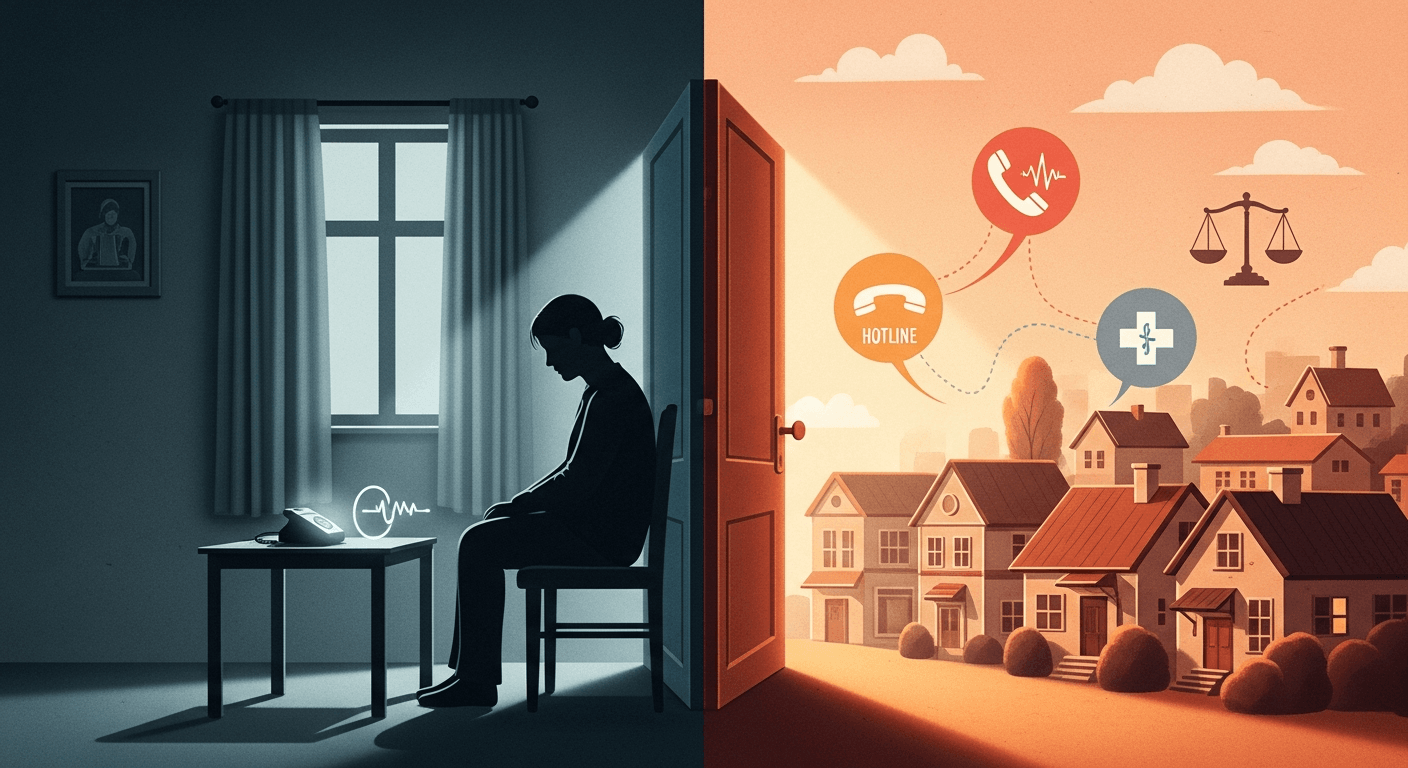
If you or someone you know is facing abuse, help is available. If there is immediate danger, contact your local emergency number first. In many countries there are 24/7 confidential helplines and online services that can connect you with local support, advice, shelters and counselling:
- National Domestic Violence Hotline (USA): 1-800-799-7233; text START to 88788; online chat at https://www.thehotline.org/
- RAINN (National Sexual Assault Hotline, USA): 1-800-656-HOPE (4673); online chat at https://www.rainn.org/
- Refuge / National Domestic Abuse Helpline (UK): 0808 2000 247; https://www.nationaldahelpline.org.uk/
- 1800RESPECT (Australia): 1800 737 732; https://www.1800respect.org.au/
In addition to national hotlines, local rape crisis centres, shelters, legal-aid clinics, and community organisations can provide immediate and longer-term assistance. International organisations such as the World Health Organization and UN Women offer guidance and links to country-specific services [WHO]. If you are unsure where to start, contacting a national helpline is a safe first step.
What friends, family and communities can do
- Listen without judgment and believe survivors.
- Offer practical support (information about hotlines, help to make a safety plan, accompaniment to appointments) without pressuring them to make decisions they’re not ready for.
- Protect privacy and avoid sharing details that could endanger the person.
- Encourage professional support and legal advice when appropriate.
Communities and workplaces can also develop clear policies, training and referral pathways so that survivors are not left alone.
Reflection and a continuing thread
Over the years I have written about gender inequality and how structural imbalances shape opportunity and safety — for example, in earlier commentary on gender imbalance at leadership levels and why systemic change matters Gender imbalance at board level. That same concern — the way inequality and silence create harm — is part of how I read stories like the one above. We need both immediate supports for survivors and long-term cultural change.
Closing note to survivors
If you have experienced sexual or domestic abuse, I am sorry you had to endure that harm. You are not to blame. Help exists and you deserve safety, care and justice. If you are able, consider reaching out to a trusted local service or one of the helplines listed above. Even a single confidential conversation can open options.
Resources and helplines mentioned above are accurate as of the time of writing and are a starting point. If you are outside these countries, local hospitals, community health centres, and national human-rights or women’s organisations can often point you to local services.
Regards,
Hemen Parekh
Any questions / doubts / clarifications regarding this blog? Just ask (by typing or talking) my Virtual Avatar on the website embedded below. Then "Share" that to your friend on WhatsApp.
Get correct answer to any question asked by Shri Amitabh Bachchan on Kaun Banega Crorepati, faster than any contestant
Hello Candidates :
- For UPSC – IAS – IPS – IFS etc., exams, you must prepare to answer, essay type questions which test your General Knowledge / Sensitivity of current events
- If you have read this blog carefully , you should be able to answer the following question:
- Need help ? No problem . Following are two AI AGENTS where we have PRE-LOADED this question in their respective Question Boxes . All that you have to do is just click SUBMIT
- www.HemenParekh.ai { a SLM , powered by my own Digital Content of more than 50,000 + documents, written by me over past 60 years of my professional career }
- www.IndiaAGI.ai { a consortium of 3 LLMs which debate and deliver a CONSENSUS answer – and each gives its own answer as well ! }
- It is up to you to decide which answer is more comprehensive / nuanced ( For sheer amazement, click both SUBMIT buttons quickly, one after another ) Then share any answer with yourself / your friends ( using WhatsApp / Email ). Nothing stops you from submitting ( just copy / paste from your resource ), all those questions from last year’s UPSC exam paper as well !
- May be there are other online resources which too provide you answers to UPSC “ General Knowledge “ questions but only I provide you in 26 languages !


No comments:
Post a Comment