
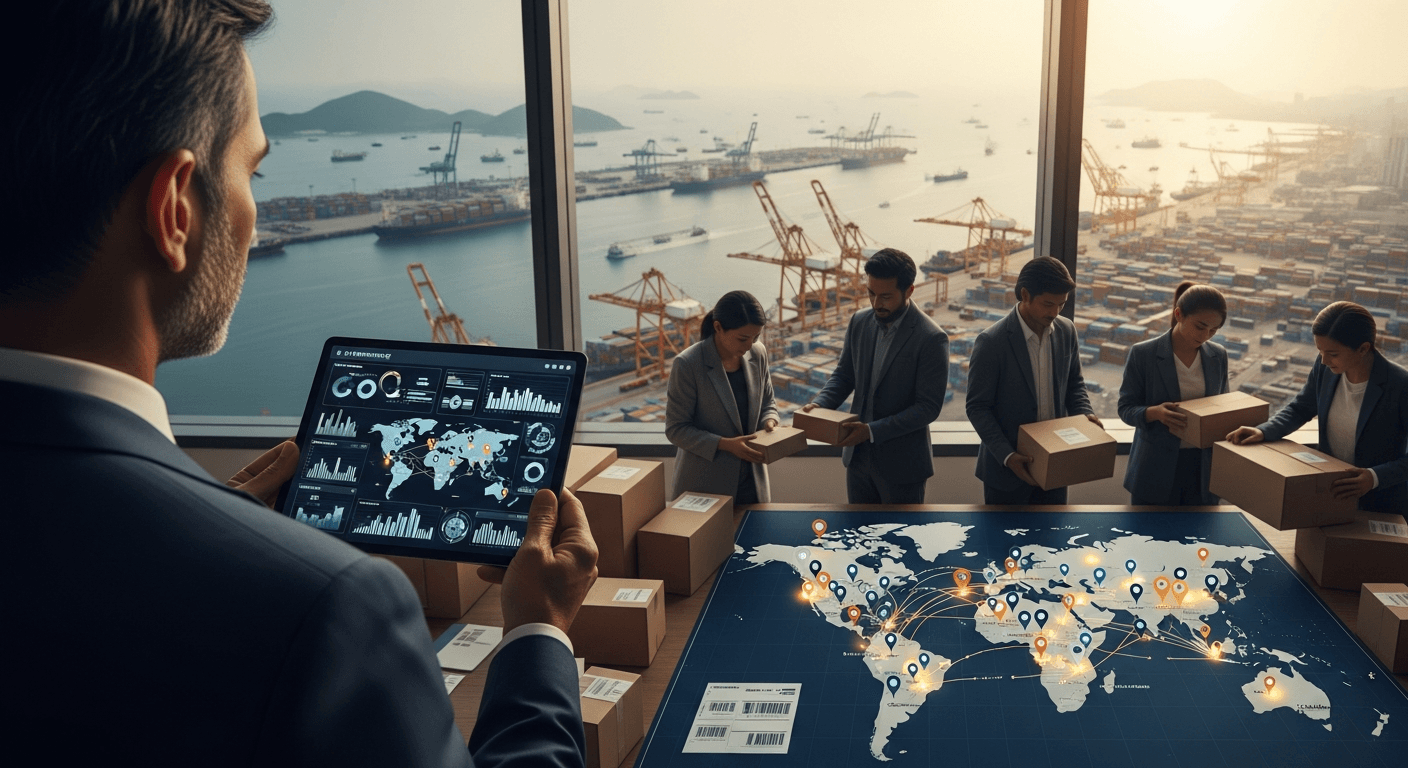
Government tells missions to push exports
Context: why this directive matters now
Last week the government asked Indian commercial missions abroad to step up their efforts to expand exports and diversify markets — a clear nudge to use our diplomatic presence as an active channel for trade promotion rather than just political outreach. The Times of India reported the directive and the broader playbook being shared with missions, emphasising market research, e-commerce promotion, sustainability-led goods, and early warning on non-tariff barriers Government tells missions to push exports.
I welcome the urgency. For years I have argued that diplomatic missions can and should act as commercial catalysts; my earlier posts urged ambassadors and trade attachés to treat export promotion as a core objective, not a side activity Dear Ambassadors, Ball is in your Court. The current push builds on that logic and on recent policy moves to operationalise an export promotion framework nationwide.
Reasons behind the directive
There are several pragmatic drivers behind the step:
- Geopolitical shocks and tariff pressures have made traditional markets volatile. Diversifying destinations reduces concentration risk and shock exposure.
- Small and niche markets can collectively contribute materially to export volumes; the playbook recognises that a cluster of $100–200m markets can add up.
- Missions have unique on-ground intelligence and networks: they can identify buyer needs, regulatory changes, and distribution partners faster than a ministry in New Delhi.
- Digital commerce and sustainability-driven demand are opening new global niches (e.g., GI-tagged goods, ethical textiles) that missions can promote locally.
All of these reasons make it sensible for the state to reorient missions from passive observers to active market developers.
What I expect missions to be asked to do (and should do)
Based on the directive and the practical capabilities of missions, I expect — and recommend — the following actions:
- Monthly market intelligence briefs: monitoring tariffs, non-tariff measures, buyer preferences and competitor moves.
- E-commerce facilitation: helping exporters list on popular local marketplaces, translating listings, and arranging logistics pilots.
- Sector-specific campaigns: targeted promotion for sustainability-oriented products, GI-labelled goods, and services where India has emerging strength.
- Trade facilitation clinics: coordinating local buyers, testing compliance requirements, and fast-tracking sample orders.
- Partnership-building: introducing Indian clusters and MSMEs to local distributors, retail buyers and institutional procurement teams.
These tasks require missions to pair diplomatic skills with commercial outreach and to measure success in leads generated and orders facilitated, not just events hosted.
Potential impact on exporters and the economy
If implemented well, this directive can deliver:
- Faster market entry for MSMEs: missions can lower discovery and compliance costs, allowing more small firms to export.
- Export diversification: a broader set of destinations and product categories reduces vulnerability to country-specific shocks.
- Job protection and creation: higher exports in labour-intensive sectors support employment in manufacturing and services.
- Brand India strengthening: coordinated international branding builds recognition and price premium for Indian-origin goods.
However, outcomes will depend on execution speed, digital adoption by exporters, and alignment between central policy and state-level export promotion.
Key challenges to watch
- Capacity at missions: many commercial wings are understaffed or lack sector specialists. Expect a ramp-up period.
- Coordination overload: monthly reviews are useful only if they translate into action; bureaucratic meetings alone won't move goods.
- Scaling from pilots: helping one or two firms succeed in a market is easier than enabling hundreds; scalable tools (digital catalogs, aggregator tie-ups) are critical.
- Export readiness of MSMEs: many firms still need help with quality standards, packaging, and export compliance.
- Data and measurement: without clear KPIs (leads converted, orders secured, market share growth), it will be hard to judge impact.
Recommendations — for policymakers and exporters
For policymakers:
- Invest in capacity-building for commercial wings: sector specialists, language skills, and digital tools.
- Create simple KPIs and a public dashboard for mission-level export outcomes to incentivise focus and transparency.
- Scale successful local pilots via digital marketplaces and shared logistics platforms rather than replicating resource-heavy trade fairs.
- Prioritise MSME export-readiness programmes — compliance, packaging, and market-specific playbooks.
For exporters:
- Treat missions as an extension of your sales team: engage proactively, share product data and target-country preferences.
- Use digital channels to validate demand quickly — local marketplaces, paid trials, and B2B platforms reduce entry risk.
- Invest in sustainability credentials and GI-proofing where relevant; buyers in many markets now pay a premium for verified origin and ethics.
- Seek aggregation: clusters and exporters’ associations can achieve scale faster than lone firms.
Conclusion
The government's instruction to missions to push exports is the right strategic pivot: in a fragmented global economy, our diplomats must be trade-savvy and commercially proactive. The true test will not be rhetoric but whether missions generate measurable leads, help small exporters cross regulatory hurdles, and facilitate sustained orders. Implementation must focus on capacity, clear metrics, and scalable digital solutions. I have long advocated for this closer alignment between diplomacy and commerce; the current directive is a step in the direction I urged — now the work of execution begins.
Regards,
Hemen Parekh
Any questions / doubts / clarifications regarding this blog? Just ask (by typing or talking) my Virtual Avatar on the website embedded below. Then "Share" that to your friend on WhatsApp.
Get correct answer to any question asked by Shri Amitabh Bachchan on Kaun Banega Crorepati, faster than any contestant
Hello Candidates :
- For UPSC – IAS – IPS – IFS etc., exams, you must prepare to answer, essay type questions which test your General Knowledge / Sensitivity of current events
- If you have read this blog carefully , you should be able to answer the following question:
- Need help ? No problem . Following are two AI AGENTS where we have PRE-LOADED this question in their respective Question Boxes . All that you have to do is just click SUBMIT
- www.HemenParekh.ai { a SLM , powered by my own Digital Content of more than 50,000 + documents, written by me over past 60 years of my professional career }
- www.IndiaAGI.ai { a consortium of 3 LLMs which debate and deliver a CONSENSUS answer – and each gives its own answer as well ! }
- It is up to you to decide which answer is more comprehensive / nuanced ( For sheer amazement, click both SUBMIT buttons quickly, one after another ) Then share any answer with yourself / your friends ( using WhatsApp / Email ). Nothing stops you from submitting ( just copy / paste from your resource ), all those questions from last year’s UPSC exam paper as well !
- May be there are other online resources which too provide you answers to UPSC “ General Knowledge “ questions but only I provide you in 26 languages !




No comments:
Post a Comment