
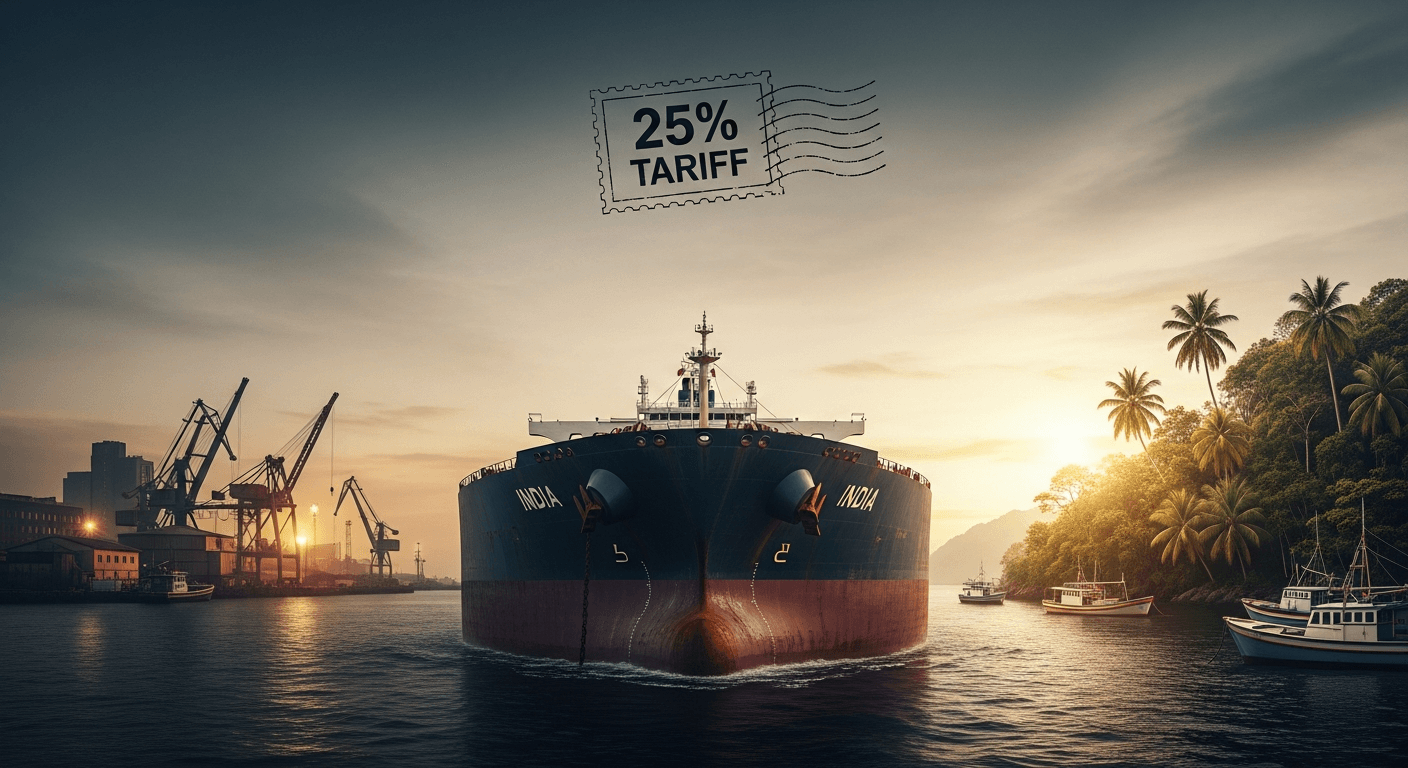
Between Tariffs and Tankers
Between Tariffs and Tankers
A short, personal take on a geopolitical fuel choice
I read the report that the United States has pitched Venezuelan crude as an alternative as India trims its Russian oil purchases under tariff pressure — a story that captures the tension between commerce and sovereignty in a single headline India to buy oil from Venezuela instead of Russia? US pitch to counter 25% tariffs.
This is the sort of story that makes me pause: energy is rarely just about barrels and refineries. It's a ledger of choices — economic, diplomatic and strategic — and each delivery has ripple effects across domestic politics, corporate balance sheets and international alignments.
Why this matters to me
- Energy security is the quiet backbone of modern life. When a government or industry changes suppliers, it affects manufacturing costs, inflation, and the very calculus of foreign policy.
- Tariffs change behavior fast. When trade penalties are high, commercial actors reroute, renegotiate and recalibrate — often more quickly than political rhetoric.
- Alternatives have costs. Venezuelan barrels might offset Russian volumes on paper, but there are logistical, legal and reputational frictions that matter: sanctions regimes, waivers, shipping distance, diluent needs and commercial counter-parties.
The choices on the table
Reading the coverage, three broad realities stand out to me:
- Markets respond to incentives. When an added tariff materially alters the economics of a trade lane, buyers explore substitutes. That’s not just commerce; it’s risk management.
- Geopolitics remains the invisible hand. Which nation supplies your crude shapes diplomatic ties, credit flows and long-term bargaining power.
- Domestic priorities push back. For a country meeting almost all of its oil needs via imports, affordability and reliability often beat ideological purity.
Practical frictions politicians and CEOs face
- Logistics: Venezuelan cargoes are further away for many Asian refineries; shipping and transit times rise, as do costs.
- Sanctions and compliance: Even when waivers are technically possible, banks, insurers and trading houses assess reputational and regulatory risks.
- Refining fit: Crude grades differ. Refineries configured to process certain blends need time and investment to adapt to alternative crude types.
My view on policy and strategy
If I were advising, I’d suggest a three-track approach:
- Short term: Use tactical flexibility. Make pragmatic buying decisions that preserve refining margins and secure immediate fuel needs while minimizing legal exposure.
- Medium term: Build redundancy. Diversify suppliers across the Middle East, Africa, the Americas and renewables so one diplomatic shove can’t undo energy stability.
- Long term: Accelerate structural change. Invest in downstream upgrading, strategic storage, and accelerated adoption of cleaner fuels and electrification to reduce exposure to petro-politics.
All of these are uncomfortable because they require trade-offs: diplomatic patience with partners, investments that show returns slowly, and policy choices that sometimes clash with short-term populist narratives.
What I worry about — and what gives me hope
I worry about a world in which trade policy becomes the blunt instrument of geopolitical coercion. Tariffs and counter‑tariffs can introduce volatility that feeds inflation and discourages investment.
But I remain hopeful because markets and states are adaptive. Firms reconfigure supply chains; states build strategic buffers; and ultimately, cheaper alternatives (including cleaner energy) can reduce the leverage that any single supplier or sanctioning power can exert.
A final, practical thought
Conversations about crude should not only be about which barrel but about capability. If we invest in refining flexibility, port infrastructure, and strategic reserves, we gain choices — and choices are the essence of sovereignty.
For readers who want the granular reporting that underpins these reflections, see the piece from the Times of India linked above for the journalistic account.
Regards,
Hemen Parekh
Any questions / doubts / clarifications regarding this blog? Just ask (by typing or talking) my Virtual Avatar on the website embedded below. Then "Share" that to your friend on WhatsApp.
Get correct answer to any question asked by Shri Amitabh Bachchan on Kaun Banega Crorepati, faster than any contestant
Hello Candidates :
- For UPSC – IAS – IPS – IFS etc., exams, you must prepare to answer, essay type questions which test your General Knowledge / Sensitivity of current events
- If you have read this blog carefully , you should be able to answer the following question:
- Need help ? No problem . Following are two AI AGENTS where we have PRE-LOADED this question in their respective Question Boxes . All that you have to do is just click SUBMIT
- www.HemenParekh.ai { a SLM , powered by my own Digital Content of more than 50,000 + documents, written by me over past 60 years of my professional career }
- www.IndiaAGI.ai { a consortium of 3 LLMs which debate and deliver a CONSENSUS answer – and each gives its own answer as well ! }
- It is up to you to decide which answer is more comprehensive / nuanced ( For sheer amazement, click both SUBMIT buttons quickly, one after another ) Then share any answer with yourself / your friends ( using WhatsApp / Email ). Nothing stops you from submitting ( just copy / paste from your resource ), all those questions from last year’s UPSC exam paper as well !
- May be there are other online resources which too provide you answers to UPSC “ General Knowledge “ questions but only I provide you in 26 languages !



No comments:
Post a Comment