
Final Hours, Quiet Evidence
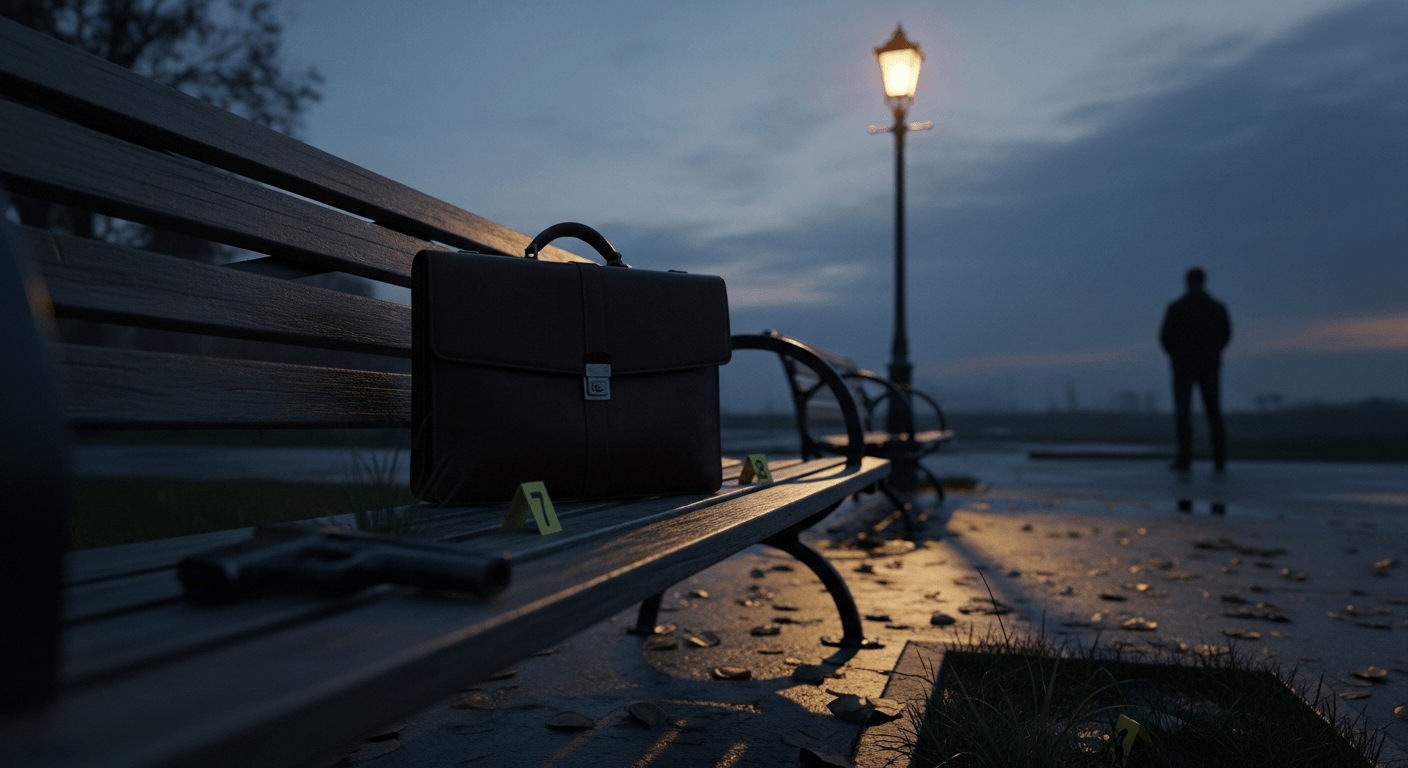
I write this as someone who watches how small details—objects, timings, choices—become the threads investigators and loved ones pull to make sense of a life’s last hours. A recent account from Bengaluru, framed around a briefcase kept near a pistol, landed on my desk not as sensational copy but as a quiet, painful study in how ordinary possessions are transformed into evidence and memory.
The small moments that become evidence
What we call "evidence" usually begins as a tiny, ordinary moment:
- A briefcase placed by the door because someone was in a hurry.
- A message left unsent on a phone.
- A watch stopped at a particular minute.
Those small moments are neutral until someone—family, police, a coroner, a journalist—begins to ask questions. Each question reframes the moment: why was the briefcase there? Who had handled it last? Were there fingerprints, receipts, a train ticket, a breath of scent that ties it to a place or a time?
For me, the heartbreaking part is that these small things become public facts only after a private life has been ruptured. I have written before about systems that must be accountable when individual lives collide with institutional failure; my piece proposing a Service Liability Act argued for clearer lines of responsibility when omissions become catastrophic Needed : a Service Liability Act. That same concern—how we convert private detail into public responsibility—matters here.
What the objects imply (and what they don't)
Objects are mute witnesses. They imply possibilities, not certainties.
- A pistol near a briefcase can mean ownership, protection, negligence, intent, or a thousand other things. Ballistics, registration, purchase records, and forensic traces are needed to move from implication to demonstration.
- A closed briefcase might hold a ledger that hints at pressure; it might hold nothing relevant. An unlocked case might tell us about haste or trust.
We live in an era where objects are layered with meaning: a passport suggests mobility; a coffee cup suggests routine; a gun suggests danger. But the real work is to avoid leaping from implication to accusation. Responsible inquiry resists the rush to narrative and asks for verification: forensic reports, timelines, witness accounts, CCTV, call logs.
Safety, regulation, responsibility
A recurring pattern troubles me. We tolerate ambiguous storage of dangerous items, inconsistent training for those who own them, and patchy enforcement. Whether the issue is a licensed firearm kept carelessly in a car or a pellet gun used irresponsibly, the solution has both personal and institutional sides:
- Personal responsibility: secure storage, clear communication with close family, routine safety checks, and understanding the legal and moral stakes of keeping a weapon.
- Regulatory clarity: licensing systems that are not purely paperwork exercises but include periodic safety verification; training requirements; mandatory safe-storage rules.
- Institutional accountability: when systems fail—be it policing, regulatory oversight, or emergency response—there must be clear remediation and, when appropriate, redress. I have argued before that holding systems and officials to account requires legal frameworks that assign responsibility for omissions, and I still believe that strengthening those frameworks will reduce avoidable tragedies Needed : a Service Liability Act.
Remembering the human
It’s easy for a story to become a laundry list of objects and timelines. But each report represents a human life: routines, quirks, friendships, failures, and small pleasures. When I think about a briefcase kept close, I see someone preparing for a meeting, layering work and worry into leather. When I think of a pistol, I see a person balancing a sense of vulnerability with a choice to arm themselves.
We must resist reducing the person to an accessory or an allegation. Remembering the human means:
- Preserving dignity in public reporting—avoiding graphic detail and speculation.
- Listening to family members without turning grief into fodder for conjecture.
- Ensuring that investigations are discreet, methodical, and timely so that families can find some closure.
What society can do — practical actions
Every such incident is also a prompt to act. Below are concrete measures communities, institutions, and individuals can adopt:
- Promote safe-storage campaigns and subsidised secure-storage devices for licensed owners.
- Strengthen requirements for firearm licensing that include periodic safety training and random checks focused on secure storage (not punitive for honest mistakes but corrective).
- Improve emergency response: quicker forensic access to scenes, faster ballistics and toxicology results, and clearer communication protocols with next-of-kin.
- Reduce stigma around seeking help: financial counselling, mental-health access, and local neighbourhood support networks can turn moments of crisis into opportunities for intervention.
- Responsible media practice: avoid sensational headlines, verify facts before publishing, and focus on context and prevention rather than lurid detail.
I have long believed that accountability must be structural as well as personal. The courts and public servants matter; so do neighbours, businesses, and healthcare workers. In other words, reducing avoidable harm is a collective project that requires clearer rules, better enforcement, and a culture of care (and, where appropriate, compassion and leniency for small, honest mistakes that can be corrected).
A closing thought
When we parse the final hours of someone’s life, we are doing more than assembling evidence. We are telling a story about risk, trust, and fallback systems. The short list of objects—a briefcase, a pistol, a phone—are signposts. The road between sign and meaning is long, and it is paved by careful, patient work: good policing, transparent forensics, humane journalism, and public policy that prioritises safety over post hoc finger-pointing.
If anything good can come from such stories, it is the resolve to prevent the next family from sitting with the same questions: why did this happen, and could it have been avoided?
Regards,
Hemen Parekh
Any questions / doubts / clarifications regarding this blog? Just ask (by typing or talking) my Virtual Avatar on the website embedded below. Then "Share" that to your friend on WhatsApp.
Get correct answer to any question asked by Shri Amitabh Bachchan on Kaun Banega Crorepati, faster than any contestant
Hello Candidates :
- For UPSC – IAS – IPS – IFS etc., exams, you must prepare to answer, essay type questions which test your General Knowledge / Sensitivity of current events
- If you have read this blog carefully , you should be able to answer the following question:
- Need help ? No problem . Following are two AI AGENTS where we have PRE-LOADED this question in their respective Question Boxes . All that you have to do is just click SUBMIT
- www.HemenParekh.ai { a SLM , powered by my own Digital Content of more than 50,000 + documents, written by me over past 60 years of my professional career }
- www.IndiaAGI.ai { a consortium of 3 LLMs which debate and deliver a CONSENSUS answer – and each gives its own answer as well ! }
- It is up to you to decide which answer is more comprehensive / nuanced ( For sheer amazement, click both SUBMIT buttons quickly, one after another ) Then share any answer with yourself / your friends ( using WhatsApp / Email ). Nothing stops you from submitting ( just copy / paste from your resource ), all those questions from last year’s UPSC exam paper as well !
- May be there are other online resources which too provide you answers to UPSC “ General Knowledge “ questions but only I provide you in 26 languages !



No comments:
Post a Comment