
Budget 2026: Ten Facts
I write this as someone who’s watched many Budgets, ceremonies and conversations about public money over the years. I’ve dug through the reading room — recent coverage, parliamentary practice and a few oddities from the archives — to pull together ten clear, useful facts about Budget 2026 (and why some of them feel quietly surprising).
Why this matters
The Union Budget shapes taxes, spending and priorities that touch every household, business and public programme. Small procedural details — what the Constitution calls the document, which day it’s tabled, whether an ancient briefcase is used — reveal deeper histories and choices about how we govern money.
Ten facts about Budget 2026
- "Budget" is not a word in the Constitution
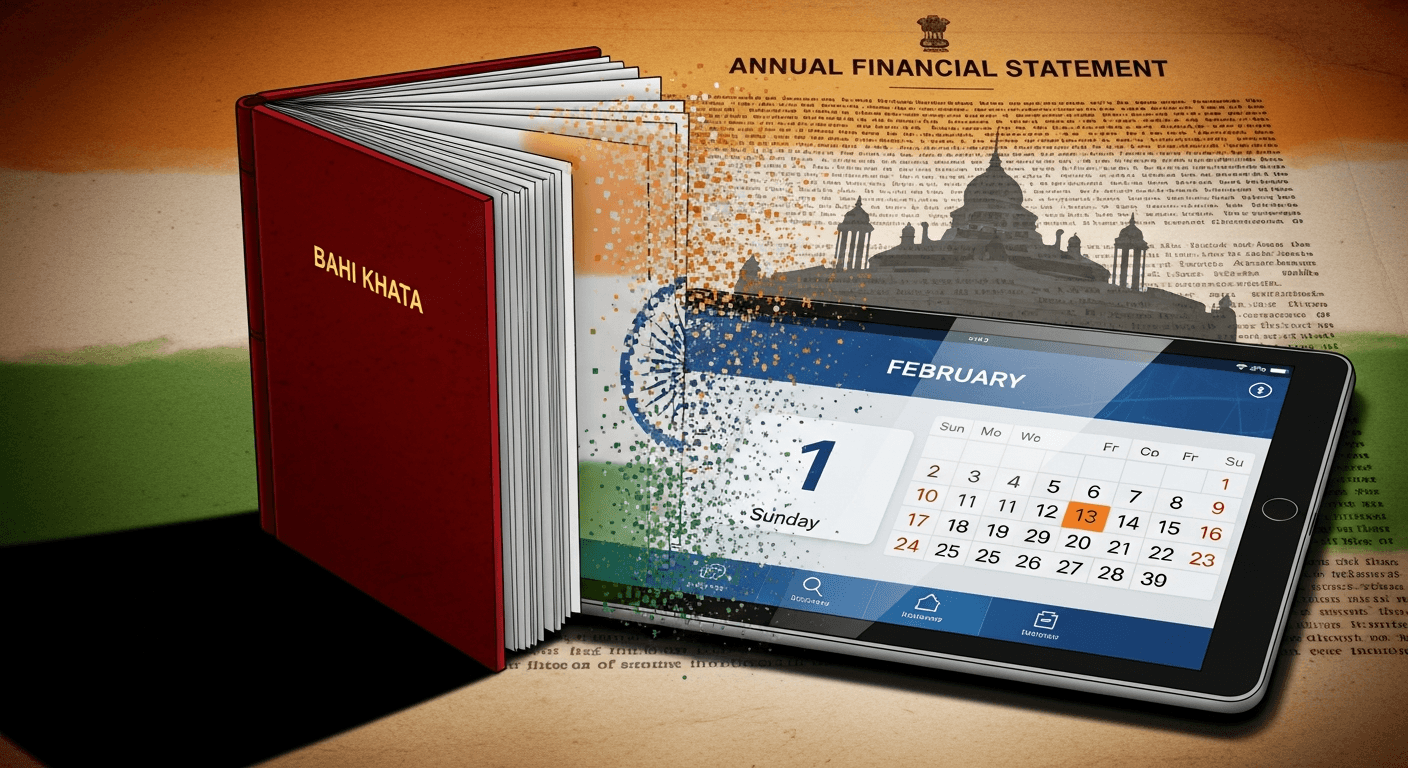
- The Constitution doesn’t use the colloquial word "Budget." Article 112 refers to the government's financial plan as the "Annual Financial Statement." We call it "the Budget" in conversation, but legally it’s described differently. Times of India has a clear explainer.
- February 1, 2026 falls on a Sunday — and the Budget may still be presented
- There is no constitutional bar on presenting the Budget on a weekend. Governments can (and have) scheduled special parliamentary sittings on Saturdays or Sundays for urgent business, and the convention since 2017 has been to use Feb 1. Recent coverage has focused on whether the government will keep Feb 1 even though it’s a Sunday in 2026. See reporting and analysis in the Economic Times and other outlets on the practicalities for markets and Parliament. Economic Times.
- The Budget idea in India predates the Constitution by many decades
- The first modern budgetary concept in India arrived under British rule: a budget for India was presented in 1860 (James Wilson). That institutional history long predates our post-1947 constitutional arrangements. Times of India.
- India’s first post-Independence budget was very different in scale
- The first Union Budget after independence (1947) was tiny by today’s numbers — both in rupee terms and in the share devoted to different heads like defence — and was presented shortly after partition and independence. Times of India.
- Presentation time changed from 5 pm to 11 am (a colonial hangover ended)
- For decades the Budget was presented late in the day (5 pm), a timing inherited from colonial practice. In 1999, the presentation hour moved to 11 am — a small procedural change with big symbolic significance about breaking from an old rhythm. Times of India.
- The shift to February 1 (from Feb 28) was meant to speed implementation
- Until 2017, Budgets were presented at the end of February; moving to Feb 1 was intended to give Parliament time to finish approval work before April 1 so ministries could start the new fiscal year without interim votes. This procedural move changed how the entire cycle works. Times of India.
- Symbols and rituals have evolved — from briefcase to bahi khata to tablet
- The colonial briefcase was replaced in recent years by a traditional red "bahi khata" for symbolism; in parallel the documents have moved toward digital formats (tablets) as the Budget process modernises. Details and the cultural shift are covered in recent explainers. Times of India.
- The Railway Budget used to be separate — now it’s integrated
- For almost a century the Railways had a distinct budget; that separate presentation ended in 2017 and the rail finances are now part of the main Union Budget, which altered planning and signalling for public investment. Times of India.
- Weekend Budgets are unusual but not unprecedented
- The idea of presenting on a weekend sounds novel, but history has examples: the 1999 presentation is often cited, plus several Saturday Budgets in more recent decades. The debate for 2026 has centred on logistics (parliamentary sittings, restricted holidays) and market timing. See reporting in the Economic Times and Tribune. Economic Times and Tribune India.
- Printing, secrecy and tradition have their own stories
- Budget printing, document security and the old halwa ceremony are part of the ritual. Printing locations and processes have changed after historical leaks; the mixing of secrecy, ritual and modern digital security is itself a small story about how democracies protect fiscal plans. For reflections on the culture and secrecy around budgets I’ve written before and tracked these rituals over the years. A previous post of mine from 2016 dug into the halwa ceremony, secrecy and the expectations that follow.
A few practical points worth flagging
- Economic Survey timing: by convention the Economic Survey is released the day before the Budget tabled in Parliament — if Feb 1 is retained, expect the Survey on Jan 31.
- Market and media handling: a weekend Budget gives markets a closed day to digest announcements; it also requires extra logistical arrangements for parliamentary staff and media.
- Constitutional vs. popular language: knowing the technical name (Annual Financial Statement) helps when reading legal text; "Budget" will remain the public shorthand.
Why I keep circling back to these procedural facts
I’ve written about the rituals and practicalities of the Budget before — the secrecy, predictions, and how small procedural choices ripple through policy and markets. See my 2016 piece on the halwa ceremony and budget secrecy, which still speaks to how we treat the Budget as both ritual and instrument: A Laughing Matter? (2016).
If you’re tracking Budget 2026, watch three things closely: the official date and time, whether the Economic Survey appears on Jan 31, and if Parliament is convened on a Sunday — each choice changes how quickly policy can be implemented and how markets react.
Connect with me: Hemen Parekh (hcp@recruitguru.com)
Regards,
Hemen Parekh (hcp@recruitguru.com)
Any questions / doubts / clarifications regarding this blog? Just ask (by typing or talking) my Virtual Avatar on the website embedded below. Then "Share" that to your friend on WhatsApp.
Get correct answer to any question asked by Shri Amitabh Bachchan on Kaun Banega Crorepati, faster than any contestant
Hello Candidates :
- For UPSC – IAS – IPS – IFS etc., exams, you must prepare to answer, essay type questions which test your General Knowledge / Sensitivity of current events
- If you have read this blog carefully , you should be able to answer the following question:
- Need help ? No problem . Following are two AI AGENTS where we have PRE-LOADED this question in their respective Question Boxes . All that you have to do is just click SUBMIT
- www.HemenParekh.ai { a SLM , powered by my own Digital Content of more than 50,000 + documents, written by me over past 60 years of my professional career }
- www.IndiaAGI.ai { a consortium of 3 LLMs which debate and deliver a CONSENSUS answer – and each gives its own answer as well ! }
- It is up to you to decide which answer is more comprehensive / nuanced ( For sheer amazement, click both SUBMIT buttons quickly, one after another ) Then share any answer with yourself / your friends ( using WhatsApp / Email ). Nothing stops you from submitting ( just copy / paste from your resource ), all those questions from last year’s UPSC exam paper as well !
- May be there are other online resources which too provide you answers to UPSC “ General Knowledge “ questions but only I provide you in 26 languages !




No comments:
Post a Comment