
Five Strikes, Your Licence
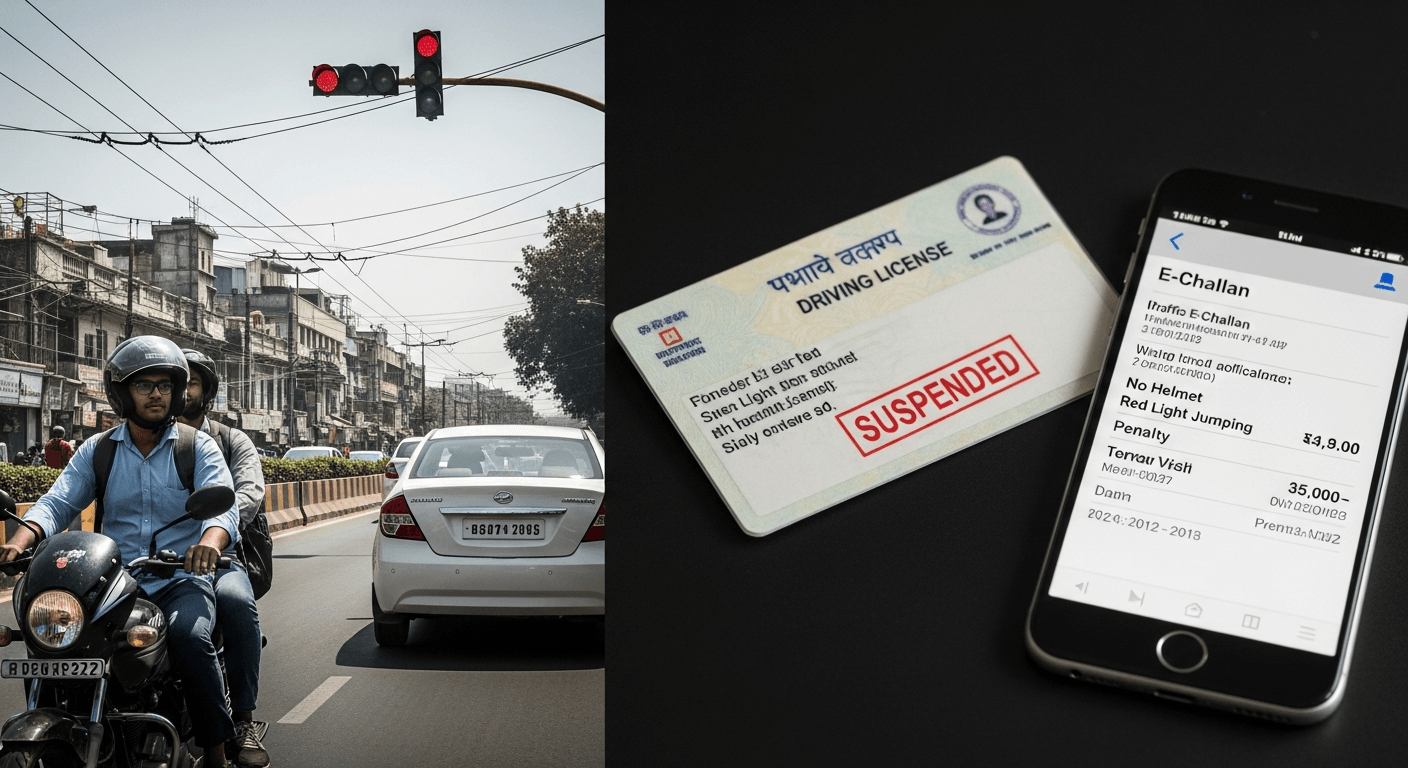
I write this as someone who watches how policy, technology and daily behaviour meet on Indian roads. A recent amendment to our Motor Vehicles Rules means that if a driver has five or more traffic offences recorded against them within a single year, the licensing authority may disqualify or suspend that driving licence. The change, effective from January 1, 2026, aims to curb repeat offenders and improve road safety (Times of India).
What the new rule says — the essentials
- Five or more traffic offences recorded within a 12-month period may trigger disqualification or suspension of your driving licence. The count applies only to offences in that year; earlier offences will not be carried forward.
- The licensing authority (RTO/DTO) decides whether to suspend or revoke the licence and for how long, but must give the licence-holder an opportunity to be heard before taking final action (Times of India).
- The government notification also standardises procedures for issuing, managing and paying challans: challans can be auto-generated (e-challans), and violators have a limited window to pay or contest them.
For the legal framework that underpins these procedures, the Central Motor Vehicles Rules and the Motor Vehicles Act remain the base documents governing licensing, disqualification and appeals (Motor Vehicles Act — IndiaCode PDF).
Which offences count?
The amendment expands the practical reach of disqualification. The list includes both serious and common contraventions: overspeeding, driving without a helmet or seatbelt, signal-jumping, illegal parking, overloading, and other offences already covered under notified provisions. In short: a mix of repeated minor offences can now have major administrative consequences.
Practical implications for drivers
- A single serious offence can still attract its own penalties; but under this rule, even repeated minor infractions can add up to licence suspension.
- E-challans and CCTV-generated notices make it easier for authorities to record offences remotely — but they also raise questions about accuracy, notification, and the right to be heard.
- Pending challans or unresolved disputes may block access to certain services (RC-related services, fitness certificates, NOC for inter-state transfer) until cleared.
Penalties, process and timelines — what to expect
- Challans: once a challan is issued, you typically have a fixed window to pay or contest (reported timelines around 45 days in current practice). Failure to contest within that window may be treated as acceptance.
- Disqualification: the RTO/DTO will initiate proceedings; they must provide a chance to be heard. The authority decides the suspension period case-by-case.
- Appeal: orders by licensing authorities are generally appealable under the statutory procedure set out in the Motor Vehicles Act and related rules.
How to check and contest offences
- Check e-challan / offence records on the national Parivahan e-challan portal or your state’s traffic police portal. The Parivahan platform is the official route to view and pay e-challans online: https://echallan.parivahan.gov.in/.
- If you believe a challan is incorrect, gather evidence (photos, timestamped receipts, GPS logs where applicable) and raise a formal grievance or contestation through the portal or the local transport office within the allowed period.
- Keep copies of receipts and correspondence; if the matter escalates, these documents will be important in appeals or court proceedings.
Immediate steps if you are told your licence may be suspended
- Don’t panic: read the notice carefully and note dates for response or hearing.
- Check the official e-challan records and download all notices and receipts.
- If valid grounds exist, file a timely representation with the licensing authority and, if needed, prepare to pursue appeal channels established under the law.
Practical tips to avoid getting five strikes
- Observe basic safety: wear helmets and seat belts, obey signals and speed limits.
- Keep documents current (DL, RC, insurance, PUCC) and carry digital copies where permitted.
- Use hands-free navigation and avoid phone use while driving.
- Regularly check the Parivahan portal for pending challans; paying or contesting early prevents escalation.
- Adopt defensive driving habits; many repeat offences reflect habit more than intent.
Criticisms and support — the public debate
Arguments in favour:
- Advocates say the rule targets habitual violators and could reduce repeat risky behaviour, improving road safety.
- Digital enforcement creates a consistent record that authorities can act upon.
Concerns raised:
- Accuracy and fairness of automated enforcement (camera/CCTV-based challans) — contesting often requires clear SOPs and reliable evidence.
- Administrative capacity: RTOs and local authorities must apply consistent procedures and ensure drivers get hearings before punitive action.
- Road design and enforcement gaps: critics note that enforcement alone will not fix poor infrastructure or unsafe road design.
My view and context
I’ve written previously about how technology can help make enforcement more effective — and about the need to combine automation with procedural fairness (“Learn to drive sensibly or perish”; “Can technology out-smart the traffic offenders?”). The new rule is a logical next step in using digital records to encourage better behaviour, but it must be implemented with care: clear SOPs, quick dispute resolution, and safeguards against erroneous automated notices.
If you drive in India, take this as a reminder: the combination of higher enforcement, e-challans, and this five-strike threshold makes simple, consistent safe-driving habits more important than ever. Check your records, clear or contest challans promptly, and treat this rule as an incentive to reduce risky behaviour on the roads.
Regards,
Hemen Parekh
Any questions / doubts / clarifications regarding this blog? Just ask (by typing or talking) my Virtual Avatar on the website embedded below. Then "Share" that to your friend on WhatsApp.
Get correct answer to any question asked by Shri Amitabh Bachchan on Kaun Banega Crorepati, faster than any contestant
Hello Candidates :
- For UPSC – IAS – IPS – IFS etc., exams, you must prepare to answer, essay type questions which test your General Knowledge / Sensitivity of current events
- If you have read this blog carefully , you should be able to answer the following question:
- Need help ? No problem . Following are two AI AGENTS where we have PRE-LOADED this question in their respective Question Boxes . All that you have to do is just click SUBMIT
- www.HemenParekh.ai { a SLM , powered by my own Digital Content of more than 50,000 + documents, written by me over past 60 years of my professional career }
- www.IndiaAGI.ai { a consortium of 3 LLMs which debate and deliver a CONSENSUS answer – and each gives its own answer as well ! }
- It is up to you to decide which answer is more comprehensive / nuanced ( For sheer amazement, click both SUBMIT buttons quickly, one after another ) Then share any answer with yourself / your friends ( using WhatsApp / Email ). Nothing stops you from submitting ( just copy / paste from your resource ), all those questions from last year’s UPSC exam paper as well !
- May be there are other online resources which too provide you answers to UPSC “ General Knowledge “ questions but only I provide you in 26 languages !



No comments:
Post a Comment