
Republic Day, Fabric, and Memory
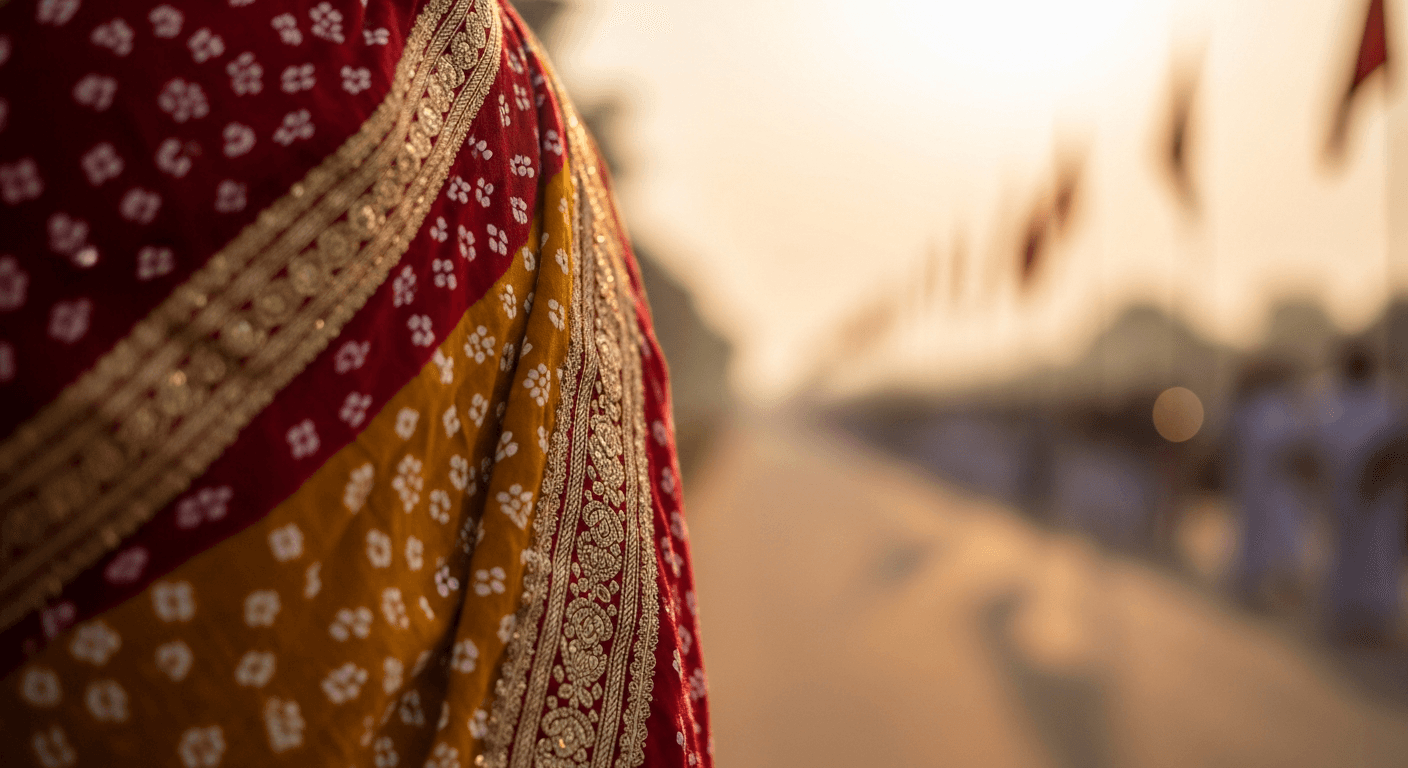
I watched the Republic Day ceremonies this year with that particular mix of civic pride and small curiosity I always carry: a country celebrating its constitutional promise, and people — leaders included — choosing how to tell its story. When the Prime Minister arrived wearing a red-yellow Bandhej safa rooted in Rajasthani tradition, it was more than an aesthetic flourish; it was a deliberate stitch in a larger narrative about craft, region and continuity.
What a safa says without words
A turban on a day like January 26 is shorthand. It signals reverence for regional crafts, an invocation of history, and a gentle reminder that polity and culture are braided together. The red and mustard-yellow bandhani pattern — a tie-dye technique with deep roots in Gujarat and Rajasthan — carries layers of meaning:
- Heritage: Bandhani is hand-crafted; each knot, each dye speaks of lineage and time-tested skill.
- Regional recognition: Choosing a Rajasthani-style safa places Rajasthan’s textile idioms on the national stage, if only for a morning.
- Soft diplomacy: Clothing is a form of storytelling that travels well across borders, especially during moments when the world watches.
Journalistic coverage captured these nuances and described the safa’s colours and weave, situating it among a history of similar choices at national ceremonies Times of India and analyses of its symbolic weight NDTV.
Why small cultural gestures matter
I’ve become more convinced over time that the little things — a scarf, a speechline, a chosen song — are the threads that hold public imagination together. On Republic Day, when ceremony and memory converge, sartorial choices do three things at once:
- Honor artisans whose hands keep traditions alive.
- Remind citizens of the country’s regional textures and languages of expression.
- Offer a calm, culturally intelligible statement to domestic and international viewers about continuity and identity.
This is not mere pageantry. It’s cultural shorthand that can be read quickly, broadly, and respectfully.
Some reflections I carry forward
- I want our national moments to keep making room for craftsmen and craftswomen — the people behind dye and weave. Public visibility matters for sustaining livelihoods and pride.
- Symbols work best when they are humble and rooted: a safa should not be spectacle for spectacle’s sake, but a nod to living practice.
- Continuity is as important as change. When ceremonies repeat a pattern of honoring regional traditions, they slowly build an archive of cultural respect.
Closing: a small, personal ask
I left this Republic Day with a wish: that conversations about national identity include conversations about how we support the hands that make our textiles, the markets that sustain them, and the apprentices who will carry those skills forward. A turban is a small thing, but its ripple can be large if we pay attention.
Regards,
Hemen Parekh
Any questions / doubts / clarifications regarding this blog? Just ask (by typing or talking) my Virtual Avatar on the website embedded below. Then "Share" that to your friend on WhatsApp.
Get correct answer to any question asked by Shri Amitabh Bachchan on Kaun Banega Crorepati, faster than any contestant
Hello Candidates :
- For UPSC – IAS – IPS – IFS etc., exams, you must prepare to answer, essay type questions which test your General Knowledge / Sensitivity of current events
- If you have read this blog carefully , you should be able to answer the following question:
- Need help ? No problem . Following are two AI AGENTS where we have PRE-LOADED this question in their respective Question Boxes . All that you have to do is just click SUBMIT
- www.HemenParekh.ai { a SLM , powered by my own Digital Content of more than 50,000 + documents, written by me over past 60 years of my professional career }
- www.IndiaAGI.ai { a consortium of 3 LLMs which debate and deliver a CONSENSUS answer – and each gives its own answer as well ! }
- It is up to you to decide which answer is more comprehensive / nuanced ( For sheer amazement, click both SUBMIT buttons quickly, one after another ) Then share any answer with yourself / your friends ( using WhatsApp / Email ). Nothing stops you from submitting ( just copy / paste from your resource ), all those questions from last year’s UPSC exam paper as well !
- May be there are other online resources which too provide you answers to UPSC “ General Knowledge “ questions but only I provide you in 26 languages !





No comments:
Post a Comment