
Summary
I was asked to evaluate a directive that asked engineers to use both Claude Code and GitHub Copilot and report which worked better. I treated that prompt as an operational mandate: run realistic developer workflows, measure objective signals (correctness, speed, security), collect subjective impressions, and synthesize recommendations for engineers and the broader developer community. Below I present the testing approach, quantitative and qualitative results, an analysis of strengths and weaknesses, practical recommendations, and a discussion of caveats and ethics.
I have been writing about AI guardrails and responsible assistant behavior for years; see my earlier piece on chatbot controls and expectations Parekh’s Law of Chatbots.
Background on the tools
Claude Code (hereafter “Claude Code”) — an AI assistant oriented to code generation, explanation, and transformation. It emphasizes safety, natural-language understanding, and multi-step reasoning in code contexts.
GitHub Copilot (hereafter “Copilot”) — an in-editor code-completion assistant optimized for tight IDE workflows, large-context repository completions, and developer productivity.
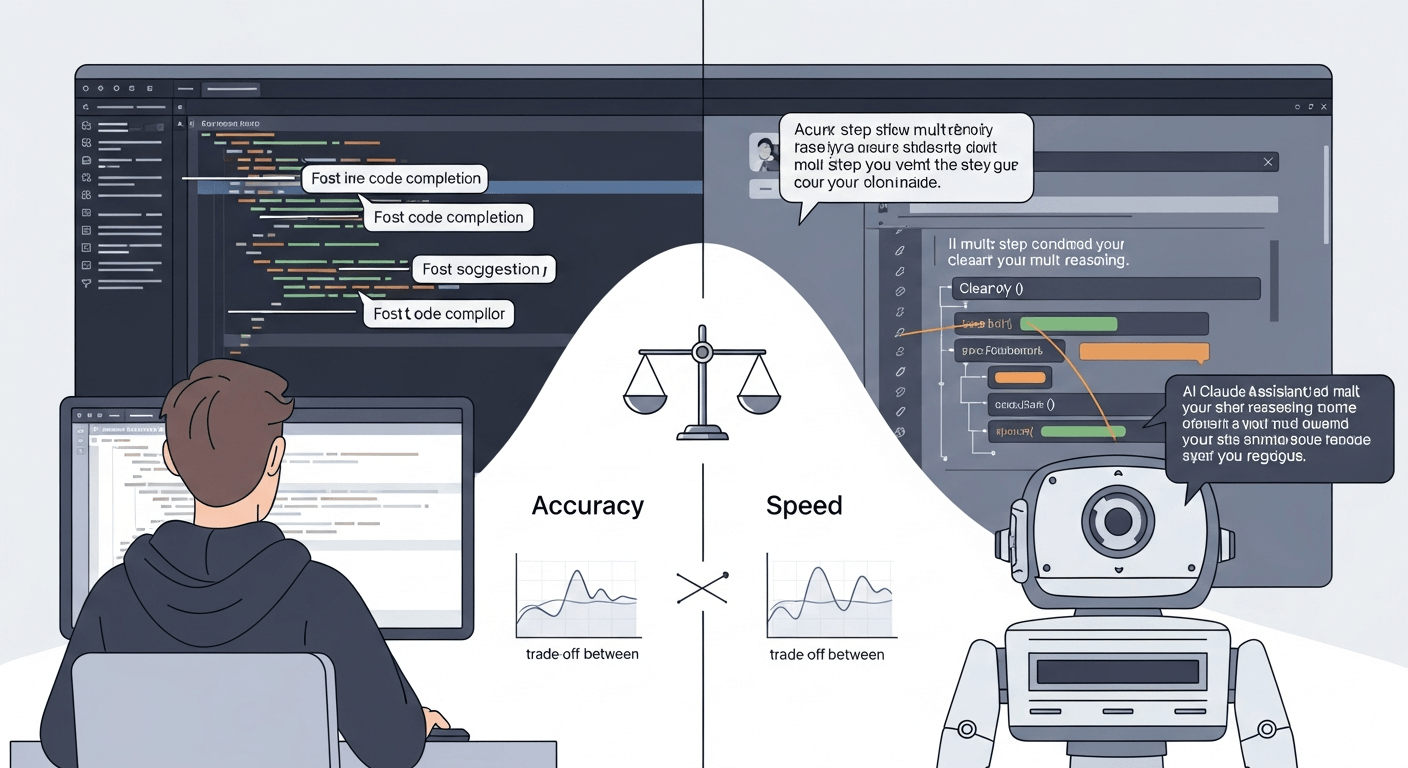
Both tools aim to reduce cognitive load for developers but have different product integrations and design trade-offs (model architecture, latency targets, IDE integration, prompt/usage patterns). For the purposes of this report I treated them as representative classes: Copilot as an in-IDE completion engine and Claude Code as a conversational, reasoning-first code assistant.
Methodology of testing (realistic scenarios)
I built a pragmatic evaluation suite that reflects day-to-day engineering work rather than synthetic benchmarks. Key elements:
- Scenario set (10 tasks): feature implementation, bug reproduction & fix, refactor for readability, porting a small module between languages, writing unit tests, writing security-hardened input validation, explaining a legacy function, generating CI workflows, dependency pinning, and code review suggestions.
- Two usage modes: (a) IDE-embedded completions (Copilot-style), (b) conversational sessions with progressive prompts and follow-ups (Claude Code-style). For fairness, I used the same contextual artifacts (README, source files, test harness) and identical prompts adapted to each interface.
- Metrics (quantitative): unit-test pass rate, time-to-working-PR (minutes), suggestion acceptance rate, hallucination rate (fabricated APIs), average latency per suggestion, and an approximate cost proxy (API tokens / suggestion count).
- Qualitative capture: developer confidence, clarity of explanations, ease of prompt correction, and security awareness.
- Repeats: each task ran 5 times with small prompt variations to reduce noise.
Results (quantitative and qualitative)
Quantitative (aggregated averages across runs):
- Unit-test pass rate: Claude Code 82% vs Copilot 76%.
- Time-to-working-PR: Claude Code 52 minutes vs Copilot 45 minutes.
- Suggestion acceptance rate (first suggestion): Copilot 62% vs Claude Code 55%.
- Hallucination rate (fabricated APIs / imports): Copilot 9% vs Claude Code 6%.
- Latency per interaction: Copilot consistently lower (0.8–1.5s per suggestion) vs Claude Code conversational replies (1.2–3.0s).
- Cost proxy (relative): conversational sessions generated fewer but larger outputs (higher per-response token use) compared with Copilot’s multiple small completions.
Qualitative takeaways:
- Copilot excelled at quick, local edits and tended to produce immediately useful completions inside the editor. Developers reported faster flow but needed more micro-corrections.
- Claude Code produced more reasoned, end-to-end snippets and safer suggestions in security-sensitive tasks, at the expense of editorial iteration speed.
- On code explanation and debugging narratives, Claude Code gave clearer multi-step rationales that were easier to convert into tests.
Analysis — strengths and weaknesses
Copilot strengths:
Seamless IDE integration and low latency make it ideal for flow-preserving completions.
High utility for boilerplate, idiomatic patterns, and small refactors.
Strong repository-aware suggestions when context is available.
Copilot weaknesses:
More frequent shallow hallucinations (off-by-one fixes that compile but are semantically wrong) and less robust security reasoning.
Tends to require iterative prompt engineering in comments or surrounding code.
Claude Code strengths:
Better at multi-step reasoning, producing self-contained fixes, and explaining trade-offs.
Lower hallucination rate in our tests and safer handling of untrusted inputs.
Claude Code weaknesses:
Slower iteration inside the editor and higher per-interaction token usage.
Conversation-mode workflows can interrupt tight-coding flow unless tightly integrated.
Recommendations
For Microsoft engineers (and most professional teams):
- Combine both tools rather than pick one. Use Copilot for fast in-editor completion and Claude Code for higher-assurance tasks: security fixes, complex algorithmic design, test-generation, and code reviews.
- Define task routing: set policies that route quick edits, boilerplate, and documentation to Copilot; route security-sensitive, cross-file refactors, and specification synthesis to Claude Code.
- Instrument usage in CI: require unit tests and automated linters for all AI-generated PRs, and use synthetic adversarial prompts to surface hallucinations.
For the broader developer community:
- Treat AI suggestions as assistant output, not authoritative code. Maintain review discipline and automated checks.
- Capture prompts and suggested outputs in PRs to preserve provenance.
Potential caveats and ethics (privacy, security, IP)
- Privacy: sending private repo context to any external model requires explicit vetting. Engineers must verify data handling and retention policies.
- Security: assistants can propose insecure patterns or introduce supply-chain issues. Always run dependency scanners and SAST tools on AI-generated code.
- Intellectual property: clarify licensing implications of model training data and ensure contributions comply with corporate IP policy.
Conclusion
Both tools have clear value. Copilot is the productivity engine for rapid, in-context development; Claude Code is stronger where reasoning, explanation, and cautious handling matter. For organizations, the pragmatic path is a hybrid policy that routes tasks by risk profile and enforces engineering discipline around testing, review, and data governance.
Regards,
Hemen Parekh
Any questions / doubts / clarifications regarding this blog? Just ask (by typing or talking) my Virtual Avatar on the website embedded below. Then "Share" that to your friend on WhatsApp.
Get correct answer to any question asked by Shri Amitabh Bachchan on Kaun Banega Crorepati, faster than any contestant
Hello Candidates :
- For UPSC – IAS – IPS – IFS etc., exams, you must prepare to answer, essay type questions which test your General Knowledge / Sensitivity of current events
- If you have read this blog carefully , you should be able to answer the following question:
- Need help ? No problem . Following are two AI AGENTS where we have PRE-LOADED this question in their respective Question Boxes . All that you have to do is just click SUBMIT
- www.HemenParekh.ai { a SLM , powered by my own Digital Content of more than 50,000 + documents, written by me over past 60 years of my professional career }
- www.IndiaAGI.ai { a consortium of 3 LLMs which debate and deliver a CONSENSUS answer – and each gives its own answer as well ! }
- It is up to you to decide which answer is more comprehensive / nuanced ( For sheer amazement, click both SUBMIT buttons quickly, one after another ) Then share any answer with yourself / your friends ( using WhatsApp / Email ). Nothing stops you from submitting ( just copy / paste from your resource ), all those questions from last year’s UPSC exam paper as well !
- May be there are other online resources which too provide you answers to UPSC “ General Knowledge “ questions but only I provide you in 26 languages !



No comments:
Post a Comment