
Introduction
I read recent reporting that the state government, in collaboration with IIT Bombay, is developing a language- and speech-based AI tool intended to flag suspected illegal Bangladeshi nationals and Rohingya individuals during field interactions. The system—reported as a ₹3-crore project—is described as an initial screening aid for law-enforcement officers and, according to coverage, is currently experimental with roughly 60% reported reliability in early tests Hindustan Times. I want to walk through what such a tool likely entails, where the risks are, and practical steps that should guide any responsible pilot.
What the proposed AI tool likely does
- Data sources: voice recordings captured during police or field interviews; possibly short video (for face or gait analysis); contextual metadata (location, time, device ID); and any available document images to cross-check claims.
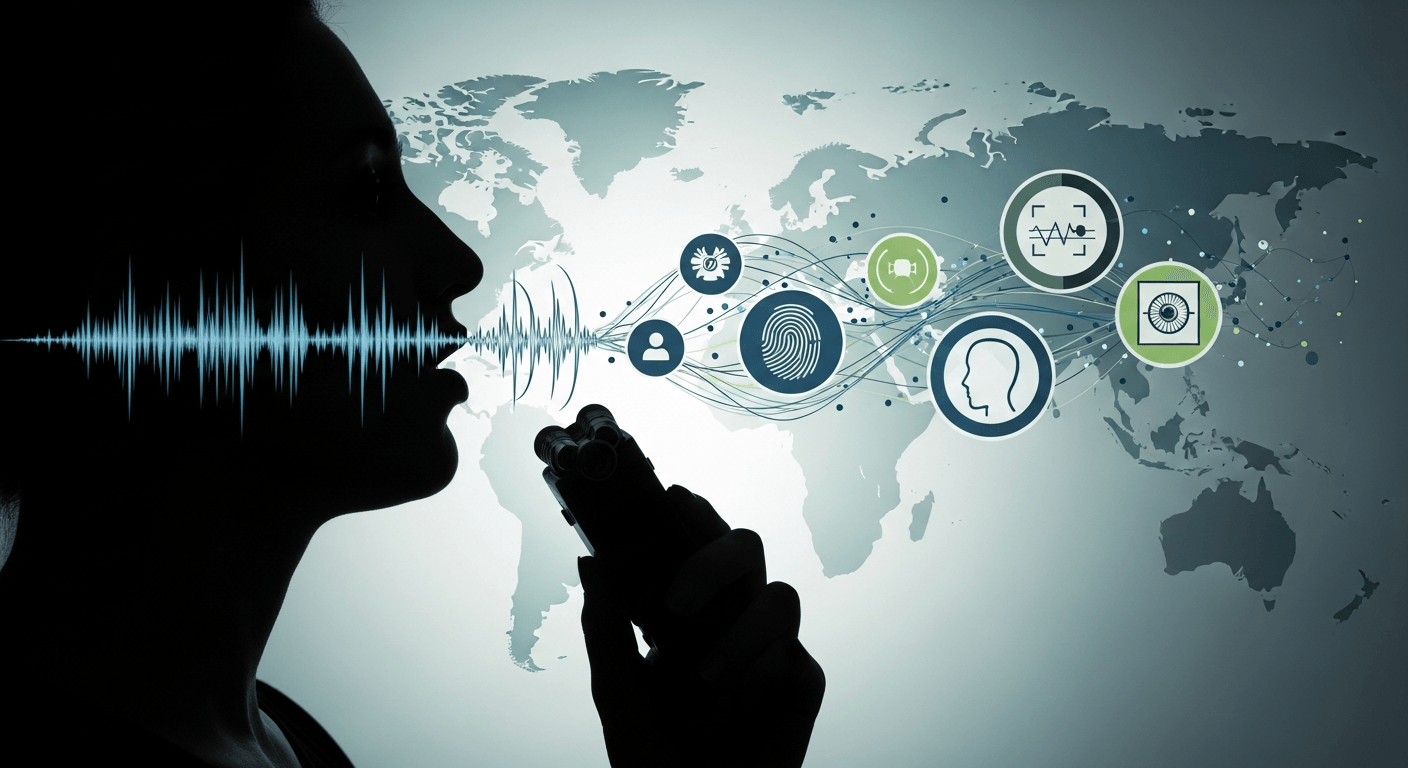
- Primary methods: language identification (is this speaker using Bengali, a regional dialect, or mixed code-switching?), dialect and accent classification, speaker recognition to detect reused identities, and multimodal fusion if video or metadata are used.
- Probable algorithms: modern transformer-based speech and language models (for automatic speech recognition and dialect tagging), x-vector/i-vector and neural embeddings for speaker characterization, convolutional or transformer networks for video-based face or gait features, and ensemble classifiers or Bayesian fusion layers to combine signals.
- Intended workflow: the tool provides a probabilistic signal (a score or flag) that an officer uses as a cue for further documentary verification—not as a final decision. Current reporting suggests the system is an initial-screening aid rather than an automatic deportation engine Hindustan Times.
Limitations of the approach
- Dialectal overlap: Bengali dialects in bordering Indian states and Bangladesh overlap heavily; accent alone is a weak proxy for nationality. Code-switching and second-language effects further obscure signals.
- Data representativeness: training datasets that do not capture the full sociolectal and acoustic variety will produce systematic errors.
- Probabilistic outputs: models will give confidence scores, not categorical truth—calibration and threshold choice determine false-positive rates.
Legal and human-rights concerns
- Privacy and surveillance: collecting and storing voice and biometric data from people interacting with state agents creates surveillance risks unless tightly limited by law.
- Bias and discrimination: errors will disproportionately harm linguistic minorities, migrant workers, and low-income people who cannot easily contest decisions.
- Due process and wrongful detention: if model outputs are used to justify detention, even temporarily, the consequences of false positives are severe. Procedural safeguards must prevent AI output from being the sole cause of coercive action.
Technical challenges
- Data quality: noisy field audio, short utterances, and emotional speech reduce classifier reliability.
- Cross-border ethnicity errors: shared language communities across borders make nationality inference from speech inherently unreliable.
- Adversarial and spoofing attacks: deliberate voice manipulation, replay attacks, or poisoned data can mislead models.
- Domain shift: models trained on curated datasets perform worse in real-world operational environments without robust domain adaptation.
Governance and oversight recommendations
- Narrow, documented scope: define and publish the precise operational use (preliminary screening only), legal basis, and standard operating procedures.
- Human-in-the-loop: require trained human officers to verify any case flagged by the tool before action; AI outputs should be advisory and logged.
- Independent audits: mandate periodic third-party technical and rights-impact audits with public summaries of methods and error rates.
- Transparency and notice: inform communities that audio/biometric screening may occur and publish aggregate performance metrics (hit rates, false positives by demographic group).
- Data minimization and retention limits: store only what is strictly necessary, for the minimum time, with clear deletion schedules and access controls.
- Grievance and redress: provide easy, timely mechanisms for people to challenge flags and obtain human review and remediation.
Social impacts
- Community relations: deployment without community consultation can erode trust, stigmatize particular neighborhoods, and exacerbate tensions between citizens and migrants.
- Discrimination and chilling effects: routine profiling may push vulnerable groups away from public services and reporting of crimes.
- Migration dynamics: expanded screening could shift migration routes or increase clandestine movement, with humanitarian consequences.
Reactions from stakeholders (likely patterns)
- State/security actors: see operational value in screening aids and emphasize law-and-order benefits.
- Research partner (IIT Bombay): likely to stress the experimental and scientific aspects, while also raising questions about evaluation and safeguards.
- Civil-society organizations: will emphasize privacy, due process, and risk of racialized policing.
- Neighboring state and foreign authorities: diplomatic concerns and demands for robust legal safeguards can be expected.
International law and precedents
International human-rights law emphasizes non-discrimination, proportionality, and procedural safeguards for any measures affecting liberty or nationality status. Precedents from biometric-ID and surveillance deployments globally show that without careful governance, well-intentioned systems can lead to misidentification, legal challenges, and reputational harm to implementing agencies.
My prior observations
I have tracked India’s growing work on AI for Indic languages and the broader move to local-language models; institutions such as IIT Bombay have been active in that space, including projects that explore the linguistics and cultural context of language AI Meet India’s own ChatGPT-style AI model Hanooman. That background makes me sympathetic to technical innovation, but also cautious about operational use that affects people’s liberty.
Conclusion and practical next steps
If this tool is piloted, I recommend a conservative pathway: constrained pilots with informed consent, independent pre-deployment risk assessments, public transparency about data and errors, strict limits on operational use, and a statutory or regulatory framework that binds the tool to advisory status with human oversight. Technology can help flag leads, but it must never substitute for legally robust, evidence-based procedures that protect human rights.
References
- Initial reporting on the project and performance claims: Hindustan Times.
- My earlier reflections on language AI research at IIT Bombay: Meet India’s own ChatGPT-style AI model Hanooman.
- Practical governance frameworks: NITI Aayog and other policy bodies have published Responsible AI guidance that is useful for shaping audits and transparency obligations.
Regards,
Hemen Parekh
Any questions / doubts / clarifications regarding this blog? Just ask (by typing or talking) my Virtual Avatar on the website embedded below. Then "Share" that to your friend on WhatsApp.
Get correct answer to any question asked by Shri Amitabh Bachchan on Kaun Banega Crorepati, faster than any contestant
Hello Candidates :
- For UPSC – IAS – IPS – IFS etc., exams, you must prepare to answer, essay type questions which test your General Knowledge / Sensitivity of current events
- If you have read this blog carefully , you should be able to answer the following question:
- Need help ? No problem . Following are two AI AGENTS where we have PRE-LOADED this question in their respective Question Boxes . All that you have to do is just click SUBMIT
- www.HemenParekh.ai { a SLM , powered by my own Digital Content of more than 50,000 + documents, written by me over past 60 years of my professional career }
- www.IndiaAGI.ai { a consortium of 3 LLMs which debate and deliver a CONSENSUS answer – and each gives its own answer as well ! }
- It is up to you to decide which answer is more comprehensive / nuanced ( For sheer amazement, click both SUBMIT buttons quickly, one after another ) Then share any answer with yourself / your friends ( using WhatsApp / Email ). Nothing stops you from submitting ( just copy / paste from your resource ), all those questions from last year’s UPSC exam paper as well !
- May be there are other online resources which too provide you answers to UPSC “ General Knowledge “ questions but only I provide you in 26 languages !



No comments:
Post a Comment