
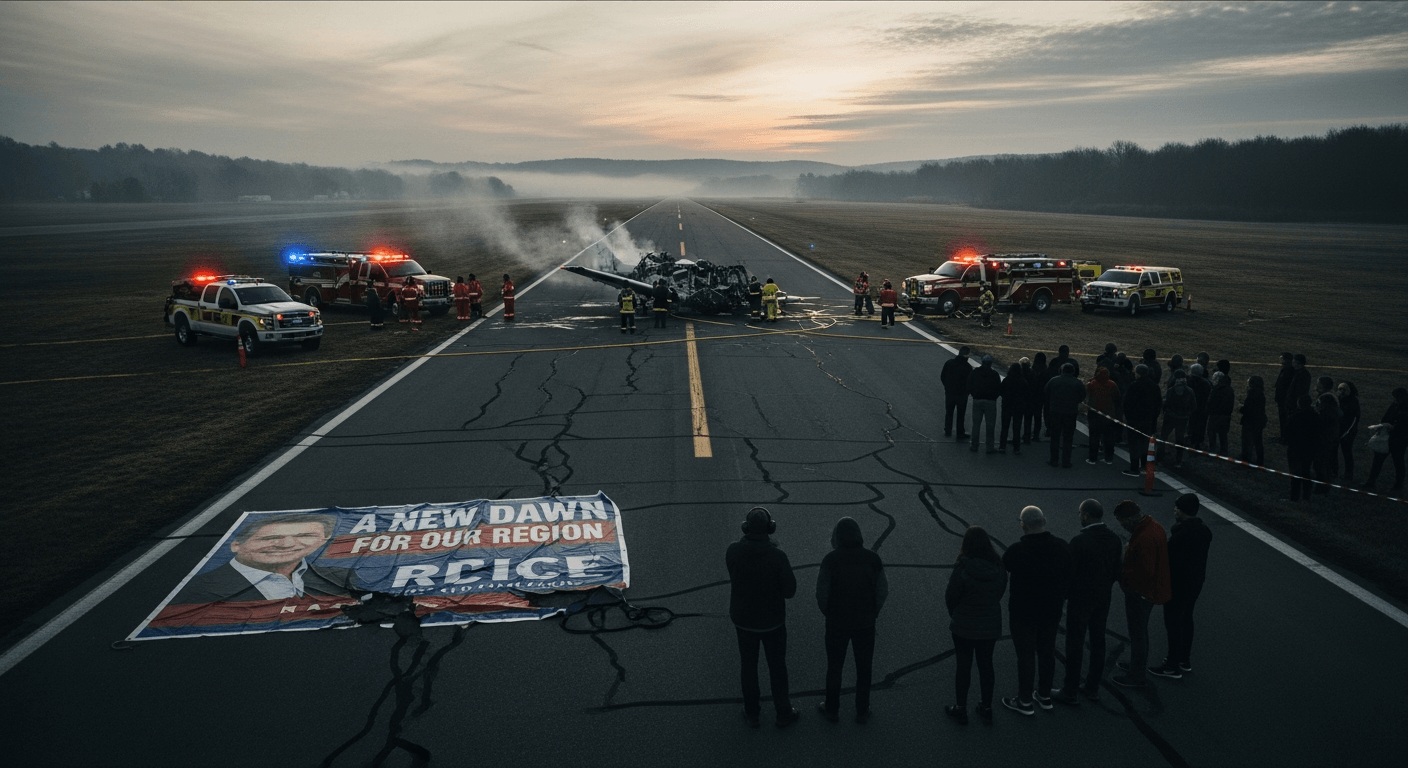
Morning in Baramati — a public life cut short
This morning I read the terrible news: an aircraft attempting to land at Baramati crashed, killing the Maharashtra deputy chief minister and five others. The images and first reports — from outlets such as NDTV and Times of India — showed wreckage and smoke, an emergency response unfolding where lives and public plans once were.[^1][^2]
I write from the place where grief and policy meet. As someone who has long written about transport safety and misplaced priorities, I find myself returning to the same questions: how did this preventable risk persist, and how will we honour the dead beyond headlines and condolence statements? I explored similar themes in earlier pieces about accident prevention and priorities for public safety.[^3]
What this loss forces us to ask
- How robust are safety checks at smaller regional airports and for privately chartered flights that ferry public officials?
- Are flight-data recordings, maintenance records and crew training being audited and shared quickly enough after crashes to prevent repetitions?
- How will emergency response and victim support be coordinated — for the bereaved families, for the communities that relied on the departed leader, and for first responders who worked at the scene?
These are practical, urgent questions. They are not abstract. The answers require aviation regulators, state administrations, manufacturers, and local governments to move past ritual statements and into transparent, systemic action.
A personal note on public life and fragility
Public figures live at an odd intersection: their schedules and visibility mean they make many decisions that affect many people, yet they remain as mortal as the rest of us. When a plane carrying high-profile leaders crashes, the shock is amplified — because the loss affects not just family but the machinery of governance and the communities that relied on that leadership.
For those of us who observe and comment, there is a responsibility not to politicize the immediate human suffering but to make the aftermath useful. That means pressing for independent investigations, demanding timely release of factual findings, and converting grief into reforms that reduce future risk.
Concrete steps I believe we should press for now
- Immediate, transparent investigation by independent aviation investigators; public release of preliminary findings within days, final report within months.
- Mandatory audit of safety protocols at smaller airports and for charter operations that transport public officials.
- A review of regulatory oversight: maintenance records, aircraft age and airworthiness directives must be accessible to appropriate oversight bodies.
- Strengthening local emergency medical response — drills, trauma-care readiness, and post-incident psychological support for survivors and responders.
- Compassionate, expedited compensation and support systems for families of the deceased and for injured survivors.
If we are to honour those who died, we must insist that the lessons from this crash are learned quickly and applied broadly.
On memory, politics and public duty
There will be vigils, political realignments, and ceremonies. There should also be quiet, sustained work: better governance of transport safety, greater attention to small-but-critical infrastructure, and an ethic that treats safety as a continuous public good rather than an episodic response.
Loss like this reminds me — and should remind every citizen — that public life is fragile. The right tribute to those taken is not only grief expressed in immediate words, but systems fixed so fewer families endure such loss in the future.
Regards,
Hemen Parekh
Any questions / doubts / clarifications regarding this blog? Just ask (by typing or talking) my Virtual Avatar on the website embedded below. Then "Share" that to your friend on WhatsApp.
[^1]: NDTV, "Ajit Pawar's Plane Crash Lands In Maharashtra's Baramati" — https://www.ndtv.com/india-news/ajit-pawars-plane-crash-lands-in-maharashtras-baramati-10897243
[^2]: Times of India live updates, "Ajit Pawar plane crash Live updates" — https://timesofindia.indiatimes.com/city/pune/ajit-pawar-plane-crash-live-updates-maharashtra-deputy-cm-baramati-hospital/liveblog/127675224.cms
[^3]: On transport safety and priorities I have explored systemic failures in earlier writing; see for example my reflections on preventing avoidable deaths and misplaced priorities: http://myblogepage.blogspot.com/2016/11/a-case-of-misplaced-priority.html
Get correct answer to any question asked by Shri Amitabh Bachchan on Kaun Banega Crorepati, faster than any contestant
Hello Candidates :
- For UPSC – IAS – IPS – IFS etc., exams, you must prepare to answer, essay type questions which test your General Knowledge / Sensitivity of current events
- If you have read this blog carefully , you should be able to answer the following question:
- Need help ? No problem . Following are two AI AGENTS where we have PRE-LOADED this question in their respective Question Boxes . All that you have to do is just click SUBMIT
- www.HemenParekh.ai { a SLM , powered by my own Digital Content of more than 50,000 + documents, written by me over past 60 years of my professional career }
- www.IndiaAGI.ai { a consortium of 3 LLMs which debate and deliver a CONSENSUS answer – and each gives its own answer as well ! }
- It is up to you to decide which answer is more comprehensive / nuanced ( For sheer amazement, click both SUBMIT buttons quickly, one after another ) Then share any answer with yourself / your friends ( using WhatsApp / Email ). Nothing stops you from submitting ( just copy / paste from your resource ), all those questions from last year’s UPSC exam paper as well !
- May be there are other online resources which too provide you answers to UPSC “ General Knowledge “ questions but only I provide you in 26 languages !




No comments:
Post a Comment