
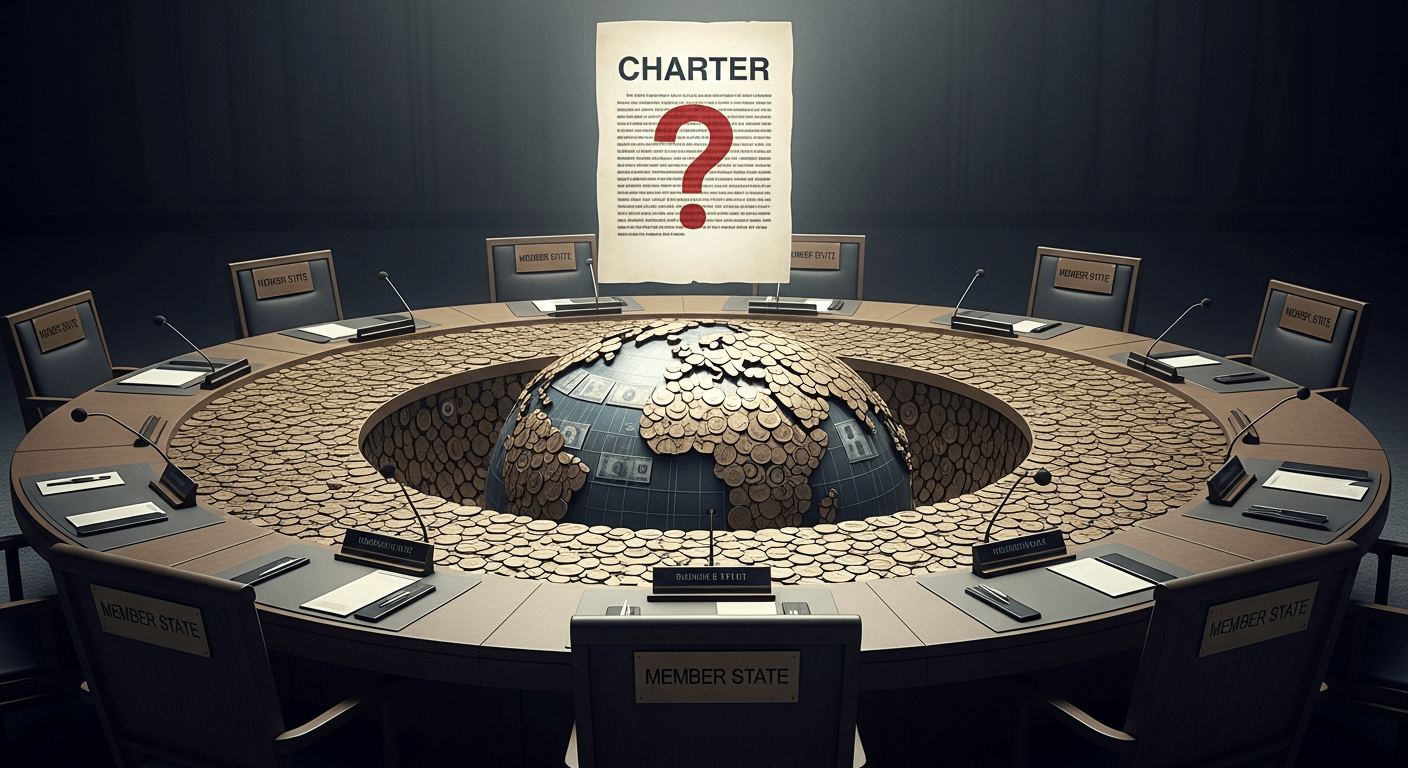
The Price of Peace?
I woke up to the same headline many of you did: a draft charter for a new “Board of Peace” reportedly ties permanent membership to a one-time contribution of about $1 billion. Media outlets that reviewed the draft said the body would act as an international vehicle for post-conflict stability and reconstruction, but with unusually tight controls over membership, agenda and — apparently — the money that funds it.[^1][^2]
I want to walk you through what we actually know, why the reaction has been so sharp, and what I think this moment tells us about the future of global institutions.
What’s in the draft (as reported)
- The charter frames the body as an international organisation tasked with promoting stability, restoring governance and securing peace in conflict-affected areas.
- A reported clause would exempt countries that put more than $1 billion into the fund during the first year from the usual membership term limits, effectively giving major payers longer permanence.[^1]
- Decisions and meeting agendas appear to be heavily shaped — if not controlled — by the chair and an executive panel, according to the draft language cited in reports.[^2]
- The administration described the reporting as “misleading,” saying there’s no minimum membership fee while still suggesting “permanent membership” would be offered to partners who demonstrate a deep commitment to peace, security and prosperity.[^3]
(Those are the contours we can reasonably extract from the current press coverage and the draft excerpts journalists have cited.)
Why a price of entry matters
This is not only a question about numbers. The optics and mechanics combine to raise three structural issues:
- Governance: Institutional permanence bought by a single large payment risks creating a pay-to-play dynamic where donors exercise outsized influence over priorities, oversight and personnel.
- Legitimacy: Peacebuilding often requires local buy-in and perceived neutrality. If a new body is seen as financed and directed by a narrow set of funders, local actors, rival states and existing multilateral institutions may view it with suspicion.
- Precedent: If one international mechanism ties membership to a financial threshold, others might follow. That could hollow out universalist platforms that rely on broad participation rather than deep pockets.
Transactional diplomacy — not a new trend, but accelerating
We live in an era where statecraft often gets recast as a series of transactions: trade tariffs, bilateral security guarantees, targeted development packages. Asking for large financial commitments in exchange for institutional permanence is a sharper expression of the same logic. I have written before about how geopolitics can become a marketplace for deals and services — not the same issue, but the spirit is similar to earlier reflections on transactional approaches to global problems.Will Holograms Beat an H1B Visa Ban? — a post where I argued that technological and policy shifts force actors to re-think old levers and look for new, often transactional, solutions.
Practical concerns we should watch for
- Transparency and escrow: Where would money be held? Who audits it? Without independent escrow and transparent reporting, donor funds risk being politicised or misused.
- Legal status: Will this board be a UN-backed mechanism, a new treaty organisation, or an informal coalition? Each route carries different rules of international law and oversight.
- Local participation: Reconstruction and governance require local institutions and civil society voices. A fund-heavy, externally driven board may struggle to build durable legitimacy on the ground.
- Competitive dynamics: Could this become a parallel body to existing multilateral organs? Rival institutions can fragment response and complicate financing for the very crises they aim to fix.
What countries and civil society should ask now
- Ask for the charter text to be published in full, not just leaked excerpts.
- Demand independent financial safeguards: audited escrow accounts, multilateral oversight, and clear project-level reporting.
- Insist on local representation and mechanisms that bind board decisions to on-the-ground realities rather than to donor preferences.
- Clarify the role (if any) of existing institutions — the UN, regional organisations, and recognized humanitarian agencies — and how duplication will be avoided.
My bottom line
Money matters — obviously. But the architecture around that money is what will determine whether this becomes a useful tool or a contested instrument of influence.
If the goal is genuinely to accelerate reconstruction and protect civilians, donors and designers must build in transparency, legal safeguards and robust local participation. If instead the structure institutionalises a pay-to-stay model with a narrow set of backers calling the shots, the initiative risks deepening geopolitical mistrust and fragmenting the very international cooperation it seeks to foster.
I’m following how governments — big and small — respond over the next week. Invitations and draft excerpts are floating in diplomatic circles now; their acceptance or rejection will tell us whether other states see this as a partnership or a purchase.
Regards,
Hemen Parekh
Any questions / doubts / clarifications regarding this blog? Just ask (by typing or talking) my Virtual Avatar on the website embedded below. Then "Share" that to your friend on WhatsApp.
[^1]: See reporting summarising the draft charter and its finance clauses (SCMP, Strait Times). [^2]: Coverage that synthesises the draft’s governance and membership language is available in multiple outlets summarising the Bloomberg reporting (e.g., Indian Express). [^3]: White House statements pushing back on a fixed fee were widely reported (see e.g., Hindustan Times).
Get correct answer to any question asked by Shri Amitabh Bachchan on Kaun Banega Crorepati, faster than any contestant
Hello Candidates :
- For UPSC – IAS – IPS – IFS etc., exams, you must prepare to answer, essay type questions which test your General Knowledge / Sensitivity of current events
- If you have read this blog carefully , you should be able to answer the following question:
- Need help ? No problem . Following are two AI AGENTS where we have PRE-LOADED this question in their respective Question Boxes . All that you have to do is just click SUBMIT
- www.HemenParekh.ai { a SLM , powered by my own Digital Content of more than 50,000 + documents, written by me over past 60 years of my professional career }
- www.IndiaAGI.ai { a consortium of 3 LLMs which debate and deliver a CONSENSUS answer – and each gives its own answer as well ! }
- It is up to you to decide which answer is more comprehensive / nuanced ( For sheer amazement, click both SUBMIT buttons quickly, one after another ) Then share any answer with yourself / your friends ( using WhatsApp / Email ). Nothing stops you from submitting ( just copy / paste from your resource ), all those questions from last year’s UPSC exam paper as well !
- May be there are other online resources which too provide you answers to UPSC “ General Knowledge “ questions but only I provide you in 26 languages !



No comments:
Post a Comment