
Introduction
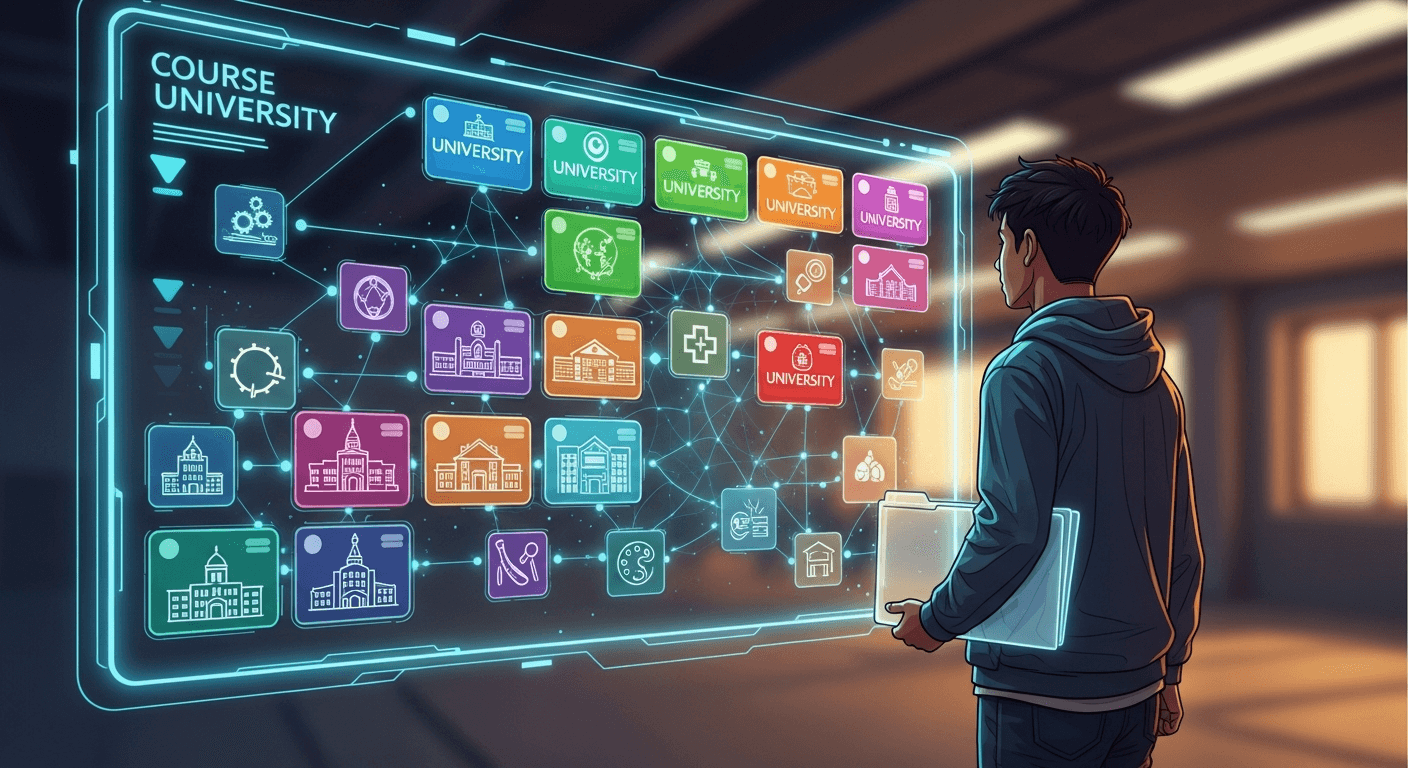
I read the recent coverage about the Meta University idea — a model that will let students assemble degrees by choosing modules across institutions — and I felt both excited and reflective. The concept is no longer a distant policy sketch; it is surfacing again as a practical possibility because of better internet infrastructure, modular course design, and policy nudges for multidisciplinary learning source.
Why this matters to me
Over the years I have written about virtual universities, online learning, and skill-first education. I argued that a digital-first approach can scale opportunities and connect learners to industry-relevant skills long before traditional campuses can adapt My earlier note on virtual skills university. The Meta University concept feels like the natural next step: not just digitizing classes, but tearing down institutional walls so a student can create a curriculum that fits their life and the market.
What a student-designed degree could look like
- Cafeteria-style curriculum: pick 60% core from one domain, 40% electives across engineering, humanities, design, and entrepreneurship.
- Hybrid credentials: a mix of credit-bearing university courses, industry micro-credentials, and project portfolios.
- Mobility and delivery: courses delivered online, in blended formats, or physically across partner institutions.
Benefits (why I cheer for it)
- Relevance: Students can combine technical depth with soft skills or domain knowledge that employers truly want.
- Interdisciplinarity: Serendipitous combinations (for example, materials science + public policy) create new problem-solvers.
- Access & choice: Learners in smaller towns can access professors and labs from top institutions via networked platforms.
- Industry linkages: Modular programmes make co-created sectoral pathways (space, defence, digital health) easier to build.
Practical challenges we must not romanticize
Credits and standards: Uniform credit transfer, assessment fairness, and academic standards across partners will be essential.
Quality assurance: How do we ensure rigor when courses come from heterogeneous providers?
Administrative friction: Enrollment, scheduling, and student services across institutions will need integrated platforms.
Equity: High-speed connectivity and device access remain unequal — otherwise flexibility becomes privilege.
How to make it work — three priorities
1) Build an interoperable credit framework
- Agree common learning outcomes, transparent rubrics, and an easy credit-transfer mechanism so students don’t get stuck with orphan credits.
2) Invest in the shared digital backbone
- Use a secure national knowledge network and centralized registries for courses, faculty, assessments, and student portfolios. Earlier digital-university ideas I described leaned on such networked hubs as the enabler see my reflections on distance education and online programs.
3) Co-design programmes with industry mentors
- Modular degrees should include mandatory applied projects co-supervised by industry and academia so employers can trust the outcomes.
A note to students and parents
If your university or state announces Meta-style options, think in terms of learning trajectories, not just subjects. Start with:
- An anchor discipline (your primary degree home).
- Two-to-three complementary clusters (skills + context + a capstone project).
- A visible portfolio you can show employers — not merely a transcript.
A plea to policymakers and university leaders
Design pilots that are small, measurable, and rapid. Test joint degrees in high-impact sectors where industry partners can supervise capstones and evaluate employability. Set clear public metrics for student outcomes and equitable access.
Final thought — the pedagogy matters most
Technology is the enabler; pedagogy is the soul. If Meta University becomes a bag of disconnected online courses, it will fail. But if it becomes a system that helps students learn to synthesize, collaborate, and apply knowledge across contexts — then it could reshape higher education for a century.
References & further reading
- News coverage of the recent Meta University announcement: Hindustan Times link.
- My previous notes on virtual and digital universities: "National Skills University: Virtual is the only way" link and "Distance Education vs Online Courses" link.
Regards,
Hemen Parekh
Any questions / doubts / clarifications regarding this blog? Just ask (by typing or talking) my Virtual Avatar on the website embedded below. Then "Share" that to your friend on WhatsApp.
Get correct answer to any question asked by Shri Amitabh Bachchan on Kaun Banega Crorepati, faster than any contestant
Hello Candidates :
- For UPSC – IAS – IPS – IFS etc., exams, you must prepare to answer, essay type questions which test your General Knowledge / Sensitivity of current events
- If you have read this blog carefully , you should be able to answer the following question:
- Need help ? No problem . Following are two AI AGENTS where we have PRE-LOADED this question in their respective Question Boxes . All that you have to do is just click SUBMIT
- www.HemenParekh.ai { a SLM , powered by my own Digital Content of more than 50,000 + documents, written by me over past 60 years of my professional career }
- www.IndiaAGI.ai { a consortium of 3 LLMs which debate and deliver a CONSENSUS answer – and each gives its own answer as well ! }
- It is up to you to decide which answer is more comprehensive / nuanced ( For sheer amazement, click both SUBMIT buttons quickly, one after another ) Then share any answer with yourself / your friends ( using WhatsApp / Email ). Nothing stops you from submitting ( just copy / paste from your resource ), all those questions from last year’s UPSC exam paper as well !
- May be there are other online resources which too provide you answers to UPSC “ General Knowledge “ questions but only I provide you in 26 languages !



No comments:
Post a Comment