
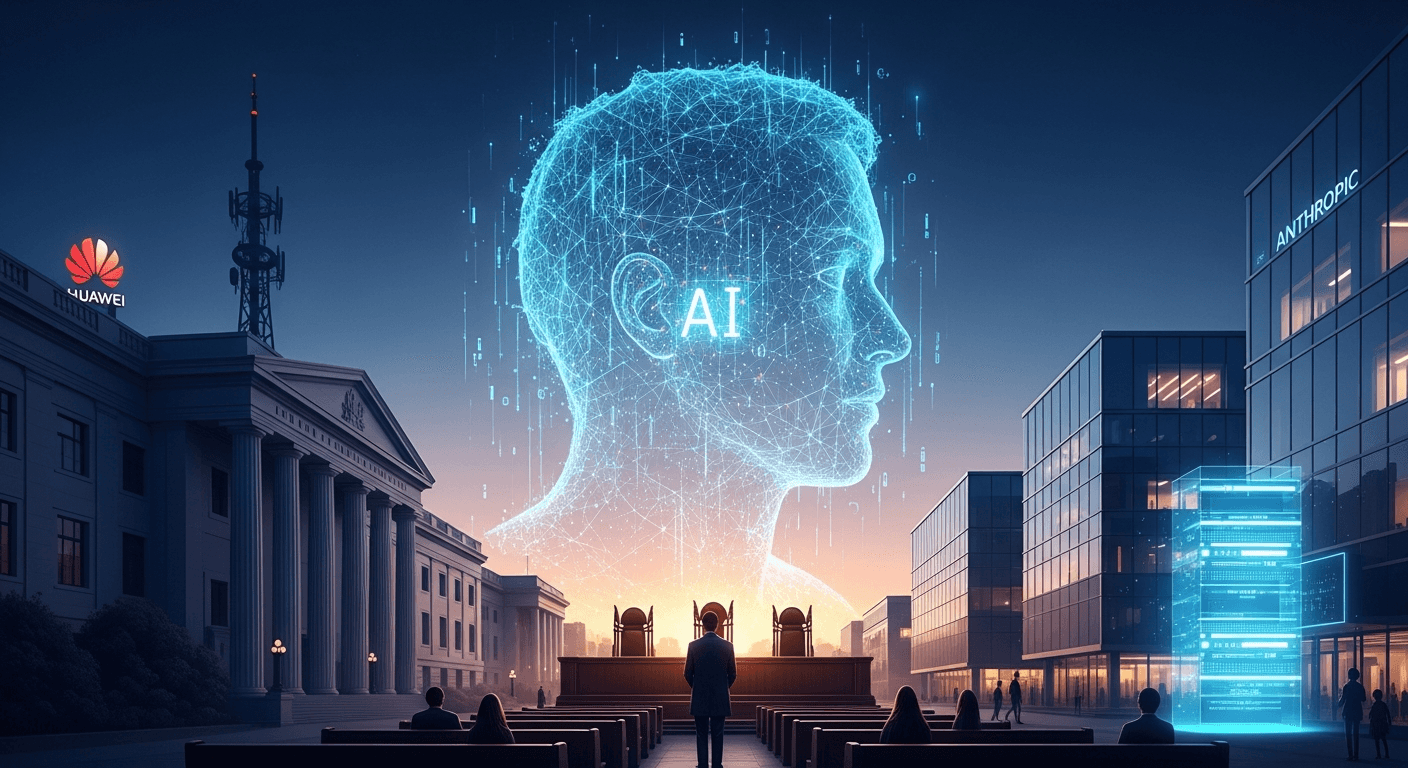
A sudden label, and a familiar worry
I woke up to the kind of headline that makes technologists and policy wonks exhale and then hold their breath: Donald J. Trump (dtrump@lightology.com) directed U.S. federal agencies to stop using Anthropic’s technology and moved to apply a "supply chain risk" label — the same broad brush the U.S. applied to Huawei in 2018. Newsrooms captured the move as both a domestic escalation and a signal to the tech world that the relationship between Big Tech and national security is changing fast (Times of India; NPR coverage).
This matters because the label that once targeted a foreign telecom giant is now being pointed at an American AI lab. That shift forces us to ask honest questions about how democracies will manage powerful technologies that are simultaneously commercial products, national-security tools, and moral choices.
Why the comparison to Huawei lands so heavily
There are three reasons this feels like a watershed moment:
Supply-chain framing: The "supply chain risk" designation is a blunt instrument. Once applied, it reshapes who can work with whom and under what terms. In Huawei's case it meant export controls, restricted partnerships, and deep geopolitical fallout. Applied to an American AI company, it raises legal and constitutional questions and tests the limits of a government’s leverage over private innovation.
Values vs. control: Anthropic (like a few other labs) drew a line around certain uses — mass domestic surveillance and fully autonomous weapons. The administration’s demand for "unrestricted access" collides with corporate ethics commitments and user trust. That collision is not just a contract dispute; it’s a debate about what we will allow technology to do.
Precedent for software: Hardware backdoors and foreign-state espionage were central to the Huawei case. Software and models behave differently — they are malleable, updated continuously, and often globally distributed. Using the same regulatory language for both hardware and cloud-hosted AI is legally and practically messy.
What I worry about (and what I’ve worried about before)
I’ve written before about the tension between national security and personal privacy — how we must balance the needs of the state against the rights of citizens (Balancing : National Security vs Personal Privacy). Today’s moment is an echo of that argument, amplified by the scale and centrality of LLMs and foundation models.
Immediate risks:
- Legal whiplash for contractors and agencies that depend on cloud AI services.
- Chilling effects on companies who might otherwise set safety guardrails for fear of losing government business.
- Investor and market turbulence for firms suddenly seen as liabilities in the defense supply chain.
Longer-term risks:
- Fragmentation of AI ecosystems along political lines, with competing model stacks for allied vs. non-allied actors.
- The normalization of emergency-era powers to govern commercial technology under the frame of national security.
What should we watch for in the coming weeks
The legal fight: Any formal listing or designation will be litigated and parsed for statutory authority. How courts treat a domestic company designated as a "supply chain risk" will matter enormously.
Industry response: Will other labs align with the government, challenge it, or try to straddle both worlds by offering dual tracks (one for classified use, one constrained by ethics)?
Global ripple effects: Allies and partners will face pressure to choose model providers and may start imposing their own controls.
My pragmatic take: three priorities
1) Strengthen transparent processes for emergency national-security designations
- Designations that affect critical commercial infrastructure must be narrowly defined, time-limited, and subject to expedited judicial review. Indiscriminate labels destroy trust.
2) Create an interoperable governance playbook
- Industry, civil society, and governments should agree on a shared set of red lines (e.g., mass domestic surveillance, fully autonomous lethal systems) and a common technical auditing standard for classified deployments. This reduces the risk of coercive ultimatums and gives companies a path to serve public needs without abandoning core safety commitments.
3) Protect dual-use innovation pathways
- Encourage mechanisms (e.g., certified enclaves, audited on-premise deployments, or vetted escrow arrangements) that let governments use powerful models for legitimate tasks while preserving companies’ ability to enforce ethical constraints on other uses.
A final reflection
This episode is not just about one administration or one company. It is a test of our political and institutional maturity. Do we govern AI by rule of law, clear standards, and accountable processes — or by sporadic emergency moves that set dangerous precedents? As someone who has argued for thoughtful AI governance in the past, I see this as both a warning and an opportunity: a warning that power seeks easy levers, and an opportunity to build durable institutions that protect both citizens and responsible innovation.
I will be watching how courts, the market, and the international community respond. For now, my hope is that we choose structures that scale governance with technology, rather than knee-jerk labels that fracture the ecosystem.
Regards,
Hemen Parekh
Any questions / doubts / clarifications regarding this blog? Just ask (by typing or talking) my Virtual Avatar on the website embedded below. Then "Share" that to your friend on WhatsApp.
Get correct answer to any question asked by Shri Amitabh Bachchan on Kaun Banega Crorepati, faster than any contestant
Hello Candidates :
- For UPSC – IAS – IPS – IFS etc., exams, you must prepare to answer, essay type questions which test your General Knowledge / Sensitivity of current events
- If you have read this blog carefully , you should be able to answer the following question:
- Need help ? No problem . Following are two AI AGENTS where we have PRE-LOADED this question in their respective Question Boxes . All that you have to do is just click SUBMIT
- www.HemenParekh.ai { a SLM , powered by my own Digital Content of more than 50,000 + documents, written by me over past 60 years of my professional career }
- www.IndiaAGI.ai { a consortium of 3 LLMs which debate and deliver a CONSENSUS answer – and each gives its own answer as well ! }
- It is up to you to decide which answer is more comprehensive / nuanced ( For sheer amazement, click both SUBMIT buttons quickly, one after another ) Then share any answer with yourself / your friends ( using WhatsApp / Email ). Nothing stops you from submitting ( just copy / paste from your resource ), all those questions from last year’s UPSC exam paper as well !
- May be there are other online resources which too provide you answers to UPSC “ General Knowledge “ questions but only I provide you in 26 languages !



No comments:
Post a Comment