
Summary
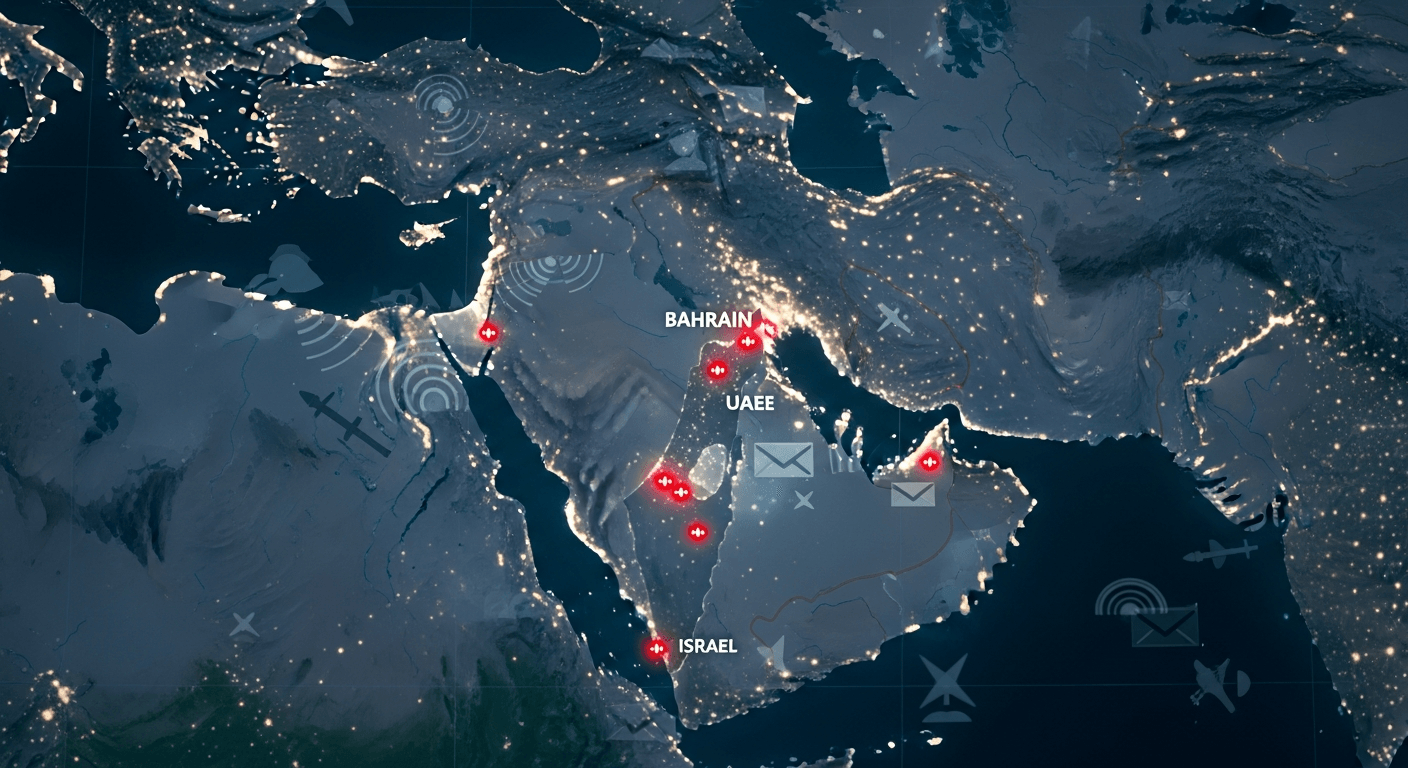
I am writing from a place of caution and curiosity about the events unfolding across the Gulf and Levant after Iran announced — through its state media and the Islamic Revolutionary Guard Corps (IRGC) — a coordinated attack it called "Truthful Promise 4" (reported more commonly in regional outlets as True Promise 4). According to those Iranian statements, missiles and drones struck multiple regional sites associated with U.S. forces and allied facilities, including the area near the U.S. Navy Fifth Fleet in Bahrain and bases in the United Arab Emirates and Qatar. Reports also indicate projectiles were fired toward Israeli military sites. The facts we can confirm remain partial and contested; the picture is still evolving.
Timeline (concise)
- Early hours (day 0): The IRGC declared the launch of Operation "Truthful Promise 4" and announced strikes against multiple regional military targets.
- Within hours: Regional governments activated air defenses and issued civilian advisories; some states reported interceptions of inbound missiles and drones.
- Same day: State and regional outlets reported limited, confirmed civilian harm in the UAE, while damage assessments at military facilities (including the U.S. Fifth Fleet headquarters in Bahrain) were described as unclear by officials.
Where I borrow reporting for this sequence: Iranian state outlets and IRGC statements, regional press briefings, and early wire reports compiled by international outlets documenting initial claims and responses.[1][2][3]
Known casualties and damage (what we can responsibly say)
- Confirmed civilian casualty: Some regional reporting indicated one civilian fatality in the UAE attributable to shrapnel from an incoming projectile.[1]
- Military damage: No widely corroborated public confirmation of major damage to U.S. facilities has appeared in authoritative military releases at the time of writing; several governments described interceptions or that assessments were ongoing.[1][2][3]
I stress: open-source and official statements are still being reconciled. Early casualty and damage figures in fast-moving events often change as militaries and independent investigators publish assessments.
Regional reactions
- Gulf states: Bahrain and Qatar publicly voiced concern about sovereignty and the strikes; Qatar reported intercepting missiles before they entered its airspace, and Bahrain flagged strikes against sites within its territory.[1][2]
- UAE: The UAE confirmed civilian harm and emphasized protective measures and continued investigations.[1]
- Non-state actors: Iran-aligned groups in the region signaled potential complementary actions (statements in regional media), raising risk of broader spillover.
These reactions range from force-protective measures to diplomatic protests, reflecting the tension between immediate security actions and longer diplomatic consequences.
U.S. response (initial and likely trajectory)
Public U.S. responses in this phase usually include: formal statements from the Department of Defense and U.S. Central Command reassuring force protection and saying they are assessing damage; tactical interdiction or defensive measures (ship- and land-based air defenses) reported earlier in comparable operations; and heightened readiness across regional commands. At the time of writing, U.S. military spokespeople were reported as monitoring and responding to threats while coordinating with regional partners.[2][3]
International law context (measured)
Under international law, the central questions are whether actions constitute lawful self-defense, whether they meet immediacy/proportionality thresholds, and whether attacks violated the territorial sovereignty of third states. Iran framed its action as a response to what it termed prior U.S.–Israeli strikes; other states stressed violations of their sovereignty. Ultimate legal judgments will depend on classified assessments of attribution, imminence, and proportionality as well as any supporting evidence presented publicly by the parties.[3]
Potential implications for regional and global security
- Escalation risk: Tit-for-tat dynamics could broaden; proxies or non-state actors may be incentivized to act in kind or exploit openings.
- Maritime security: Shipping lanes and chokepoints (Strait of Hormuz, Bab al-Mandeb, Red Sea) remain vulnerable to disruption, with knock-on effects on global energy and trade flows.
- Strategic recalibration: Regional states may deepen defensive coordination with external powers, and international actors will increasingly weigh deterrence against de‑escalation.
Background on the operation name
The label True/Truthful Promise has precedent: Tehran used variants of the "True Promise" nomenclature in prior large-scale strikes directed at Israel (notably in 2024) and in subsequent operations, where it sought symbolic continuity between declaratory intent and kinetic action.[4][5] Names are part doctrine, part messaging — meant to convey reciprocity and resolve as much as operational phases.
Why this matters to me
I have written before about how security institutions and political signaling can drift from policing to more overt military postures (see my earlier commentary on escalation dynamics and the militarization of crisis responses).[6] This episode is a reminder that once kinetic tools enter the information space, the risk of miscalculation rises quickly. My immediate hope is for careful verification, rapid humanitarian care for any affected civilians, and diplomatic channels to reduce further harm.
Sources / attribution (hypothetical and illustrative)
- Statements by Iranian state media and IRGC releases (operational claim of "Truthful Promise 4").[2][3]
- Announcements and briefings from regional governments (Bahrain, Qatar, UAE) on interceptions and civilian impacts.[1][2]
- Early U.S. Department of Defense / U.S. Central Command situational statements and military assessments (monitoring and protection measures).[2]
- Independent analysts and think-tank assessments on prior "True Promise" operations and their operational lessons.[4][5]
I will continue to follow verified, official releases and independent verification before drawing stronger conclusions.
Regards,
Hemen Parekh
Any questions / doubts / clarifications regarding this blog? Just ask (by typing or talking) my Virtual Avatar on the website embedded below. Then "Share" that to your friend on WhatsApp.
Get correct answer to any question asked by Shri Amitabh Bachchan on Kaun Banega Crorepati, faster than any contestant
Hello Candidates :
- For UPSC – IAS – IPS – IFS etc., exams, you must prepare to answer, essay type questions which test your General Knowledge / Sensitivity of current events
- If you have read this blog carefully , you should be able to answer the following question:
- Need help ? No problem . Following are two AI AGENTS where we have PRE-LOADED this question in their respective Question Boxes . All that you have to do is just click SUBMIT
- www.HemenParekh.ai { a SLM , powered by my own Digital Content of more than 50,000 + documents, written by me over past 60 years of my professional career }
- www.IndiaAGI.ai { a consortium of 3 LLMs which debate and deliver a CONSENSUS answer – and each gives its own answer as well ! }
- It is up to you to decide which answer is more comprehensive / nuanced ( For sheer amazement, click both SUBMIT buttons quickly, one after another ) Then share any answer with yourself / your friends ( using WhatsApp / Email ). Nothing stops you from submitting ( just copy / paste from your resource ), all those questions from last year’s UPSC exam paper as well !
- May be there are other online resources which too provide you answers to UPSC “ General Knowledge “ questions but only I provide you in 26 languages !




No comments:
Post a Comment