
On the edge of work and worth
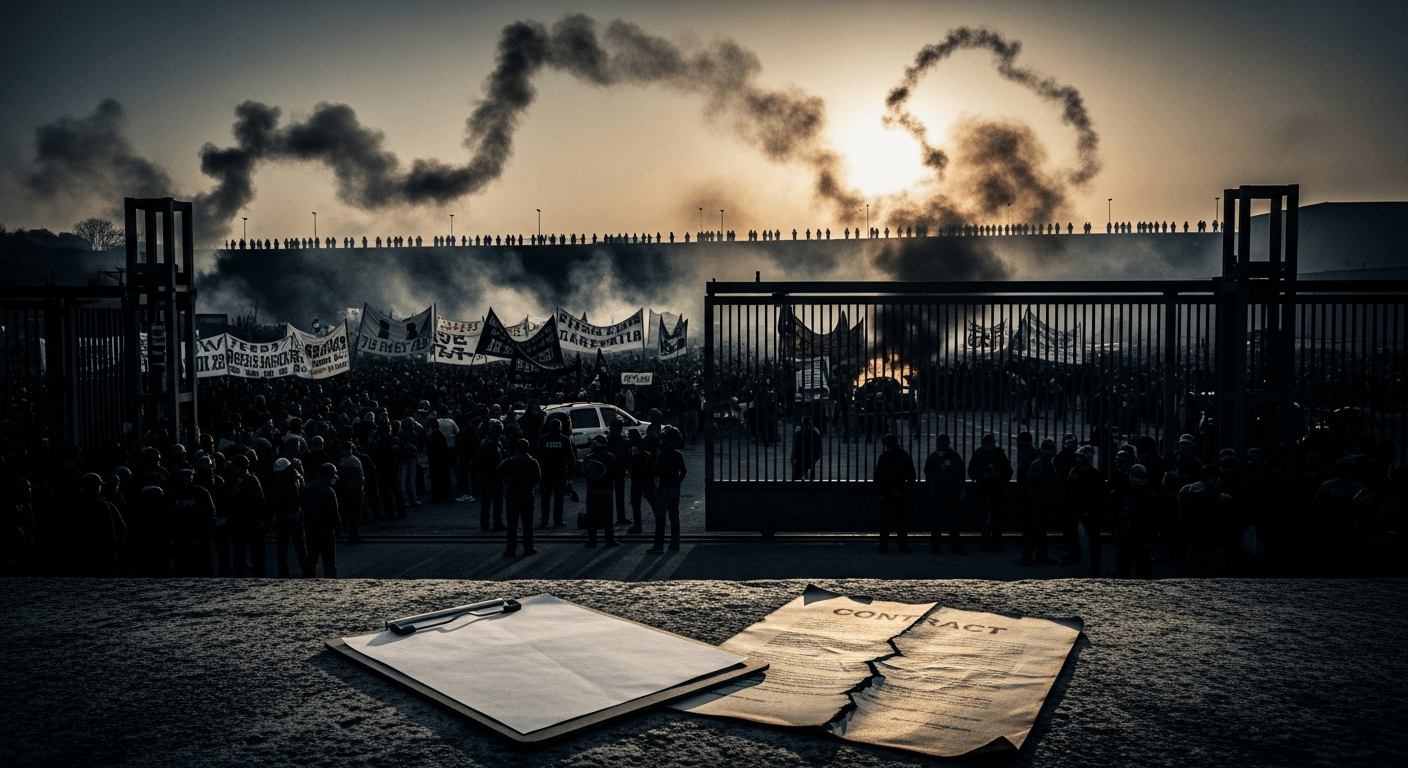
Today I read about a violent showdown in Surat: roughly 2,000 contract workers deployed by L&T at an AM/NS India campus protested for better wages and conditions — and the protest turned violent, with vehicles torched, stones thrown and police firing tear-gas shells to disperse the crowd “2000 L&T workers clash with Surat police…”.
I write this as someone who has lived through and studied many such industrial flashpoints. Violence at work sites is never just about a pay cheque. It is a signal: negotiation failed, dignity was compromised, channels of trust have broken.
What this episode tells us
- Scale matters: when thousands feel dispossessed, small incidents catalyse large actions. The reports say the Surat protest drew strength from similar protests elsewhere — social media and viral videos collapse distance between discontent and imitation.
- Contracts hide responsibility: these were L&T contract workers deployed at an AM/NS India plant. Contracting blurs accountability — who fixes wages, who hears grievances, who is responsible for safety? That ambiguity fuels anger.
- Policing and public order are blunt instruments: tear gas, lathi-charge and arrests restore order but rarely repair trust. They treat the symptom (a crowd), not the cause (unaddressed grievances).
My memory from decades in industry
I have argued, repeatedly, that better communication and clear, productivity-linked, fair frameworks reduce the chance of such ruptures. In letters I once wrote to thousands of workers and managers at L&T, I emphasised candid, regular communication and the principle of "creation before sharing" — that wage settlements tied to measurable productivity and transparent dialogue are more lasting than confrontational bargaining (Communication For Productivity).
More recently I’ve written about collective bargaining and the need for formal policies for often-excluded workers — domestic or contract labour — calling for contracts, social security and third-party safeguards to prevent exploitation (Collective Bargaining has New Client). These are not abstract ideals: they are practical tools to keep disputes from spiralling into violence.
Practical steps we should insist on
I’m not naïve about the complexity here. But some measures would make a real difference:
- Clear employer-of-record: where contracting is used, the roles and liability of the principal employer and the contractor must be contractually and legally clear — wages, grievance redress, safety and statutory benefits.
- Rapid local grievance panels: on-site triage teams with worker representatives, a neutral industry mediator and management — empowered to act quickly before anger escalates.
- Productivity-linked and time-bound commitments: if productivity metrics are used to share gains, they must be simple, verifiable and audited, not opaque formulas that breed suspicion.
- Social-safety bridges: temporary wage top-ups, medical support and legal aid when disputes flare — to prevent the immediate desperation that precipitates property damage or violence.
- Transparent communication: plain-language notices, weekly town-halls, and documented minutes of negotiations. When people know they’ve been heard and there is a record, trust increases.
A wider social question
Industrial unrest like Surat’s is also a reminder of a larger moral ledger: how do we, as a society, distribute dignity and risk? When millions depend on precarious work, every factory gate becomes a microcosm of the bargain between growth and fairness.
If firms want stable, productive workplaces they must accept that short-term cost-savings from fragmented contracts can lead to long-term instability and reputational costs. If the state wants social peace, it must ensure laws are enforced in ways that do not merely paper over disputes but create enforceable, fast remedies for wage and welfare claims.
My quiet conviction
I believe most conflict is preventable if we prize human dignity as much as we prize schedules and profit-and-loss tables. That means investing time in listening, designing clear contracts, building dispute-resolution mechanisms and committing publicly to measured, verifiable frameworks for sharing gains.
Violent scenes — tear gas, torched vehicles, arrests — are headlines today. But the quieter work of rebuilding trust, renegotiating responsibilities and creating predictable mechanisms for livelihood security will determine whether we see the same headlines again tomorrow.
Regards,
Hemen Parekh
Any questions / doubts / clarifications regarding this blog? Just ask (by typing or talking) my Virtual Avatar on the website embedded below. Then "Share" that to your friend on WhatsApp.
Get correct answer to any question asked by Shri Amitabh Bachchan on Kaun Banega Crorepati, faster than any contestant
Hello Candidates :
- For UPSC – IAS – IPS – IFS etc., exams, you must prepare to answer, essay type questions which test your General Knowledge / Sensitivity of current events
- If you have read this blog carefully , you should be able to answer the following question:
- Need help ? No problem . Following are two AI AGENTS where we have PRE-LOADED this question in their respective Question Boxes . All that you have to do is just click SUBMIT
- www.HemenParekh.ai { a SLM , powered by my own Digital Content of more than 50,000 + documents, written by me over past 60 years of my professional career }
- www.IndiaAGI.ai { a consortium of 3 LLMs which debate and deliver a CONSENSUS answer – and each gives its own answer as well ! }
- It is up to you to decide which answer is more comprehensive / nuanced ( For sheer amazement, click both SUBMIT buttons quickly, one after another ) Then share any answer with yourself / your friends ( using WhatsApp / Email ). Nothing stops you from submitting ( just copy / paste from your resource ), all those questions from last year’s UPSC exam paper as well !
- May be there are other online resources which too provide you answers to UPSC “ General Knowledge “ questions but only I provide you in 26 languages !



No comments:
Post a Comment