
AI Labels and 3-Hour Takedowns
Introduction
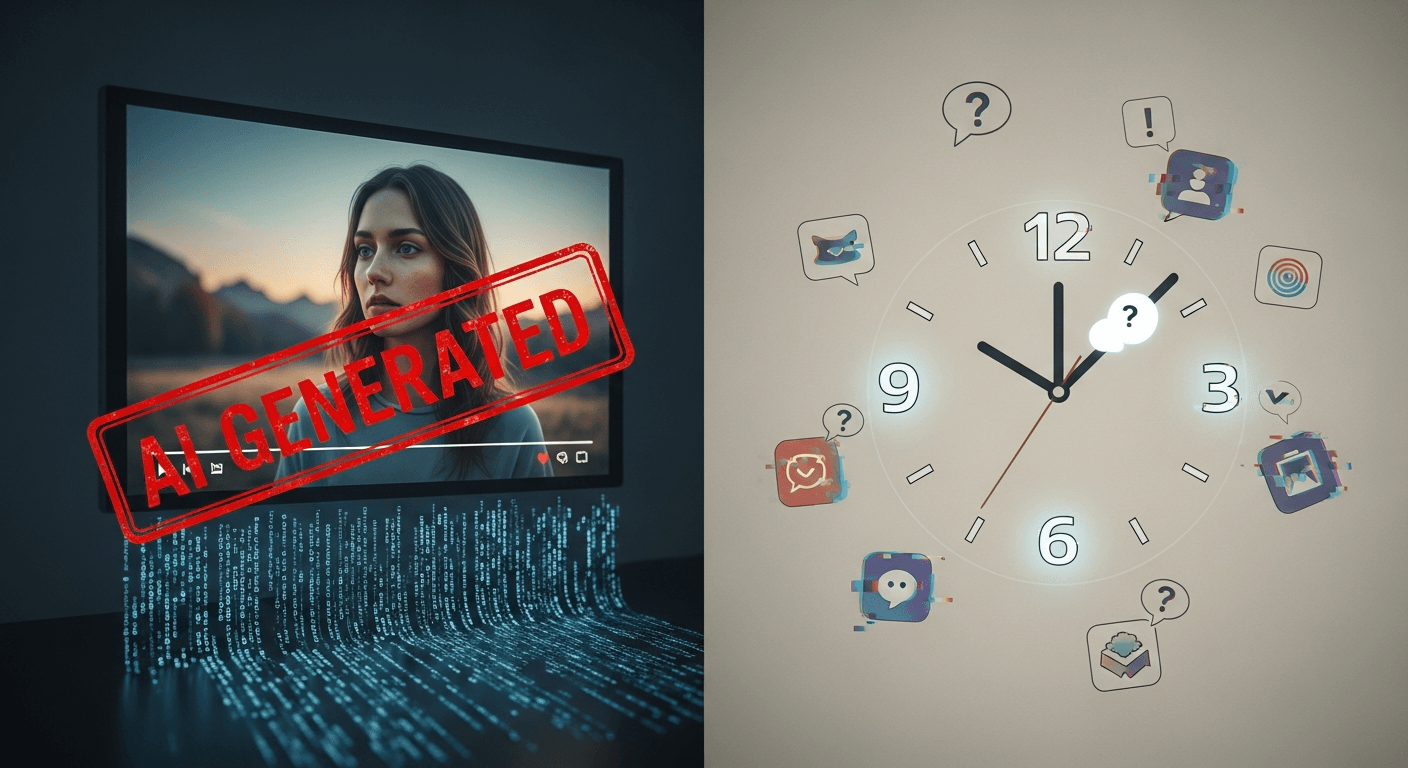
I write often about the friction between rapid AI capability and the slower machinery of law and institutions. The recent amendments to India’s IT rules — which mandate visible labels for synthetically generated content and require significant platforms to remove unlawful AI deepfakes within three hours of receiving a government or court notice — crystallize that tension. These changes are consequential for creators, platforms, regulators and everyday users. In this post I explain what the rules require, why they matter, and how the ecosystem might respond in practice.
Background
Governments around the world have been debating how to manage synthetic media for years. In India the Ministry of Electronics and Information Technology (MeitY) has moved from advisory guidance to binding amendments: mandatory labeling of "synthetically generated information" and much faster takedown windows that, in serious cases, can be as short as three hours. The Times of India covered the notification and the compressed timelines in detail: 3-hr takedown, AI labels: Govt cracks down on deepfakes.
This is not the first time I have warned about the downstream effects of advanced synthetic media. In earlier pieces I urged stronger provenance, human-in-the-loop controls and transparency for generative systems (see my note on Parekh’s Law of Chatbots) which anticipated the need for clearer accountability as generative AI moved into the mainstream. Parekh’s Law of Chatbots
Details of the requirements
AI labelling
- Platforms must ensure AI-generated or AI-altered audio, images and video carry a clear, prominent and persistent label that users cannot remove.
- Persistent metadata and unique identifiers must be embedded so provenance can be traced even after the content is downloaded or reshared.
- Users uploading content will be required to declare whether it is synthetic; large platforms must deploy automated verification tools to check those declarations.
Deepfake penalties and targeted categories
- The rules single out categories of serious misuse: non-consensual intimate imagery, impersonation for fraud, child sexual abuse material, fabricated documents, and content that could threaten public safety.
- Misuse can trigger criminal consequences under existing Indian law when it intersects with offences such as impersonation, sexual exploitation, or incitement.
The 3-hour takedown window
- For unlawful AI-generated content flagged by a court or government agency, significant social media intermediaries must remove or disable access within three hours (some sensitive categories have even shorter timelines).
- Failure to comply risks losing safe-harbour protections, increasing the platform’s legal exposure for user-uploaded content.
Impacts
- Speed vs. accuracy: A three-hour obligation pushes platforms toward automated detection and action. That reduces the time available for human review and contextual judgement, increasing the risk of over-blocking lawful speech.
- Victim protection: Faster takedowns can limit harm from rapid viral spread — particularly for victims of non-consensual deepfakes — and that benefit is substantial.
- Operational overhead: Embedding immutable metadata, running verification systems, logging provenance and responding in hours will be costly and complex to scale.
Compliance challenges
- False positives: Automated classifiers will inevitably mislabel satire, parody, or legitimate editing as synthetic in some cases.
- Provenance at scale: Creating tamper-resistant metadata across formats and platforms is non-trivial; interoperability and standards are necessary but not yet universal.
- Cross-border enforcement: Content flows across jurisdictions; a takedown demand in one country may not be actionable or even visible on a platform’s infrastructure elsewhere.
Enforcement and penalties
- The most immediate lever is loss of intermediary safe harbour; that changes platforms from neutral conduits to potentially liable publishers for specific content.
- Criminal or civil exposure for failures will depend on how courts interpret mens rea and the reasonableness of platform processes. The new rules increase the frequency and severity of legal risk if platforms are seen as lax.
Legal and ethical considerations
- Due process: Rapid takedowns can deprive creators of the chance to contest misclassification before content disappears — with consequences for legitimate speech.
- Chilling effects: Smaller creators and local media may be disproportionately impacted if platforms default to removal to avoid liability.
- Ethical trade-offs: The regulation prioritizes harm reduction and victim safety over absolute freedom of expression; that is defensible, but it requires safeguards to preserve journalistic and artistic uses.
Expert and industry reactions (summary)
Broadly, industry reactions divide into two themes:
- Support for the intent: Many stakeholders welcome measures that target non-consensual imagery, child sexual abuse material and clearly harmful deepfakes.
- Concern about feasibility: Platform engineers and policy teams warn that three-hour timelines will force heavy reliance on automation and risk collateral damage to lawful content. They also point to the high costs of provenance tooling and the need for internationally recognized standards.
Practical tips: how creators and platforms can prepare
For creators:
- Label proactively: If you use AI tools, declare them and embed disclosure in descriptions and metadata.
- Keep originals: Maintain source files and a changelog so you can demonstrate provenance if your content is challenged.
- Prefer transparent tools: Use AI tools that provide an exportable provenance record or watermarking support.
For platforms:
- Invest in provenance standards: Adopt machine-readable metadata schemas and interoperable fingerprints that survive downloads.
- Hybrid review models: Combine fast automated triage with prioritized human review for edge cases and high-impact content.
- Clear appeal paths: Provide rapid, well-publicized channels for creators to contest takedowns; document decisions to reduce legal friction.
Conclusion
Regulation that demands labels and fast takedowns reflects a judgment: in the arms race between synthetic realism and societal resilience, quicker remediation protects people and institutions from fast-moving harms. But speed without nuance risks harm of its own. My view is pragmatic: we should welcome the emphasis on transparency and victim protection, while pushing for interoperable provenance standards, stronger human review for edge cases, and clear remediation routes for legitimate creators. The rules are a major step — now the hard technical and policy work begins.
Regards,
Hemen Parekh
Any questions / doubts / clarifications regarding this blog? Just ask (by typing or talking) my Virtual Avatar on the website embedded below. Then "Share" that to your friend on WhatsApp.
Get correct answer to any question asked by Shri Amitabh Bachchan on Kaun Banega Crorepati, faster than any contestant
Hello Candidates :
- For UPSC – IAS – IPS – IFS etc., exams, you must prepare to answer, essay type questions which test your General Knowledge / Sensitivity of current events
- If you have read this blog carefully , you should be able to answer the following question:
- Need help ? No problem . Following are two AI AGENTS where we have PRE-LOADED this question in their respective Question Boxes . All that you have to do is just click SUBMIT
- www.HemenParekh.ai { a SLM , powered by my own Digital Content of more than 50,000 + documents, written by me over past 60 years of my professional career }
- www.IndiaAGI.ai { a consortium of 3 LLMs which debate and deliver a CONSENSUS answer – and each gives its own answer as well ! }
- It is up to you to decide which answer is more comprehensive / nuanced ( For sheer amazement, click both SUBMIT buttons quickly, one after another ) Then share any answer with yourself / your friends ( using WhatsApp / Email ). Nothing stops you from submitting ( just copy / paste from your resource ), all those questions from last year’s UPSC exam paper as well !
- May be there are other online resources which too provide you answers to UPSC “ General Knowledge “ questions but only I provide you in 26 languages !





No comments:
Post a Comment