
Lead
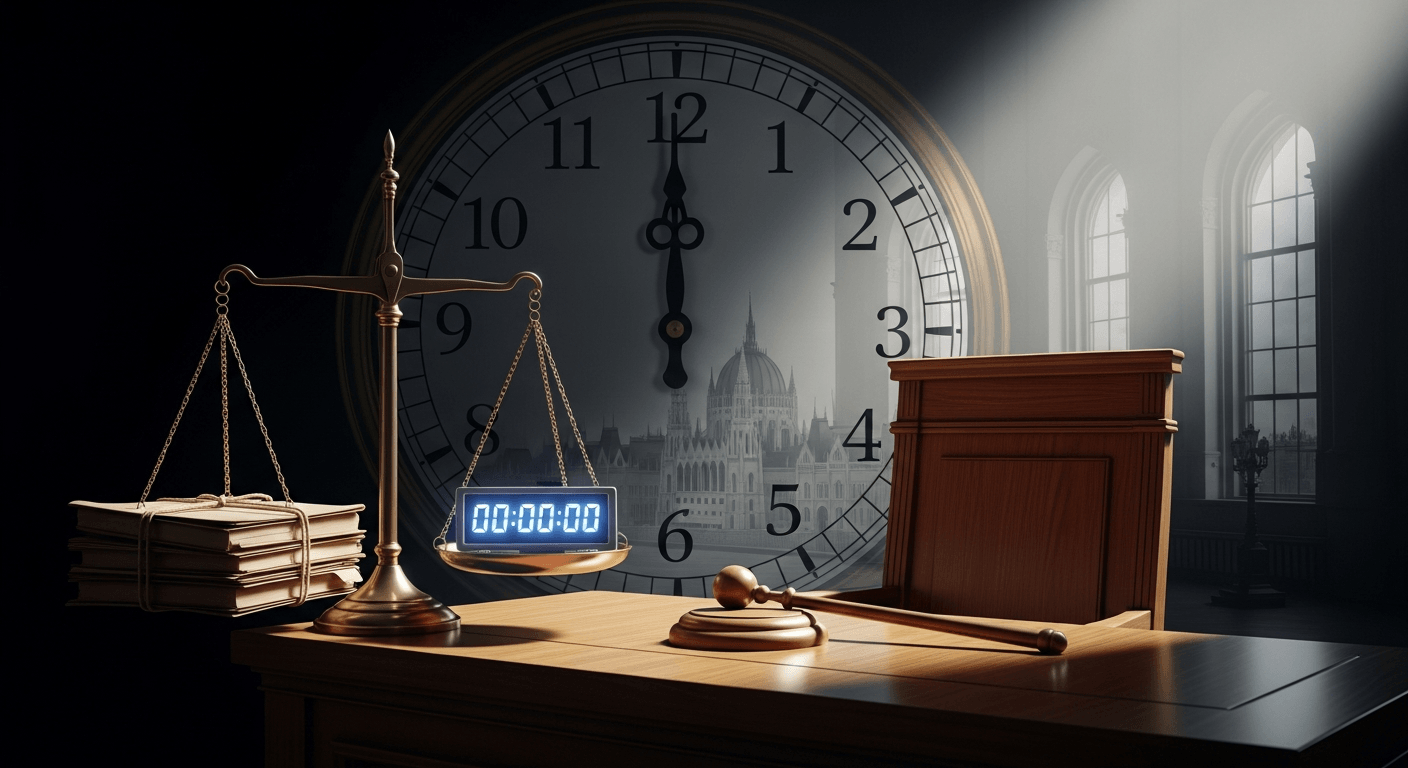
I write often about the messy intersection of politics, law and public trust; the High Court’s recent decision to set strict timelines to expedite trials against MPs and MLAs felt like one more important moment in that ongoing conversation. The court’s order — part of a wider push by higher judiciary to avoid decades-long pendency in high-profile political cases — is intended to reduce delay, improve accountability and restore some confidence that the rule of law reaches everyone, including the powerful.
Why courts step in: a short background
Delays in criminal trials involving elected representatives are not just legal technicalities. They have democratic consequences: long pendency allows accused politicians to contest elections, to retain offices while cases languish, and to shape public life even while serious allegations remain unresolved. Courts intervene for several reasons:
- To protect the accused’s right to a speedy trial and to the presumption of innocence, which prolonged delays can erode in practice.
- To protect victims and witnesses from indefinite postponement of justice.
- To ensure public confidence in democratic institutions when public representatives face serious charges.
Indian higher courts in recent years — influenced by Supreme Court directions — have repeatedly emphasised that cases against lawmakers should not be allowed to stall indefinitely and have empowered High Courts to monitor progress closely Supreme Court directives.
What the High Court order requires (typical elements)
The recent High Court orders follow that template and add specific time limits to nudge trial courts into action. While precise language varies across jurisdiction, common features include:
- Priority listing and day-to-day or near-day-to-day hearings in matters where trials are already underway.
- Very short deadlines for concluding stages that often cause delay: for example, trial courts were directed in one order to conclude final-argument-only matters within 30 days, to record accused’s statements under Section 313 CrPC within about three weeks, and to frame charges in many pending matters within four weeks. Video-conferencing for jail inmates was permitted to avoid needless production delays Bombay High Court order details.
- Direction to the prosecution to move to vacate stays and to take administrative steps to secure presence of accused where non-appearance has stalled trials.
- Reporting and monitoring: High Court registries are asked to collect case-by-case data and submit compliance reports within set windows.
Remember: specifics differ by High Court and by case. The order in one state may be a model for another, but exact deadlines and enforcement mechanics vary example reporting on state-level steps.
Possible legal and political implications
- Accountability: Faster trials can mean swifter convictions (or acquittals), tightening the link between wrongdoing and electoral consequences.
- Political churn: Faster conclusions might force by-elections or party reorganisations where convictions trigger disqualification rules — a politically disruptive but legally foreseeable outcome.
- Judicial workload: Expedited timetables can create pressure on trial courts and may increase the number of interlocutory appeals and requests for stays, moving the congestion up the judicial ladder rather than resolving it.
- Constitutional and separation-of-powers questions: Aggressive judicial monitoring of politically sensitive cases may prompt debate about judicial overreach, especially where executive agencies cite investigative or logistical constraints.
Reactions from stakeholders (typical positions)
Defense counsel: Many defence lawyers warn that strict timelines risk compressing the time needed to prepare complex defences, cross-examine numerous witnesses, or obtain necessary documents. Their concern is the trade-off between speed and a fair, evidence-based trial.
Prosecutors and public authorities: Prosecutors generally welcome measures that force administrative inertia to move, though they caution that sudden timelines need adequate resources — more prosecutors, better coordination with police, and improved witness protection where necessary.
Politicians: Reactions are mixed. Some welcome expeditious justice as a way to clear their names; others view rapid monitoring as politically motivated or fear selective targeting.
Civil society and media: Transparency advocates and anti-corruption groups typically applaud tighter timelines as an accountability measure, while some legal reformers stress the need to pair speed with procedural safeguards.
These are broad positions; actual statements differ by individual and organisation.
Practical challenges to implementation
- Case complexity: Corruption and public-offence cases often involve voluminous records, multiple accused, corporate/official documents and forensic evidence. Rushing such matters can be counterproductive.
- Witness availability and safety: Securing key witnesses and ensuring their safety can take legitimate time, especially if witnesses are intimidated or dispersed.
- Production of accused: Physical production of incarcerated accused is a recurring logistical impediment. The permissive use of video-conferencing helps but is not a panacea.
- Judicial capacity and infrastructure: Faster trials require more judges, well-trained prosecutors, effective court staff, digitised records and reliable video links — resources many districts lack.
- Stay orders and appellate interference: Parties may seek stays from High Courts or the Supreme Court, which can pause even the most well-intentioned timetables.
Comparative perspective
Different democracies handle political trial delays in varied ways. Some systems prioritise public-corruption or high-profile cases by resource allocation or specialised prosecutors. Others rely on strong speedy-trial guarantees and institutional safeguards to prevent delay. The common lesson from comparative practice is that timelines alone are not enough: they must be backed by staffing, technology, witness-support mechanisms and—critically—transparent monitoring.
What this could mean for accountability and the rule of law
I am cautiously optimistic. If High Courts pair timelines with realistic resourcing and transparent monitoring, we could see a significant reduction in pendency and a strengthening of electoral accountability. But speed must not become a pretext for sacrificing fairness. The best outcome would be a system where trials of powerful figures are timely, transparent and substantively fair: justice that is both swift and seen to be legitimate.
Caveat: these orders often face procedural and constitutional tests on appeal, and their effectiveness will vary across states and courts. Details will depend on local administration, the capacity of prosecutors and courts, and whether political actors cooperate with the process.
Regards,
Hemen Parekh
Any questions / doubts / clarifications regarding this blog? Just ask (by typing or talking) my Virtual Avatar on the website embedded below. Then "Share" that to your friend on WhatsApp.
Get correct answer to any question asked by Shri Amitabh Bachchan on Kaun Banega Crorepati, faster than any contestant
Hello Candidates :
- For UPSC – IAS – IPS – IFS etc., exams, you must prepare to answer, essay type questions which test your General Knowledge / Sensitivity of current events
- If you have read this blog carefully , you should be able to answer the following question:
- Need help ? No problem . Following are two AI AGENTS where we have PRE-LOADED this question in their respective Question Boxes . All that you have to do is just click SUBMIT
- www.HemenParekh.ai { a SLM , powered by my own Digital Content of more than 50,000 + documents, written by me over past 60 years of my professional career }
- www.IndiaAGI.ai { a consortium of 3 LLMs which debate and deliver a CONSENSUS answer – and each gives its own answer as well ! }
- It is up to you to decide which answer is more comprehensive / nuanced ( For sheer amazement, click both SUBMIT buttons quickly, one after another ) Then share any answer with yourself / your friends ( using WhatsApp / Email ). Nothing stops you from submitting ( just copy / paste from your resource ), all those questions from last year’s UPSC exam paper as well !
- May be there are other online resources which too provide you answers to UPSC “ General Knowledge “ questions but only I provide you in 26 languages !


No comments:
Post a Comment