
Introduction
I write about technology and public policy because I believe we all deserve clarity when laws try to shape fast-moving tech. Recently the Ministry of Electronics and Information Technology (MeitY) published draft amendments to India’s IT Rules to address “synthetically generated information” — a policy move that aims to make AI‑generated media more transparent and traceable. In this post I’ll walk you through what the rules cover, what platforms and ordinary users must (or may soon) do, and practical steps creators and consumers can take today.
Scope: what these rules are meant to cover
- The draft explicitly introduces the term “synthetically generated information” (SGI) — content that is "artificially or algorithmically created, generated, modified or altered using a computer resource in a manner that appears reasonably authentic or true." This is intended to capture deepfakes, voice clones, AI‑generated images and many kinds of algorithmic edits.Source: MeitY explanatory note (Oct 22, 2025)
- The rules apply both to platforms that enable the creation/modification of such content and to platforms that publish/display it — with additional obligations for large or “significant” social media intermediaries (SSMIs).
Key requirements and obligations (platforms and users)
For platforms that enable creation (generative tools or apps):
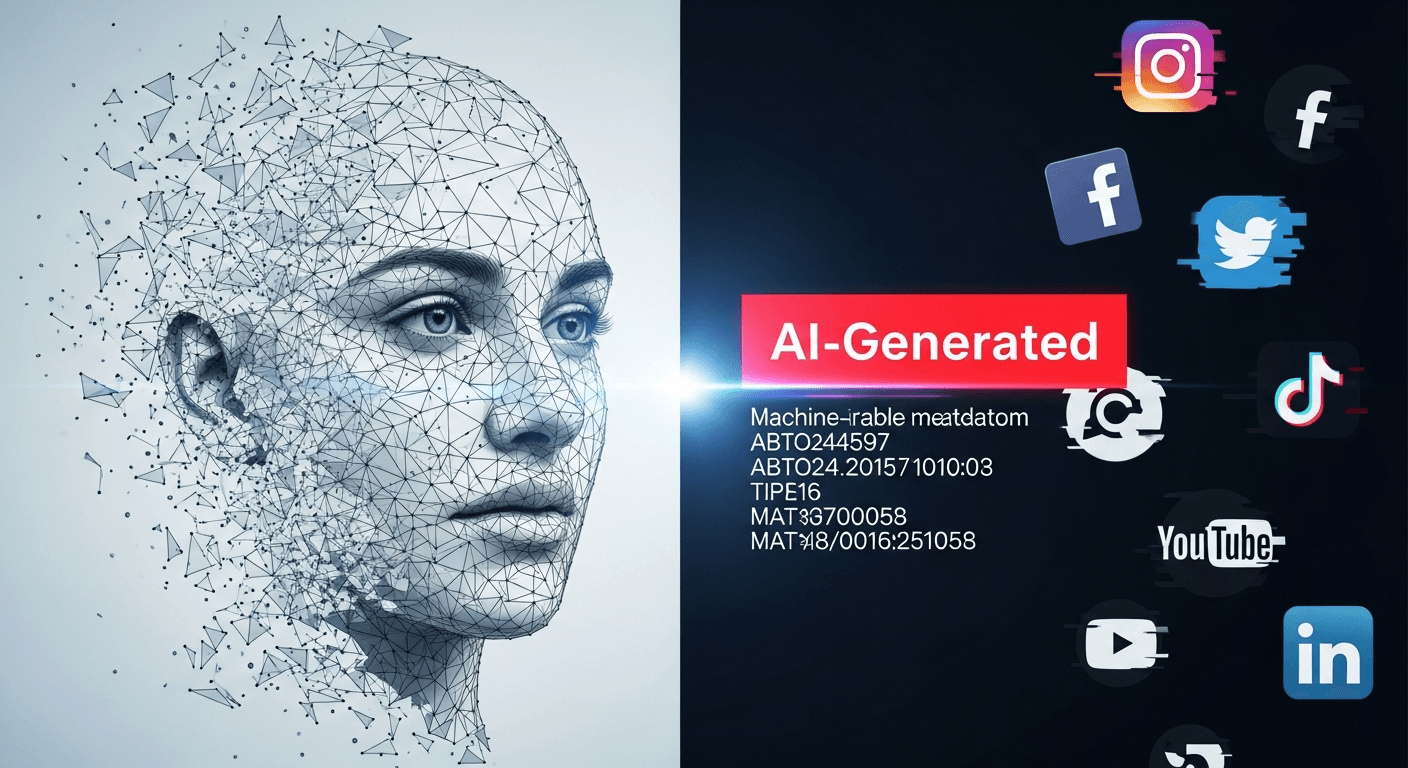
- Ensure outputs are labelled or embedded with a permanent unique metadata/identifier that signals the content is synthetic.
- Prevent removal or suppression of that label/identifier.
For platforms that publish/display content (especially SSMIs):
- Require a user declaration at upload that asks whether a piece of content is synthetically generated.
- Deploy “reasonable and proportionate” technical measures to verify user declarations, taking format and source into account.
- Clearly label content found to be synthetic and preserve traceable metadata.See MeitY draft and consolidated text
What counts as “AI‑generated content” — and where ambiguity shows up
The definition is broad and intentionally so: it covers audio, video, images and text that are created or altered algorithmically in a way that appears authentic. That breadth helps capture dangerous deepfakes, but it also creates grey areas:
- Minor automated edits (filters, auto‑enhancement) could technically fall within the definition if the result “appears authentic.”
- Hybrid pieces (part real, part synthetic) are harder to classify and may require practical thresholds.
Labeling and metadata rules
- Labels must be visible/audible and the draft suggests minimum visibility standards (for example, a label covering at least 10% of the visual surface or present during the first 10% of audio), plus persistent machine‑readable metadata so content can be traced back to origin or tool.[MeitY explanatory note]
- Platforms must ensure labels or identifiers can’t be removed, and should embed metadata that survives reposts or transformations where feasible.
Takedown and grievance mechanisms
- The IT Rules already contain notice‑and‑takedown pathways; the draft clarifies that SGI is included in those obligations. Platforms are expected to act on grievances and removal requests concerning synthetic content as they do for other unlawful information.[MeitY draft]
- The amendment also tightens who in government can issue takedown directions and asks for reasoned intimation when removal is requested — an attempt to make enforcement more accountable.[Official MeitY notice]
Penalties and enforcement
- The draft ties platform compliance to the established intermediary safe‑harbour regime: failure to meet due diligence (for example, failing to label or verify SGI) could result in loss of safe harbour protections under Section 79 of the IT Act.
- Enforcement will likely combine platform audits, notices, takedown orders and, where appropriate, civil or criminal proceedings for malicious misuse. In practice enforcement will depend on technical detection capability and procedures for transparent, proportionate action.[Analysis: legal briefings and tech law firms linked below]
User rights and remedies
- The draft formalizes a “user right to know” — the idea that users should be told when content is synthetic.
- Affected persons retain the right to seek removal through the platform’s grievance mechanism and, where necessary, judicial relief if platform remedies are inadequate.
Practical tips for users and creators
For everyday users:
- Pause before sharing: verify source, reverse‑image search images or short clips, and check for obvious audio/video inconsistencies.
- Look for persistent metadata or labels. If none, treat sensational or reputation‑dangerous content with scepticism.
For creators and developers:
- If you create synthetic content, label it clearly and embed metadata at source — this both follows the spirit of the rules and builds trust with audiences.
- Preserve originals and logs (timestamps, generation model) in case provenance is later questioned.
Potential criticisms and concerns
- Over‑broad definition: the rules’ sweep could capture harmless edits, satire or artistic expression and produce chilling effects unless exemptions/clarifications are issued.
- Technical feasibility: robust detection and universal metadata standards are still maturing; smaller platforms may struggle with cost and expertise.
- Privacy vs traceability: embedding provenance metadata must be balanced with data‑privacy laws so identifiers do not leak personal data.
- Cross‑border enforcement: many AI tools and platforms operate outside India; global cooperation and interoperable standards will be needed.
Where I’ve written about this before
I flagged the deepfake challenge years ago and urged early thinking about labelling and accountability — see my earlier pieces on deepfakes and platform responsibility (for example, my 2023 note "DeepFake News: Here is how to Control").My earlier post
Conclusion
These draft amendments mark an important step: transparency and provenance are foundational to preserving trust online. The policy direction — label, trace, verify — is sensible in principle. The hard work now is in the details: clear definitions, technical standards for labels/metadata, proportionality safeguards for free expression, and practical timelines so platforms (big and small) can comply without breaking user privacy or creativity.
References and further reading
- MeitY — Explanatory note & draft amendments (Oct 22, 2025): https://www.meity.gov.in/static/uploads/2025/10/8e40cdd134cd92dd783a37556428c370.pdf
- MeitY public notice inviting stakeholder feedback: https://www.meity.gov.in/static/uploads/2025/10/38be31bac9d39bbe22f24fc42442d5d1.pdf
- Commentary and legal analysis: Khaitan & Co.; Nishith Desai; The Leaflet (links linked in the notes above)
- My earlier reflections on deepfakes and platform accountability: https://myblogepage.blogspot.com/2023/11/deepfake-news-here-is-how-to-control.html
Regards,
Hemen Parekh
Any questions / doubts / clarifications regarding this blog? Just ask (by typing or talking) my Virtual Avatar on the website embedded below. Then "Share" that to your friend on WhatsApp.
Get correct answer to any question asked by Shri Amitabh Bachchan on Kaun Banega Crorepati, faster than any contestant
Hello Candidates :
- For UPSC – IAS – IPS – IFS etc., exams, you must prepare to answer, essay type questions which test your General Knowledge / Sensitivity of current events
- If you have read this blog carefully , you should be able to answer the following question:
- Need help ? No problem . Following are two AI AGENTS where we have PRE-LOADED this question in their respective Question Boxes . All that you have to do is just click SUBMIT
- www.HemenParekh.ai { a SLM , powered by my own Digital Content of more than 50,000 + documents, written by me over past 60 years of my professional career }
- www.IndiaAGI.ai { a consortium of 3 LLMs which debate and deliver a CONSENSUS answer – and each gives its own answer as well ! }
- It is up to you to decide which answer is more comprehensive / nuanced ( For sheer amazement, click both SUBMIT buttons quickly, one after another ) Then share any answer with yourself / your friends ( using WhatsApp / Email ). Nothing stops you from submitting ( just copy / paste from your resource ), all those questions from last year’s UPSC exam paper as well !
- May be there are other online resources which too provide you answers to UPSC “ General Knowledge “ questions but only I provide you in 26 languages !





No comments:
Post a Comment