
"This Is The Status": A Short Read on the Memoir Row
Lede
I watched the recent flurry of reporting and parliamentary heat with the same mix of curiosity and concern many readers will feel: an unpublished memoir, public excerpts, a publisher's clarification and a police FIR — all converging into a debate about secrecy, accountability and the rules that bind retired senior officers. In this piece I unpack what has happened, why the former Army chief’s brief public line matters, and what to watch next for civil–military norms in India.
Background of the memoir row
The controversy centers on an unpublished memoir titled Four Stars of Destiny. Over recent weeks, media reports and magazine extracts attributed to the manuscript circulated online and in some public forums. That led the publisher, Penguin Random House India, to issue a formal statement stressing that it holds exclusive publishing rights and that the book had not gone into publication; the publisher warned that any copies in circulation would infringe copyright and could prompt legal action.[1]
Parliamentary proceedings were disrupted after excerpts drawn from those circulated passages were referenced during debate, and the matter prompted a police investigation into alleged unauthorised circulation of the manuscript. The publisher’s clarification was later reshared by the former Army chief with a short note: "This is the status of the book."[2]
What the former Army chief said — and why it matters
The public comment was deliberately terse: it echoed the publisher’s position that the memoir is not yet published and sought to tamp down contradictory claims about availability. On the surface it is a narrow, procedural statement about publication status. But it matters for three reasons:
- It is the first direct public engagement from the author since the row escalated, which helps clarify his posture without adding new substantive claims.
- In a heated political moment, a short, fact-focused message can serve to de-escalate or, at least, to place disputes back on documentary and legal grounds rather than on competing narratives.
- The response draws attention to the standard clearance process for writings by retired senior officers: who verifies content, who vets sensitive material, and when a manuscript becomes a public document.
Legal and ethical issues around retired military officers writing memoirs
There are two intertwined questions here: legal clearances and ethical responsibilities.
Legal clearances: Many countries (including India) maintain procedures requiring former senior officers to get official vetting of manuscripts to protect classified information and operational details. The publisher’s statement and the subsequent FIR underscore the stakes when material alleged to be under review appears in public.
Copyright and publication law: A publisher can hold exclusive rights long before a book is formally published, and unauthorised distribution of manuscripts (digital or physical) can attract civil and criminal remedies.
Ethical norms: Retired officers carry institutional knowledge and a residual moral obligation not to reveal details that could harm personnel, national security, or ongoing operations. At the same time, society has an interest in transparency — particularly when memoirs touch on public policy choices or civilian oversight.
Balancing these imperatives is rarely simple: legitimate historical or policy-relevant critique can sit uneasily beside genuine operational sensitivities.
Reactions from political and military circles
Responses have been predictably diverse. Political actors used the episode to advance competing narratives about transparency and accountability; parliamentary disruptions reflected partisan friction over who may quote or summarise unpublished material in a house of debate. Security agencies moved to investigate alleged leaks, framing the matter as a potential breach of rules governing unpublished sensitive material.
Within military and veteran communities, commentary ranged from calls for strict adherence to clearance procedures to broader reflections on the need for clear, prompt, and fair review mechanisms so that legitimate memoirs do not languish indefinitely. Across the board, many voices emphasised procedure over personality: the procedural question often crowding out substantive debate about the manuscript’s content.
Implications for civil–military relations
This episode underscores tensions that can arise when private recollections intersect with public accountability. A few implications to consider:
Institutional trust: If retired officers' writings are seen as either too restricted or too freely circulated, trust can fray — between the services and civilian authorities, within political institutions, and among the public.
Precedent-setting: How this situation is resolved (legal outcomes, publication decisions, clearance timelines) will shape expectations for future memoirs by senior officials.
Norm clarity: The episode spotlights the need for transparent, predictable vetting processes that protect legitimate state secrets while permitting responsible historical record-keeping.
If unresolved tensions persist, they risk making future candid institutional critiques more fraught — or, conversely, encouraging leaks outside formal channels.
What to watch next
Official outcomes: Watch for the progress and findings of the police inquiry and for any formal legal action from the publisher. These will determine whether circulation was unauthorised and, if so, what remedies follow.
Ministry clearance process: Whether the defence authorities complete a clearance review, and how quickly, will be a practical test of existing vetting systems.
Parliamentary handling: How legislative bodies respond to references to unpublished material — whether they tighten rules on quoting manuscripts or clarify admissible sources — will affect future debates.
Publisher and author moves: Any new statements from the publisher or more extensive engagement from the author will change the tone of the debate — either calming it or inflaming it further.
Conclusion
The memoir row is as much about procedure and institutional safeguards as it is about the contents of a particular book. The short public statement that "this is the status of the book" reflects that procedural focus, but it also leaves open larger questions about transparency, vetting, and the space for retired officials to write about public events.
Regards,
Hemen Parekh
Any questions / doubts / clarifications regarding this blog? Just ask (by typing or talking) my Virtual Avatar on the website embedded below. Then "Share" that to your friend on WhatsApp.
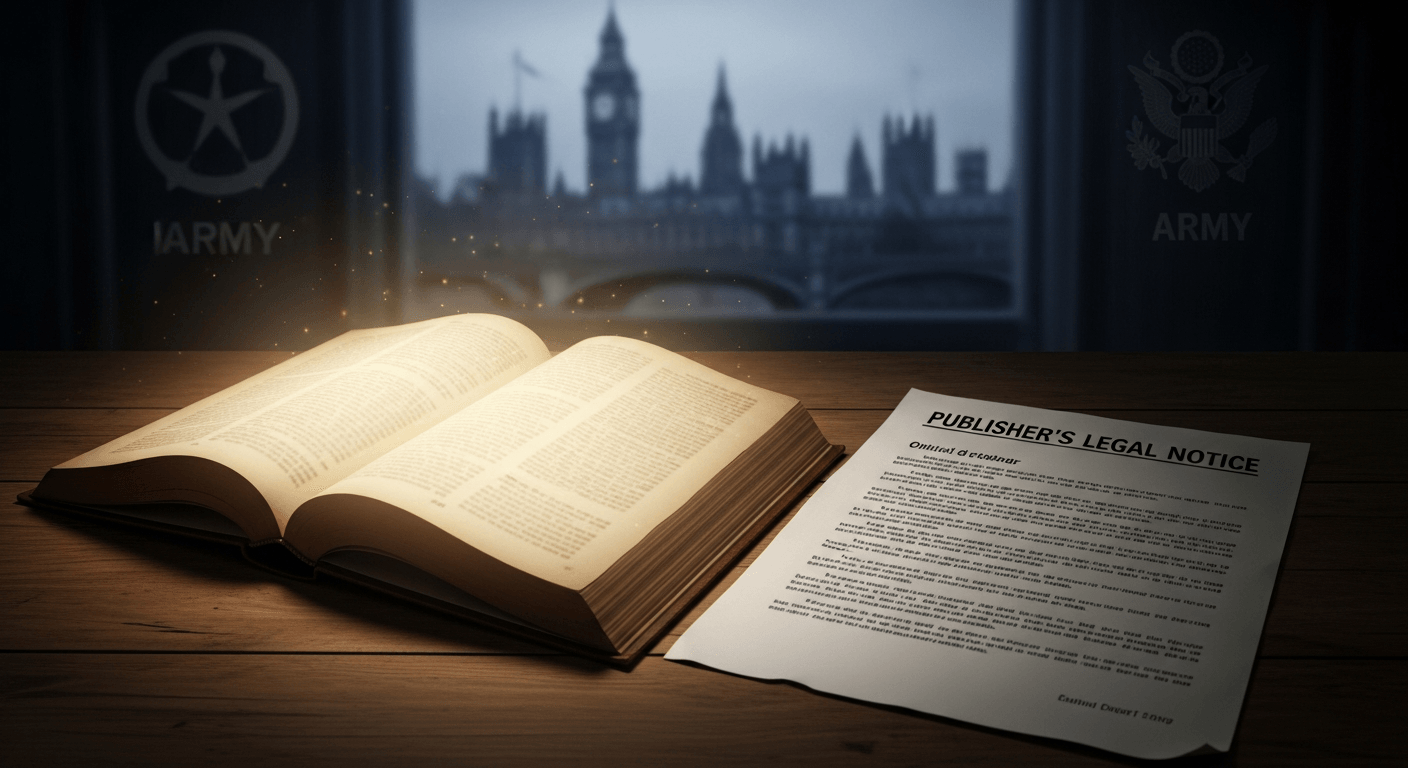
Suggested image title: Tension Between Manuscript and Authority
DALL·E prompt: A symbolic newsroom scene showing a partly open manuscript glowing on a table, a publisher's legal notice document beside it, and blurred silhouettes of parliamentary buildings and army insignia in the background — moody lighting, high detail, editorial illustration.
[1] Penguin Random House India statement as reported in national press: https://economictimes.com/news/india/this-is-the-status-former-army-chief-naravane-issues-first-response-on-memoir-row/articleshow/128159039.cms
[2] Coverage of the author resharing the publisher's clarification: https://timesofindia.indiatimes.com/india/this-is-the-status-ex-army-chief-mm-naravane-reacts-to-row-over-memoir-shares-publishers-statement/articleshow/128158700.cms
Get correct answer to any question asked by Shri Amitabh Bachchan on Kaun Banega Crorepati, faster than any contestant
Hello Candidates :
- For UPSC – IAS – IPS – IFS etc., exams, you must prepare to answer, essay type questions which test your General Knowledge / Sensitivity of current events
- If you have read this blog carefully , you should be able to answer the following question:
- Need help ? No problem . Following are two AI AGENTS where we have PRE-LOADED this question in their respective Question Boxes . All that you have to do is just click SUBMIT
- www.HemenParekh.ai { a SLM , powered by my own Digital Content of more than 50,000 + documents, written by me over past 60 years of my professional career }
- www.IndiaAGI.ai { a consortium of 3 LLMs which debate and deliver a CONSENSUS answer – and each gives its own answer as well ! }
- It is up to you to decide which answer is more comprehensive / nuanced ( For sheer amazement, click both SUBMIT buttons quickly, one after another ) Then share any answer with yourself / your friends ( using WhatsApp / Email ). Nothing stops you from submitting ( just copy / paste from your resource ), all those questions from last year’s UPSC exam paper as well !
- May be there are other online resources which too provide you answers to UPSC “ General Knowledge “ questions but only I provide you in 26 languages !




No comments:
Post a Comment